Featured Image
Marie Antoinette — A Portrait of Light and Solitude
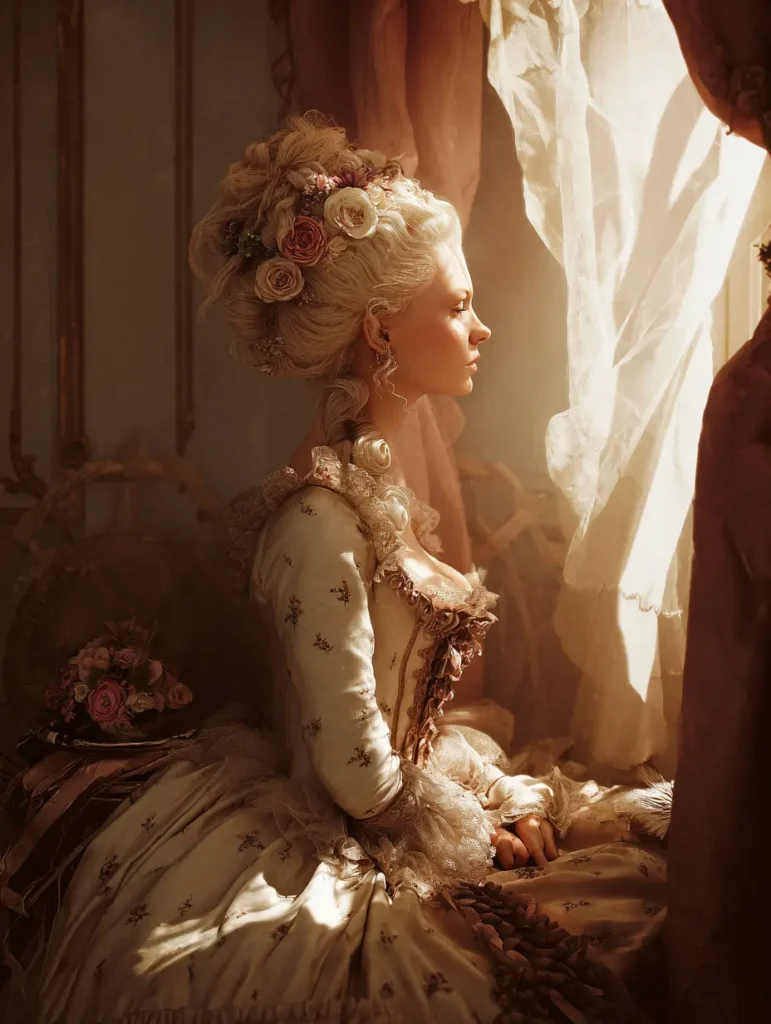
“A symbolic image of Marie Antoinette — solitude within splendor, silence within light.”
Dressed in ornate fabric and adorned with roses, this image poetically captures the inner solitude of the queen — echoing Sofia Coppola’s Marie Antoinette, where beauty and melancholy coexist.
— A Palace of Excess, and the Beauty That Lost Its Freedom
This is Part Three of our series. We previously explored the silence of repression in [The Virgin Suicides] and the rhythm of solitude in [Lost in Translation].
The Light of Versailles, and the Silence Within
Released in 2006, Sofia Coppola’s third feature film Marie Antoinette is less a historical drama and more a portrait of emotion. Rather than politics or revolution, the film captures the interior world of a woman trapped in opulence. Pastel gowns, cakes, champagne, and powdered wigs — everything gleams with beauty, and yet, beneath it all, lies a quiet, suffocating emptiness.
The film opens with the young Marie leaving Austria for France — a farewell to her freedom before she even knows it. From that moment, she becomes a queen without a voice, a girl confined behind the gilded walls of Versailles.
“You can’t talk to me that way. I’m the Queen of France!”
When she finally asserts her title, her voice trembles. It is not a cry of authority but one of loneliness. Coppola renders Versailles not merely as a palace but as a beautiful prison, where every light intensifies the feeling of isolation.
The Beauty That Lost Its Freedom: The Girl Disappears Within the Gaze of Others
Marie Antoinette is not a tragedy of history — it is a study of confinement. Coppola follows a young woman who gradually disappears within the gaze of others. Every choice she makes is not freedom, but ornament: a dress, a hairpiece, a ribbon, a smile.
“It’s not my fault.”
Marie Antoinette
This famous line is not an excuse — it is resignation. She has everything yet owns nothing. Her life, drowned in beauty, becomes a portrait of helplessness.
Coppola expresses this through the aesthetic of excess. The soundtrack — featuring The Strokes, Bow Wow Wow, and New Order — collides modern sound with 18th-century visuals. This deliberate anachronism makes Marie’s emotional chaos feel startlingly contemporary.

Freedom in Nature — The Summer Garden of Marie Antoinette
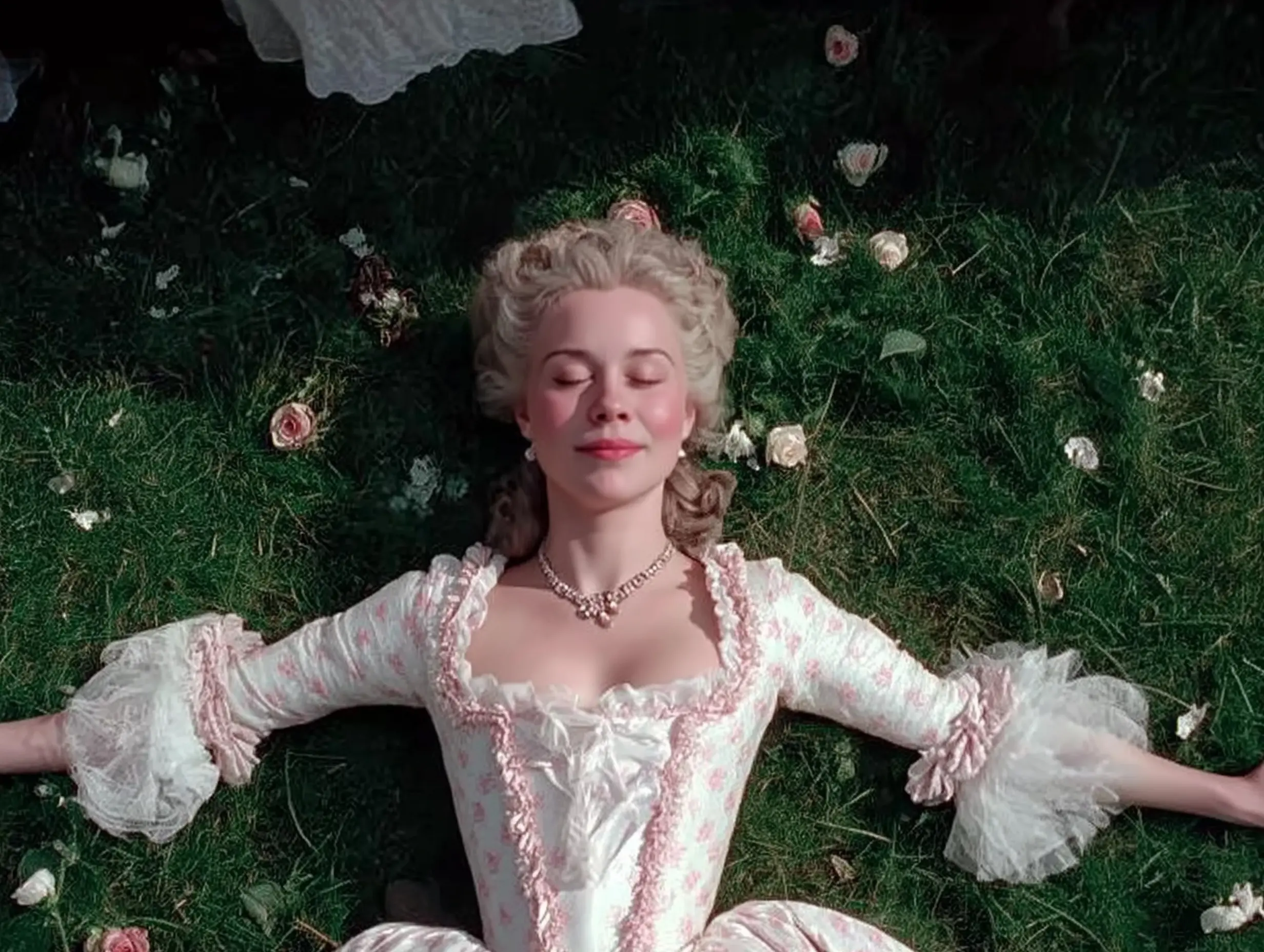
In the gardens of Versailles, Marie Antoinette briefly feels free — a moment symbolizing purity and inner peace.
-Against the soft sunlight and green tones, her expression reveals a fleeting serenity beyond power and expectation.
A Fashion Film of Feelings: Anachronism and The Aesthetic of Excess
The film’s color palette is almost edible — sugar-coated pastels of pink, mint, lavender, and cream. But as the story progresses, those sweet hues gradually fade into cold blues and muted shadows — the colors of disillusionment.
“Let them eat cake.”
Marie Antoinette

The Queen of Fabric — A Portrait Trapped in Beauty
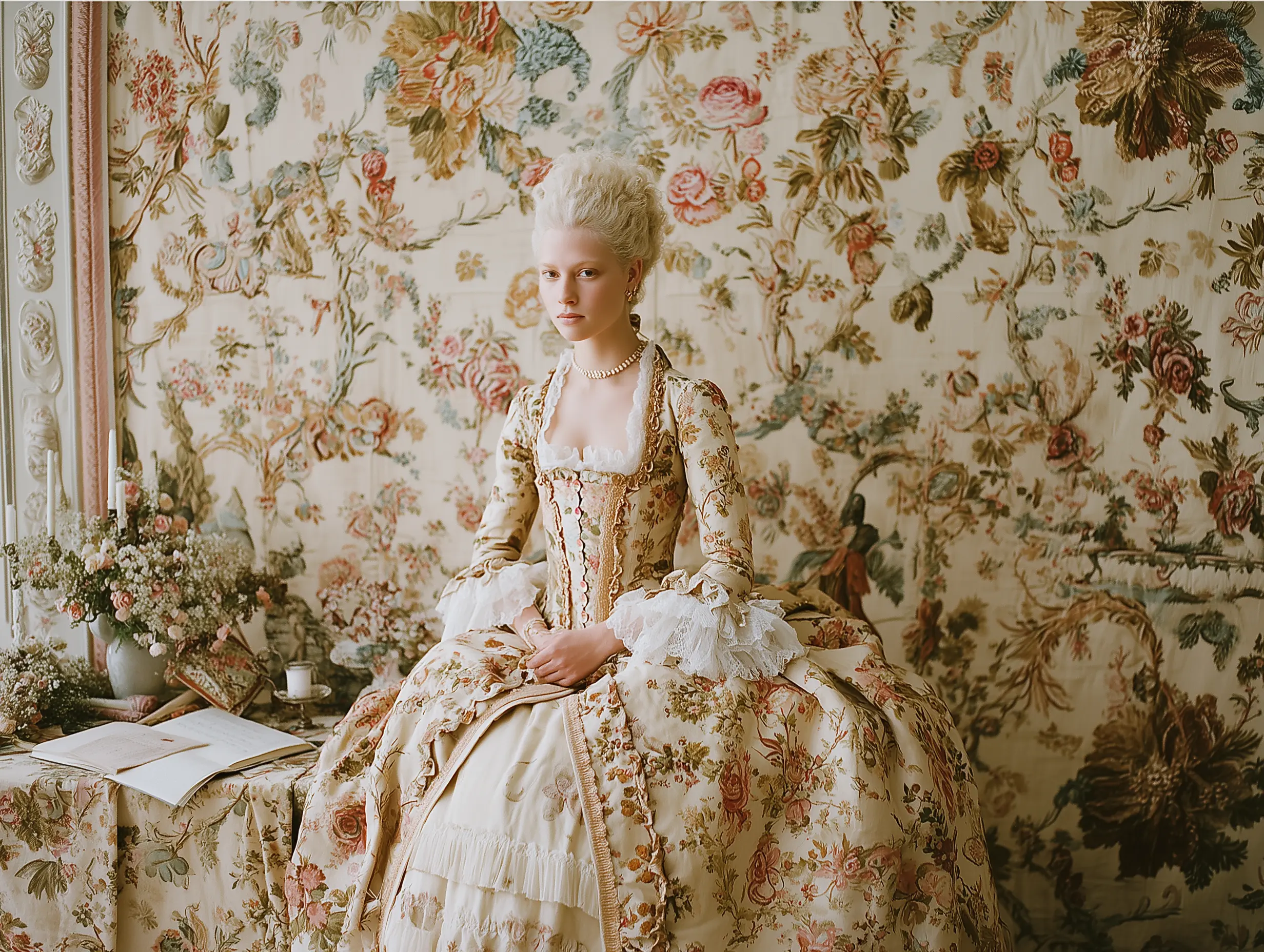
The moment where fabric and figure become one — Coppola visualizes the metaphor of “a prison made of beauty.”
-This scene symbolizes Marie’s slow disappearance into her own opulence — she shines still, but her glow fades into the tapestry around her.
Though historically misattributed, this line in the film becomes symbolic of how women’s voices are distorted and rewritten by history. Marie is not cruel; she is unheard. Coppola turns that irony into a visual metaphor for misunderstood femininity.
The film’s rhythm is defined not by dialogue but by sound. Rock music vibrates through Versailles like a heartbeat — a reminder that this is not a period piece, but a film about youth, emotion, and rebellion. Coppola speaks in colors and soundscapes, not words.

The Aesthetics of Sweetness — Marie Antoinette
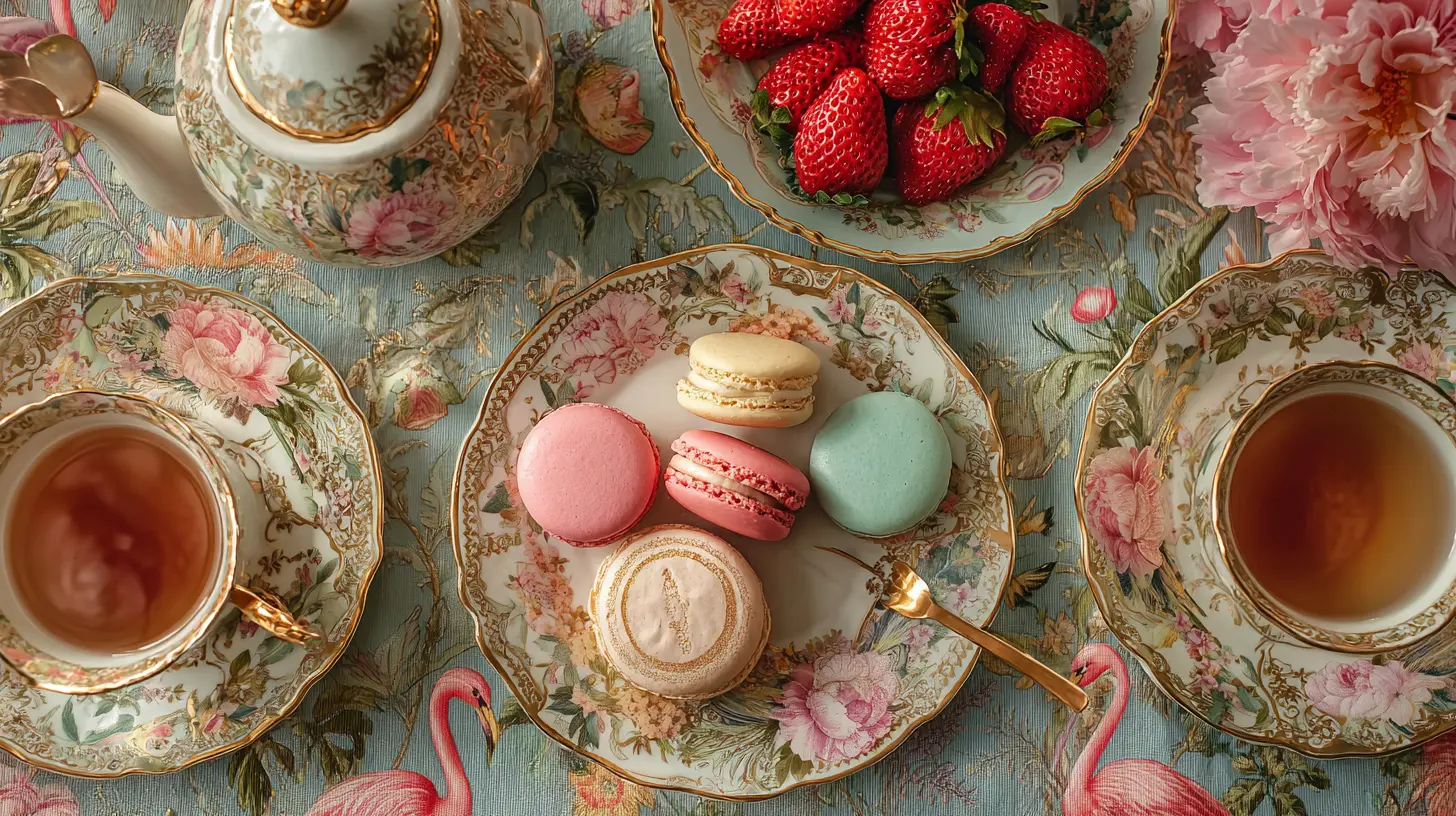
Macarons, gilded teacups, and pastel fabrics. They were not mere luxuries, but textures of emotion — the language of pleasure Sofia Coppola translated into cinema.
-A visual homage inspired by Marie Antoinette, capturing the Rococo sensibility of excess and delicacy. Through desserts, porcelain, and color harmony, the image mirrors Coppola’s cinematic vision — beauty as both indulgence and introspection.
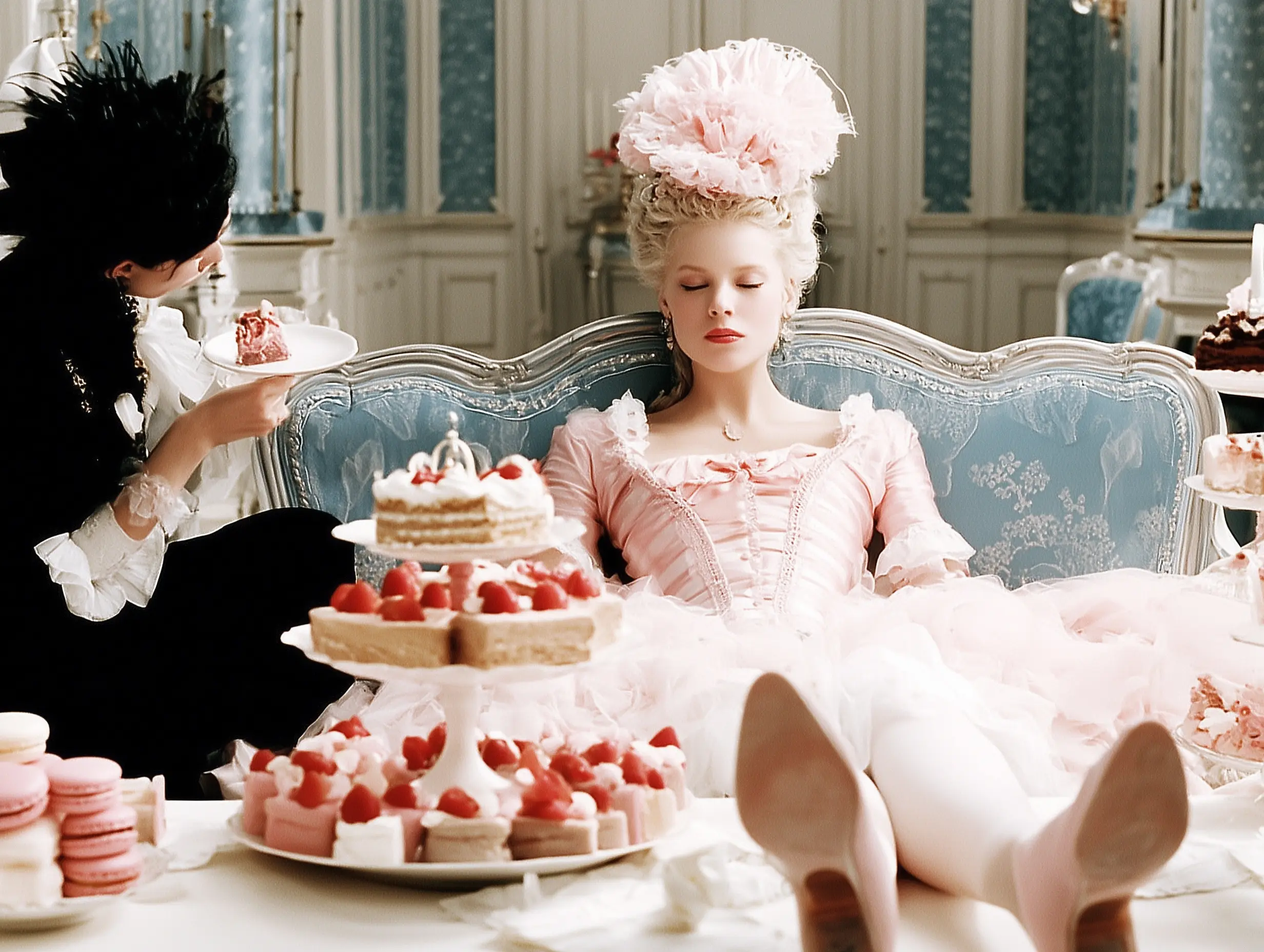
From My Perspective: Ladurée, Versailles, and the Symbiosis of Sugar-Colored Aesthetics
When I first heard that Sofia Coppola was making a film about Marie Antoinette, I thought, of course she would. Few figures in history embody the inseparable bond between fashion and identity like Marie.
Her dresses, accessories, shoes, and colors — no one has ever embodied beauty with such effortless harmony. If I had to choose one era of fashion to live in, it would be hers. As a designer, I cannot help but see Marie Antoinette as a visual archive of inspiration — a symphony of textures, silhouettes, and color.
In the early 2000s, Paris had its own echo of that aesthetic: Ladurée. Its pastel interiors, gold-embossed packaging, and macaron displays felt like modern extensions of Versailles itself. Each time I visited Paris, I found myself drawn into Ladurée’s world — buying boxes of pastel sweets just to photograph their colors and forms.
When Marie Antoinette was released in 2006, Coppola and her costume team actually collaborated with Ladurée. The pastel macarons appeared in the film as symbols of indulgence and luxury, and after the film’s release, Ladurée’s global popularity exploded. It wasn’t just a collaboration — it was a cultural symbiosis between film, fashion, and confection.
Years later, walking through Charles de Gaulle Airport, passing by elegant dessert boutiques bathed in soft light, I was reminded of this film. It felt as though Marie Antoinette had spilled out of the screen and transformed the world into her pastel daydream.
A sugar-colored solitude, a sweet and excessive beauty — that is what remains.

Sweet Excess — The Iconic Dessert Scene of Marie Antoinette
Macarons, cakes, champagne, and laughter — the moment beauty peaks, and solitude begins.
-The pastel-toned desserts, including Ladurée macarons, are not mere indulgence but Coppola’s poetic expression of emotional excess.
The Quiet After the Splendor
“I am saying goodbye. I am saying goodbye to everything.”
Marie Antoinette
In the end, Coppola’s Marie is not a symbol of decadence, but a woman saying farewell — to her youth, her illusions, her freedom. The revolution comes not with rage, but with silence. Coppola’s gaze remains tender, never judgmental. She turns the queen into a mirror of humanity itself.
Marie Antoinette is not a film about a fallen monarch; it is a memoir of emotion — of being seen, misunderstood, and finally, set free through empathy.
Lightly, yet deeply. And I have come to love the quiet after the splendor.
Attached Note | The Hidden Labor Behind Perfection: Why Artistry Is Born of Devotion
In one unforgettable scene, Marie chooses fabrics, shoes, and jewelry while tasting pastel desserts and champagne. Every item — every ribbon, lace, and jewel — feels impossibly exquisite. Watching it, I was overwhelmed not only by its beauty but by the craftsmanship that made it possible.
Those costumes and props did not simply appear. They were conceived, designed, sewn, tailored, aged, and arranged with meticulous care and endless coordination between departments. As someone who works in fashion, I know how difficult it is to make perfection look effortless. Each frame represents countless hours of work — from fabric selection to color balance, from fitting to visual harmony, from material durability to narrative emotion.
Sofia Coppola’s Marie Antoinette is the ultimate expression of such labor. Her control over costume, space, food, and light reveals not just taste, but orchestration. And the moment when Marie dons her monumental wig, decorated with a delicately crafted pastel bird, and bursts into laughter — that was pure cinematic rapture.
That image alone contains the invisible weight of hundreds of hours of human hands, patience, and art. It is a moment of beauty built upon craft and devotion.
No modern fashion brand could replicate such depth of detail. Every lace and ornament carries emotion; every color is charged with meaning.
Coppola did not merely make a film — she created a living archive of artistic craftsmanship. Behind every frame lies the invisible work of artisans, and behind that, her vision — patient, precise, and profoundly human.
In the face of such mastery, all I can do is applaud. Because beauty, as Coppola reminds us, is never the product of chance — it is born of devotion.
“Her world shimmered like sugar, and then dissolved.”
Bow Wow Wow – “I Want Candy” | Youth, Rebellion, and the Sweet Excess of Marie Antoinette
Featured in one of the film’s most iconic sequences, this track turns Versailles into a neon-drenched dream of youth and indulgence. As pastel gowns swirl and laughter fills the frame, Coppola uses the song to express the tension between freedom and excess, pleasure and emptiness — the heartbeat of Marie’s world.