
Boundaries of Work, Culture in Perspectives

The “AI Kkanbu” Moment: When Three Titans Broke Hierarchies and Toasted to the Future

November 4, 2025
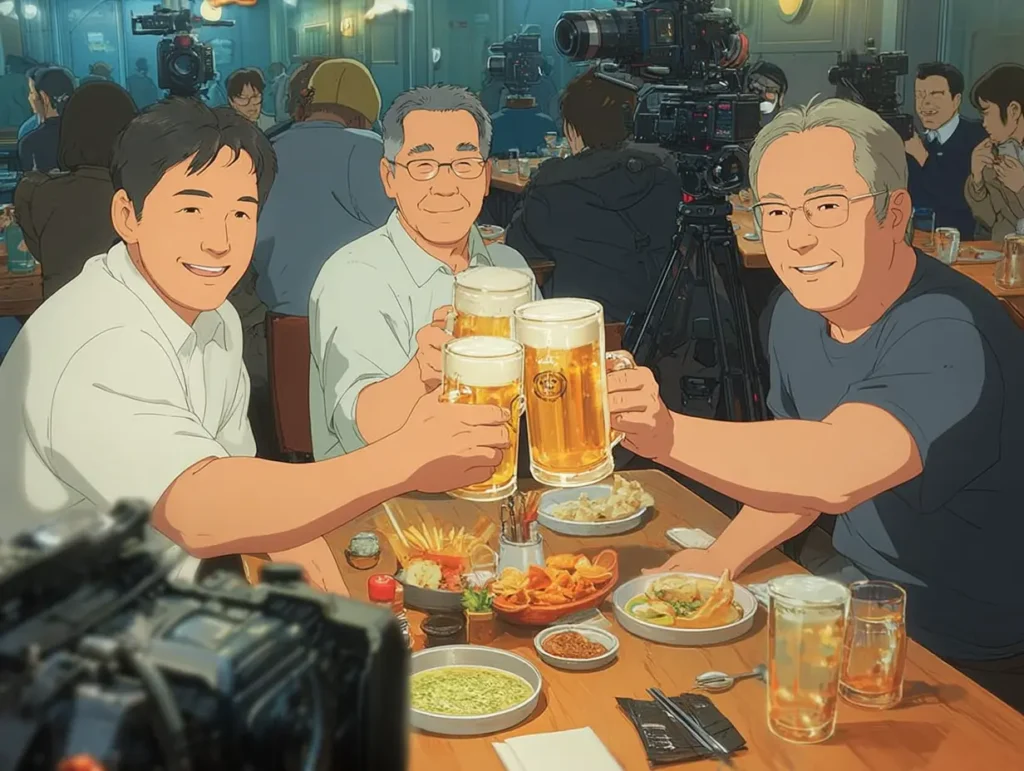
Three middle-aged men raising beer glasses and smiling at a Korean fried-chicken restaurant. A warm, cinematic Ghibli-style illustration capturing the spirit of human connection and a new kind of leadership.
Featured Image
AI Kkanbu: When Three Leaders Shared Beer and Broke Boundaries
“On that night of laughter and toasts, it wasn’t technology but humanity that shone the brightest.”

NVIDIA’s Jensen Huang, Samsung’s Jay Y. Lee, and Hyundai’s Euisun Chung shared beer and laughter at a Korean fried-chicken restaurant. Beyond the toast lies a quiet message about sincerity and the evolution of leadership in the age of AI.

This article is registered under [Culture in Perspectives] for leadership trends and [Work & Boundaries] for professional collaboration.

The AI Kkanbu Summit: A Human Encounter That Shook the Global Industry

On the evening of October 30, 2025, an extraordinary scene unfolded in Seoul’s Samseong-dong district. NVIDIA CEO Jensen Huang, Samsung Electronics Chairman Lee Jae-yong, and Hyundai Motor Group Chairman Chung Eui-sun were spotted sharing chimaek—Korean fried chicken and beer—at a small local restaurant named Kkanbu Chicken.

It wasn’t a luxury hotel or a high-level boardroom. Just three of the world’s most powerful business leaders sitting at a casual table, laughing, clinking glasses, and enjoying one of Korea’s most beloved traditions. Within hours, the scene had gone viral worldwide.

That night was free of protocol. What replaced formality was warmth, laughter, and humanity. Their smiles weren’t staged; their gestures weren’t rehearsed. It was, quite simply, one of the most disarming images of leadership we’ve seen in years.

The New Style of Leadership: Connecting Through Authenticity, Not Authority

What made this gathering so special is simple. They are the best—but they didn’t act like it.

Jensen Huang, always known for his approachable charisma, took a bite of fried chicken and shouted to nearby customers, “Tonight’s on me!” He handed out chicken to passersby and declared, “This is the best day of my life.” It was a moment without calculation or pretense—pure, joyful sincerity.

A heartwarming detail soon followed: while it was Huang who rang the “golden bell” for the crowd, it was Lee Jae-yong who quietly picked up the check. Leadership, it seems, reveals itself most clearly in such small, effortless gestures.

Lee and Chung, too, broke from the mold. They arrived casually dressed, shook hands with citizens, posed for photos, and even signed autographs. When Lee scribbled “Be a good son” on a child’s notebook, he didn’t seem like a corporate titan—he looked like a kind neighbor.

Together, these three men offered a new model of leadership: not one built on authority or distance, but on authenticity and connection. Their charisma didn’t stem from power; it came from being human.

On that table, the food was more than just a meal. The chicken and beer were a silent bridge — a symbol of connection that allowed three leaders to laugh freely and drop their formality. In that moment of shared joy, we saw a different kind of alliance — one built not on technology, but on the warmth of humanity.
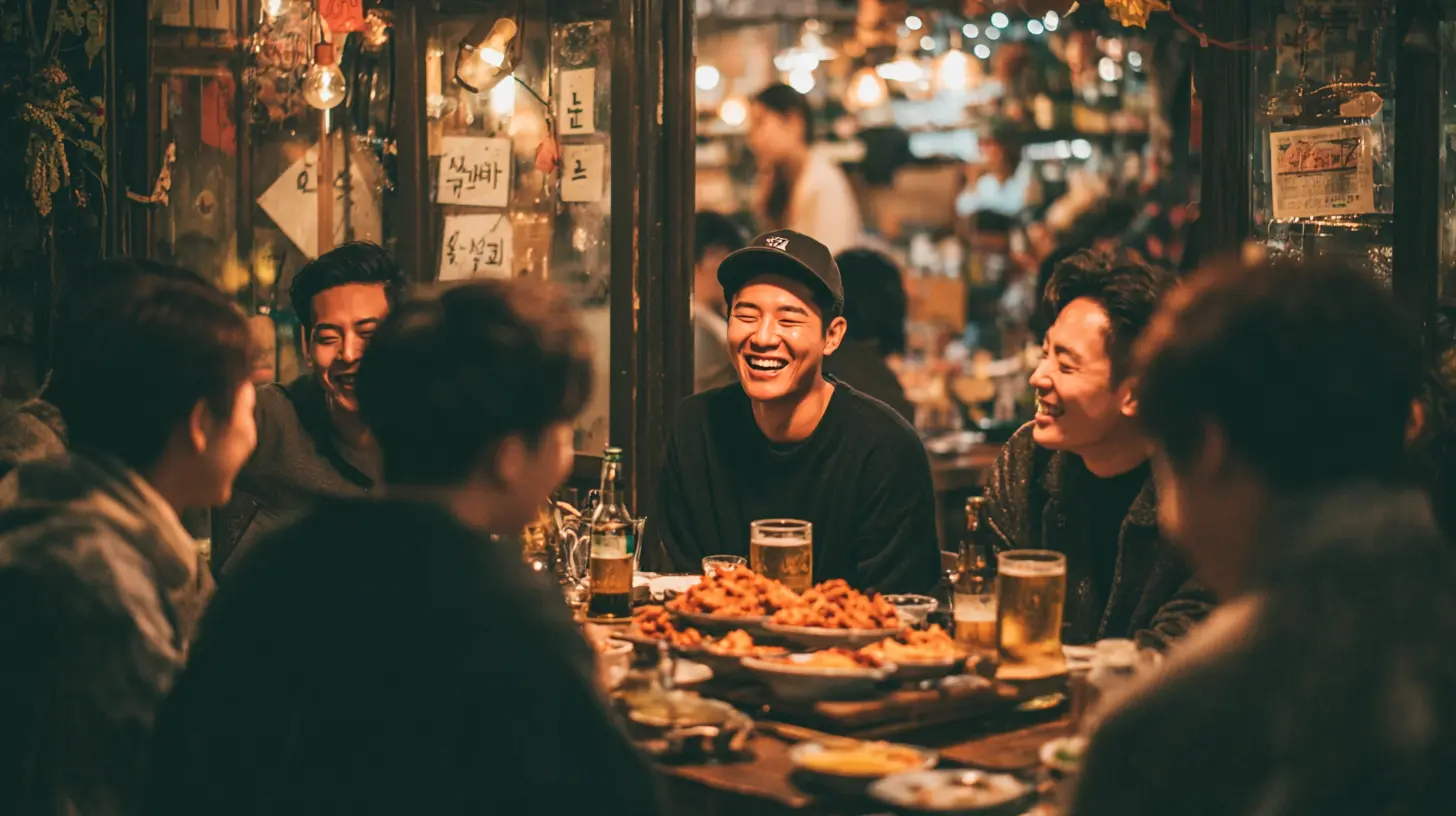
A close-up of four people clinking glasses of beer over a table filled with crispy fried chicken. The warm lighting and relaxed atmosphere capture the essence of Korea’s beloved “chimaek” culture — chicken and beer shared in good company.

The Culture of Chimaek – Korea’s Warmest Toast

“Chimaek — the taste of connection. Under warm light and laughter, each toast becomes a reminder that joy is meant to be shared.”

“Chimaek,” the Korean pairing of chicken and beer, is more than a meal — it’s a shared moment of connection and joy. This image captures the warmth and camaraderie that define one of Korea’s most iconic social rituals.
The Future of Collaboration: NVIDIA, Samsung, and Hyundai’s Technological Alliance

Of course, this wasn’t merely a cheerful dinner. Behind the laughter, the conversation likely touched on the future of entire industries.

NVIDIA now stands at the center of the global AI revolution. Its GPUs are the brains that power the world’s data centers and learning systems. Samsung, meanwhile, provides the memory and manufacturing backbone—the HBM and foundry technologies that make high-performance AI possible. And Hyundai Motor Group plays the role of the body—bringing AI to life in the form of autonomous mobility, robotics, and smart factories.

The fact that these three sat together at one table already signals a shift in the industrial landscape. This “AI Kkanbu Alliance” hints at a new balance in the semiconductor and AI ecosystem—one in which Korea rises as a key axis of global innovation.

The Engine of Innovation: Leadership Transformed by Openness and Empathy

The ripple effect was instant. The very next day, Kkanbu Chicken locations were flooded with visitors, and related stocks soared. But beyond the economic ripples, this meeting revealed something deeper: a transformation in how leadership itself is being defined.

Where leadership once meant formality and distance, today it demands openness and empathy. Jensen Huang doesn’t build myths around himself. He walks among people, smiles easily, and celebrates cultures as they are. His sincerity isn’t simply charming—it builds trust, the true engine of innovation.

Lee Jae-yong and Chung Eui-sun mirror that evolution. In a society where hierarchy once defined leadership, they now embody a gentler, more flexible approach. Their demeanor showed that success is no longer measured by authority but by the ability to connect.

After the dinner, all three appeared together at the GeForce event, keeping that energy alive. When Lee humorously remarked, “Why are there so many iPhones here?” the room erupted in laughter. Even Jensen’s behind-the-scenes stories felt more human than technical—proof that real communication often begins not with data, but with warmth.

Where Humanity Meets Innovation

I found myself replaying that video again and again. There was something oddly comforting in their laughter—something that reminded me why I still believe in the human side of business. It’s been a while since a public moment left me feeling this quietly moved.

To be honest, I never thought I would write about this. But after watching their dinner, I felt a strong urge to capture it in words— not because it was a viral event, but because their humanity lingered in me long after the video ended.

Perhaps the most revolutionary thing in our world today isn’t technology, but the human heart behind it.

That simple image of three men clinking beer glasses wasn’t just a pleasant scene—it was a glimpse of the future. AI, semiconductors, mobility—these may define industries, but what truly drives progress is trust, empathy, and warmth between people.

Like those three leaders, I, too, want to work a little more gently, a little more humanely, and find balance in my own corner of the world.

Change always begins in moments like these— when the most human of encounters gives birth to the most innovative ideas.

Lightly, yet deeply.

And perhaps, the future has already begun in their laughter.

Korea’s “chimaek” culture is more than sharing food. It’s where strangers become friends, and hierarchy quietly dissolves over a glass of beer. In that unguarded space, people lower their defenses and open their hearts. These small moments of connection eventually build the foundation of deeper trust. Perhaps that’s why the “Kkanbu meeting” felt so extraordinary — because it carried the familiar warmth of everyday life in Korea.
A group of friends sharing laughter over fried chicken and beer in a cozy, warmly lit Korean bar. The image captures the essence of Korean social culture — connection, comfort, and the joy of being together.

A Toast of Warmth – The Human Side of Korea’s Chimaek Culture

“Where laughter lingers longer than taste. Beyond the flavor of beer and chicken lies the deeper warmth of connection.”

In Korea, “chimaek” — chicken and beer — is more than food. It’s a space where laughter flows, hearts open, and people reconnect. This image captures the warmth and togetherness that define the human side of Korean gatherings.

EditBound’s Note: The Meaning of “Kkanbu”

In Korean, “Kkanbu” (깐부) is a word that originated from children’s games, meaning “a teammate,” “a close ally,” or “someone with whom you share everything without conditions.” It carries the spirit of trust, equality, and shared fate—a bond where competition dissolves, and cooperation becomes instinctive.

The phrase gained renewed global recognition through the Netflix series Squid Game, where it symbolized a friendship so deep that one’s survival could depend on it. Yet in everyday Korean life, Kkanbu remains a simple, heartfelt term—something closer to saying, “You and I are on the same side.”

In that sense, the “AI Kkanbu” gathering between Jensen Huang, Lee Jae-yong, and Chung Eui-sun was more than a casual dinner. It was a symbolic moment of alliance—a reminder that even in an age defined by algorithms and data, the truest innovation begins in human connection.

Appendix: Glossary of Key Terms
GPU
(Graphics Processing Unit)

Originally created for rendering images, the GPU has become the “brain” of artificial intelligence. Its thousands of small cores allow massive data to be processed simultaneously—a parallel structure essential for real-time AI tasks like image recognition, language modeling, and autonomous driving.

HBM Memory
(High Bandwidth Memory)

HBM is an ultra-fast memory that works alongside the GPU. Unlike conventional DRAM placed next to the chip, HBM is vertically stacked on top of the GPU, shortening data paths and improving both speed and energy efficiency. If the GPU is the brain, HBM is the bloodstream supplying it with memory and energy. The GPU–HBM pair powers data-heavy systems in autonomous driving, robotics, and smart factories.

Foundry

A semiconductor manufacturing facility that fabricates chips based on external designs. Samsung is among the few global leaders capable of producing advanced GPUs and HBMs using ultra-fine processes.

Autonomous Driving

Technology that allows vehicles to perceive and navigate their environment using AI and sensors. GPUs process large streams of visual and sensor data in real time, while HBM ensures ultra-fast data access—together forming the “eyes and brain” of self-driving systems.

Robotics

The field in which AI takes physical form. GPUs handle perception and decision-making, while HBM ensures instant data transfer for smooth, precise motion. Together they enable accurate control and human-like responsiveness.

Smart Factory

A manufacturing ecosystem where AI, IoT, and big data integrate to self-optimize efficiency and quality. The GPU–HBM synergy acts as the computational core, driving analytics, defect prediction, and autonomous production control.

  GPUs and HBMs are not only the brain of AI, but also the invisible heart driving the industries of tomorrow.
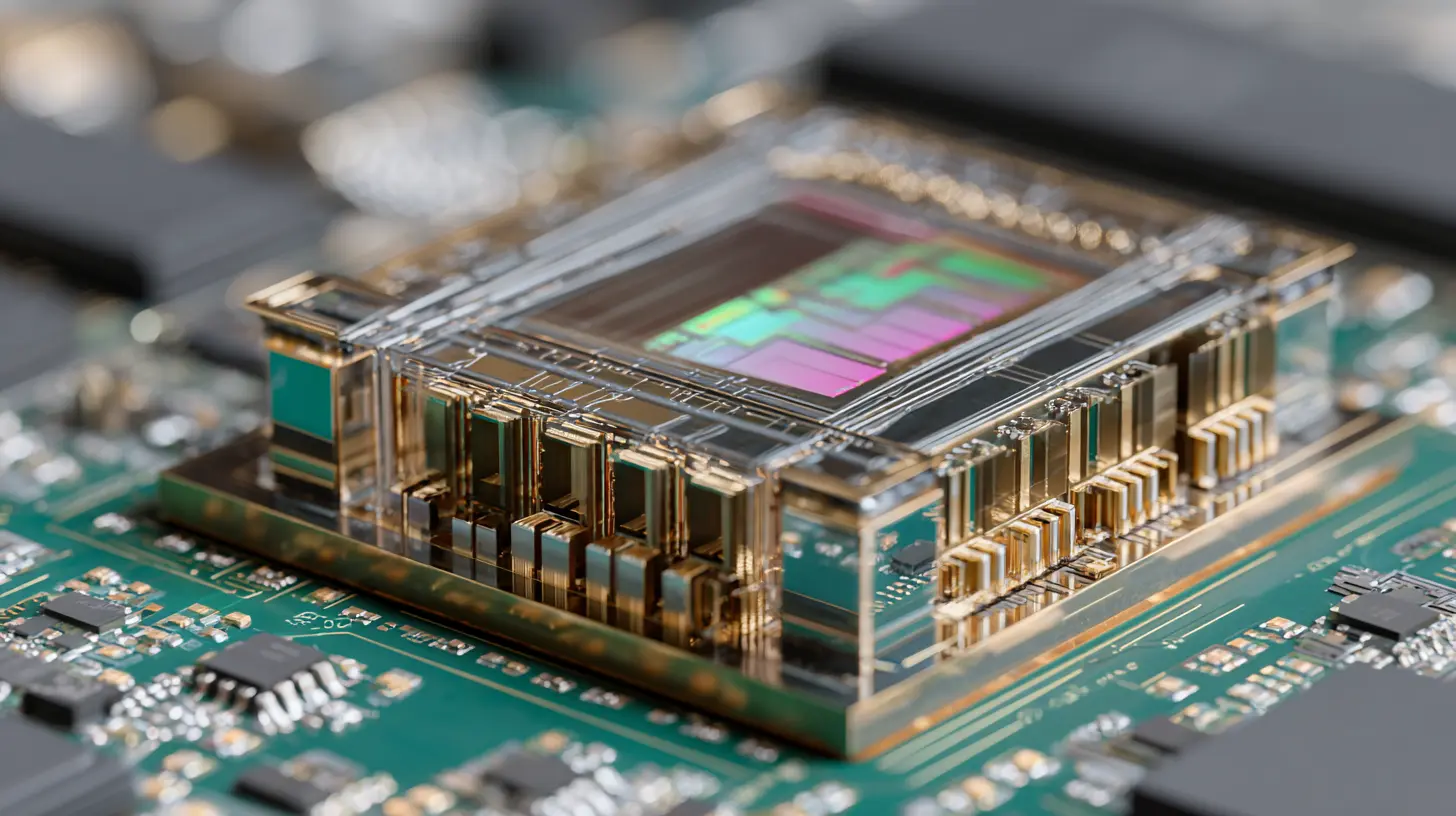
A close-up image of an HBM (High Bandwidth Memory) module stacked on a semiconductor substrate. Ultra-thin DRAM dies are layered vertically, connected to a GPU through fine metal interconnects. The image realistically depicts the architecture of a modern HBM3 package.

Inside HBM Memory – The Core Architecture of High Bandwidth Memory

“The precision of HBM architecture. Layer upon layer of DRAM dies enables ultra-fast data communication — the “memory brain” powering the AI era.”

HBM (High Bandwidth Memory) stacks multiple ultra-thin DRAM dies vertically and connects them directly to GPUs, enabling high-speed data processing. This image closely resembles the real structure of HBM3 packages, visually illustrating one of the most critical technologies driving AI performance and semiconductor innovation.

Tags

What do you think?

Leave a Reply

Your email address will not be published. Required fields are marked *

More Posts