 Balsamic vinegar is my blood, Parmigiano Reggiano is my muscle.
Although Massimo Bottura opened Osteria Francescana in 1995, his core philosophy—Tradition in Evolution—was initially met with fierce resistance from his hometown of Modena. Rather than carrying tradition forward unchanged, he wanted to look critically at the past and bring the best of it into the future.
This perspective was shaped profoundly by contemporary art, discovered through his wife, Lara Gilmore—especially the works of Italian artist Maurizio Cattelan.
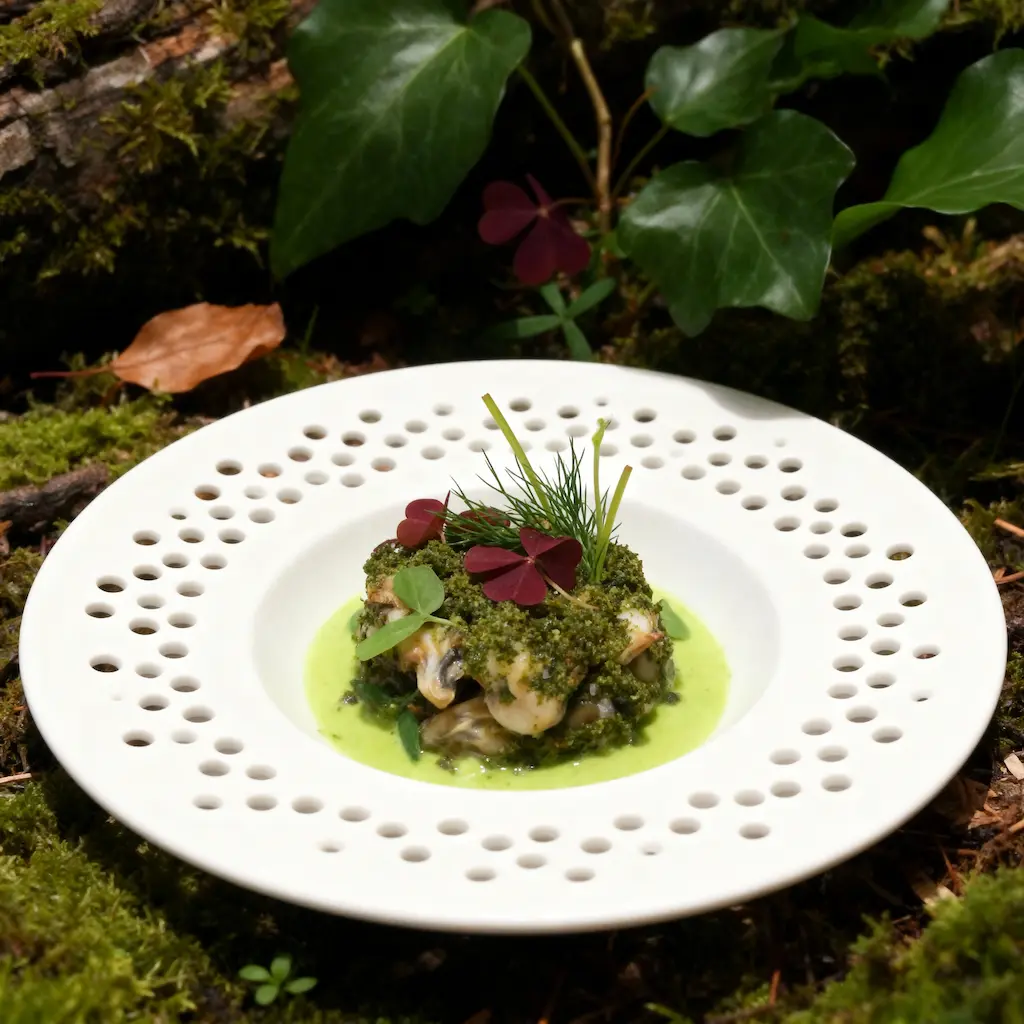
Oysters in the Woods – Reimagined
A modern reinterpretation of ‘Oysters in the Woods,’ capturing the textures and tones of the forest.
This image offers a contemporary reinterpretation of Massimo Bottura’s “Oysters in the Woods.” Set against a forest-like bed of moss and leaves, the dish combines oysters with green herb crumble to evoke the aroma and texture of the woods. Rather than imitating the original, it explores the natural elements—textures, colors, and atmosphere—in a fresh visual direction.
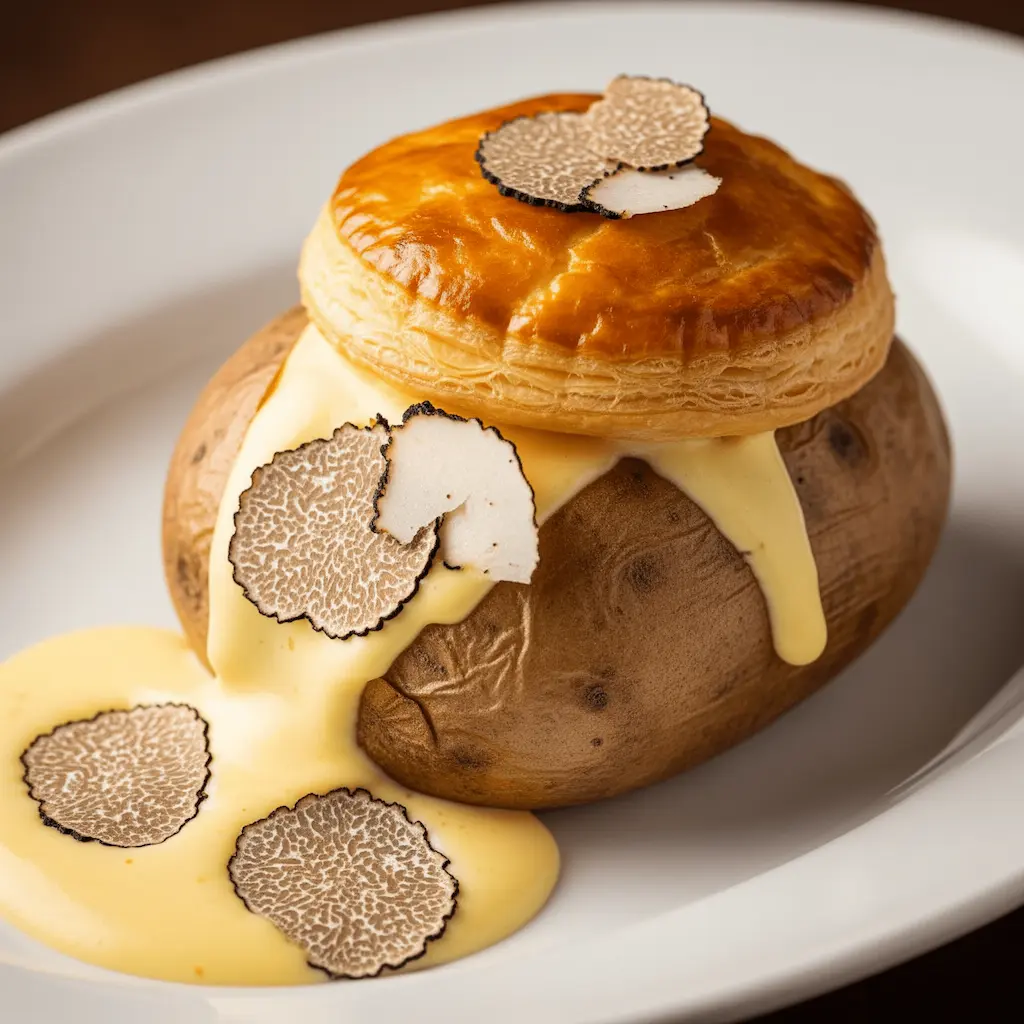
A Potato Waiting to Become a Truffle – Reimagined
“A modern reinterpretation inspired by the original dish, highlighting the flavors of potato and truffle.”
Inspired by the original ‘A Potato Waiting to Become a Truffle,’ this reimagined version pairs a warm potato base with creamy sauce, crisp pastry, and delicate truffle slices. It respects the culinary imagination of Modena while transforming the composition into something more approachable, expressive, and rich in texture.
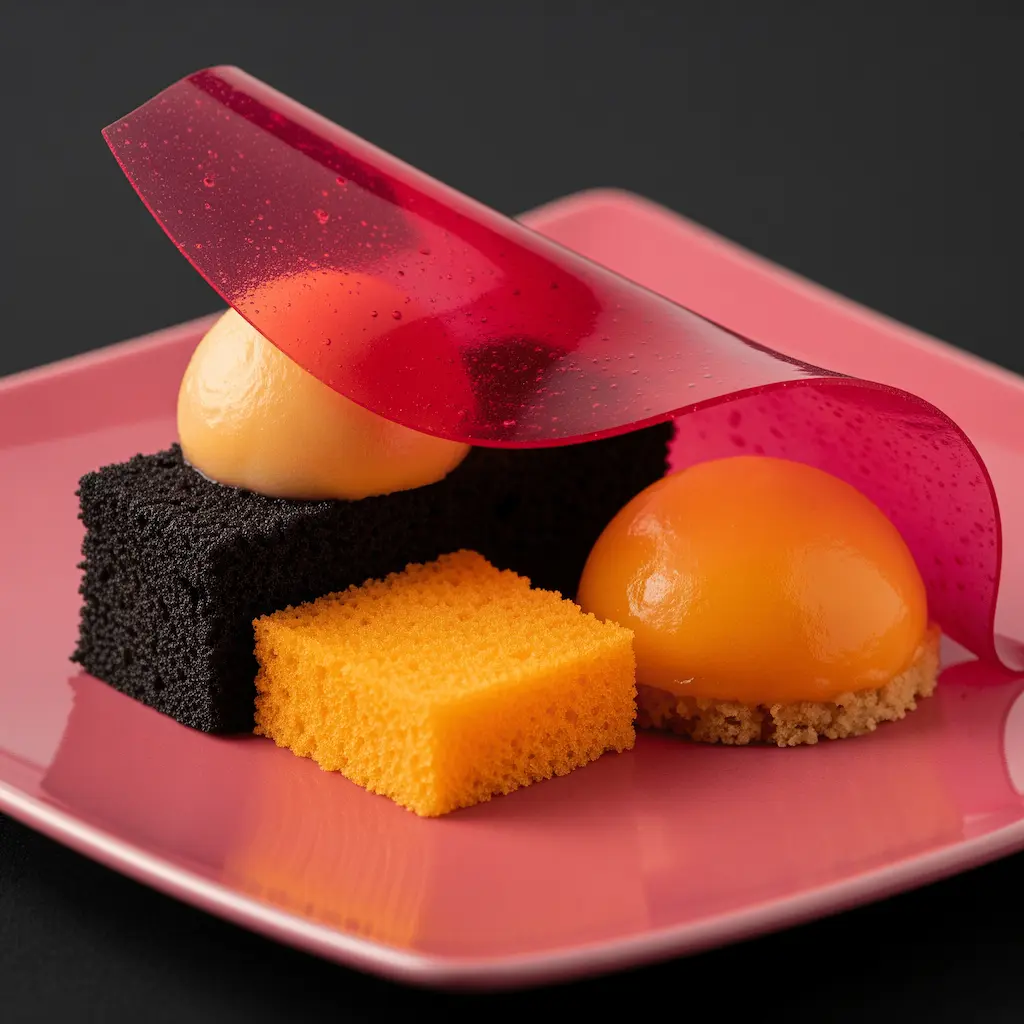
Zuppa Inglese Reimagined — Dessert Interpretation
A modern reinterpretation inspired by “Zuppa Inglese, Hot & Cold,” highlighting contrasts in color, texture, and form.
This image does not replicate Massimo Bottura’s original “Zuppa Inglese, Hot & Cold.” Instead, it reimagines its spirit through a new visual language—contrasting black and yellow sponge textures, smooth cream domes, and a sweeping red gel sheet. It captures the idea of structural and sensory contrast, offering a contemporary reinterpretation of the classic dessert’s conceptual essence.
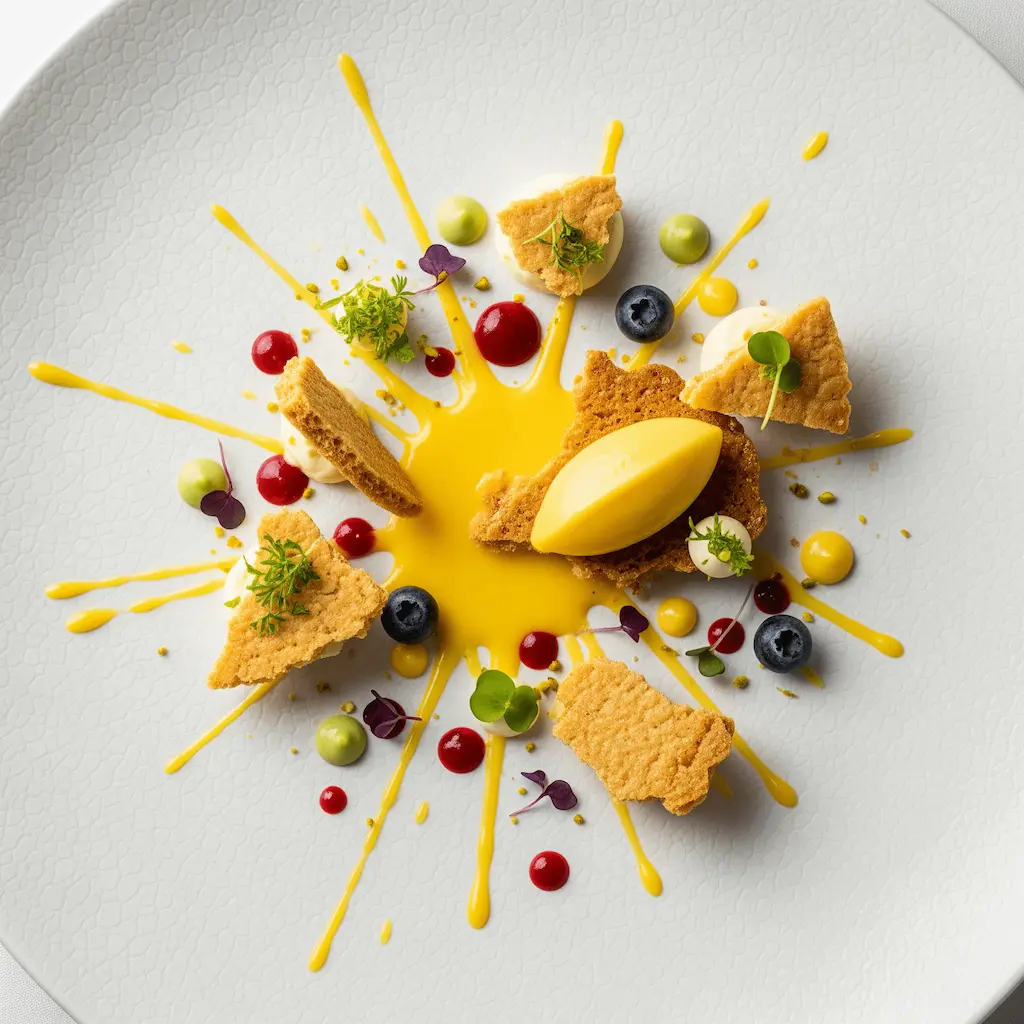
Oops! I Dropped the Lemon Tart – Reimagined
A reinterpretation of the dessert’s “accidental moment,” rebuilt with modern colors and textures.
This image reimagines Massimo Bottura’s “Oops! I Dropped the Lemon Tart,” adding new textures and structure to the intentionally accidental look. The splattered lemon cream, broken cookie fragments, and vibrant color dots create a playful composition that expands the original dessert’s sense of spontaneity and artistry.
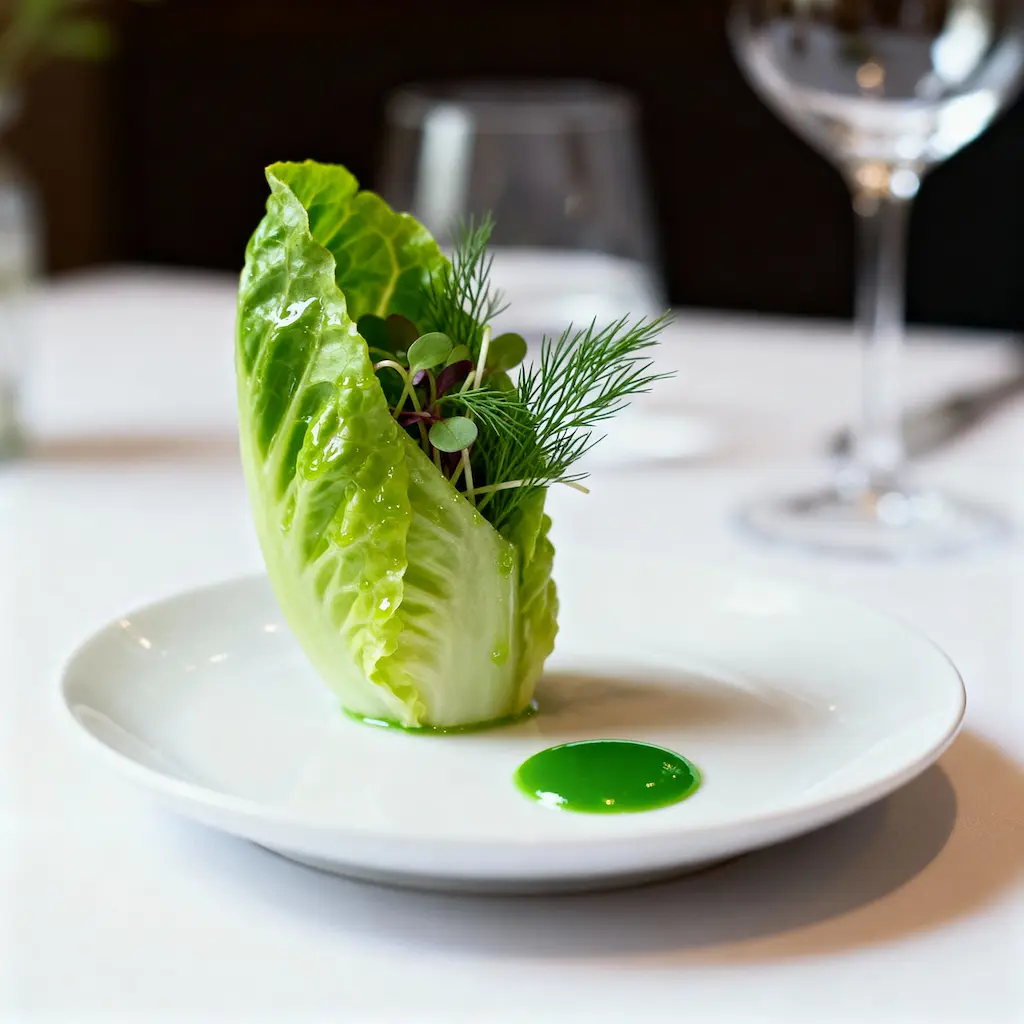
Caesar Salad in Emilia – Reimagined
A creative reimagining of the classic Caesar salad, inspired by Emilia. Fresh herbs and microgreens tucked inside a crisp romaine leaf evoke a pure, garden-like freshness.
This dish offers a modern take on “Caesar Salad in Emilia,” using a crisp romaine leaf filled with herbs and microgreens to amplify freshness. A touch of vibrant green sauce adds an Emilia-inspired note, transforming a simple salad into an elegant, minimalist culinary moment.
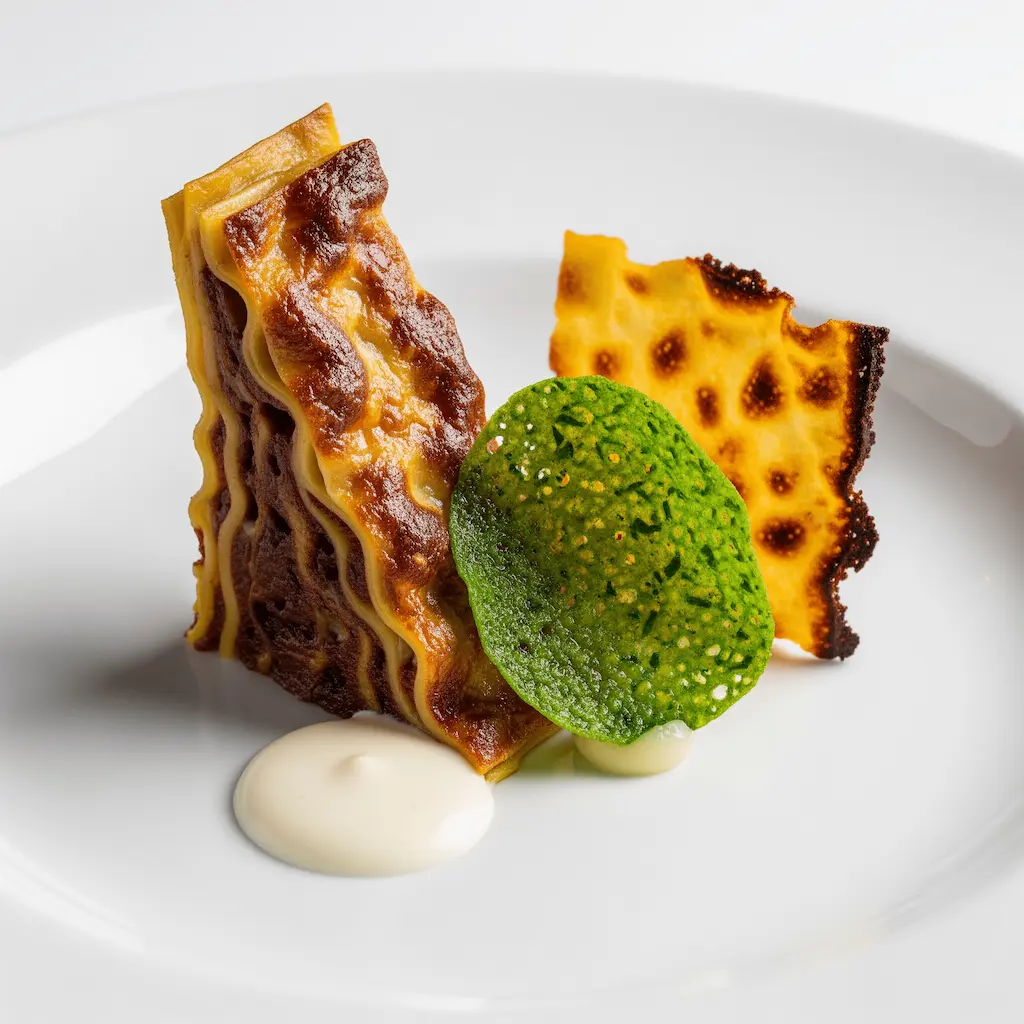
The Crunchy Part of the Lasagna – Reimagined
Inspired by the iconic “crunchy moment” of classic lasagna, rebuilt into a structural, minimalist presentation.
This image does not replicate the original dish but reimagines its textures, structure, and playful rhythm. The beloved crispy layers of lasagna are presented as sculptural elements, paired with a green chip and a minimalist cream sauce. It maintains the spirit of the original while expressing a more contemporary, experimental direction.
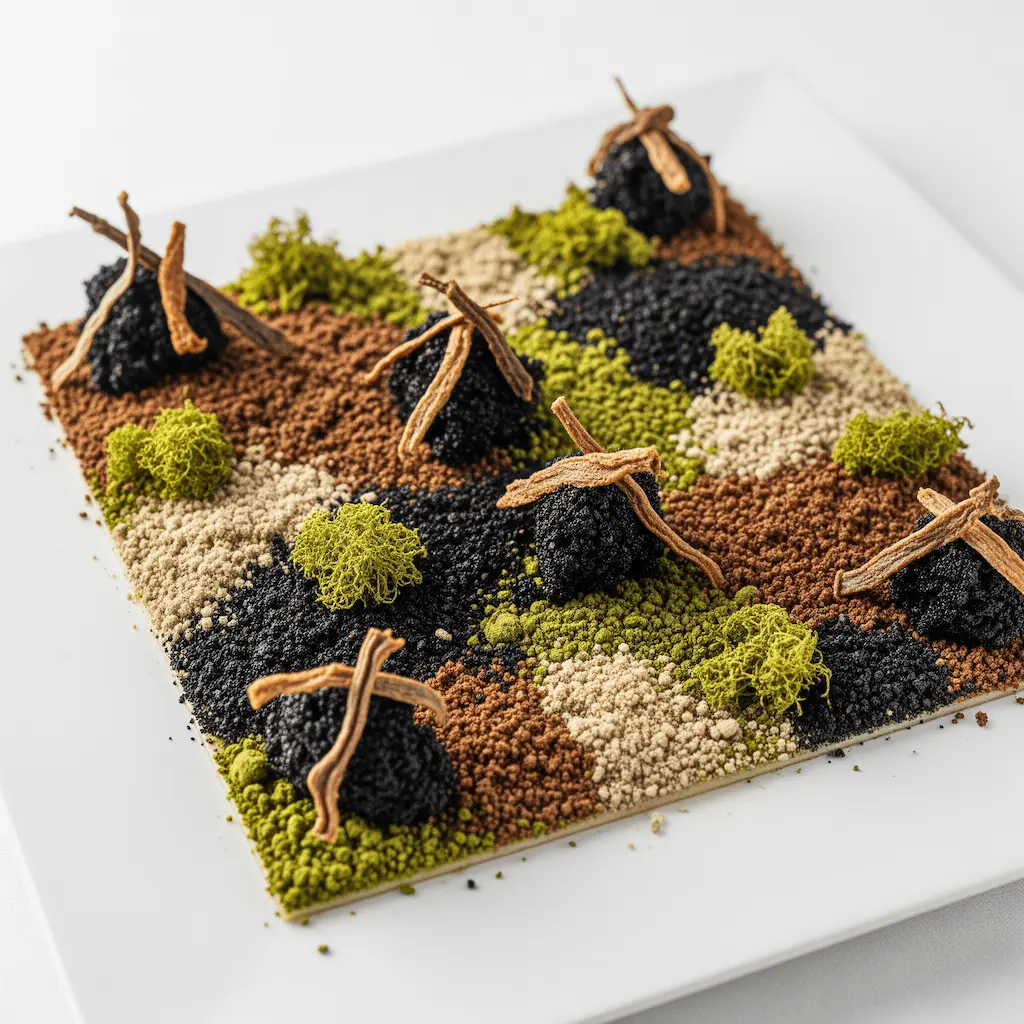
A Dish Inspired by Forest Camouflage – Reimagined Camouflage Concept
A reinterpretation that draws from the original dish’s camouflage concept, reimagining forest colors and textures in a minimal, graphic composition.
This image is a reimagined interpretation inspired by Camouflage: A Hare in the Woods, not a reproduction of the original dish. It transforms forest patterns and organic textures into a visual concept, symbolizing hidden movement and life within the woods. The contrasting colors and tactile elements create an artistic ‘map of the forest’ that draws the viewer in.
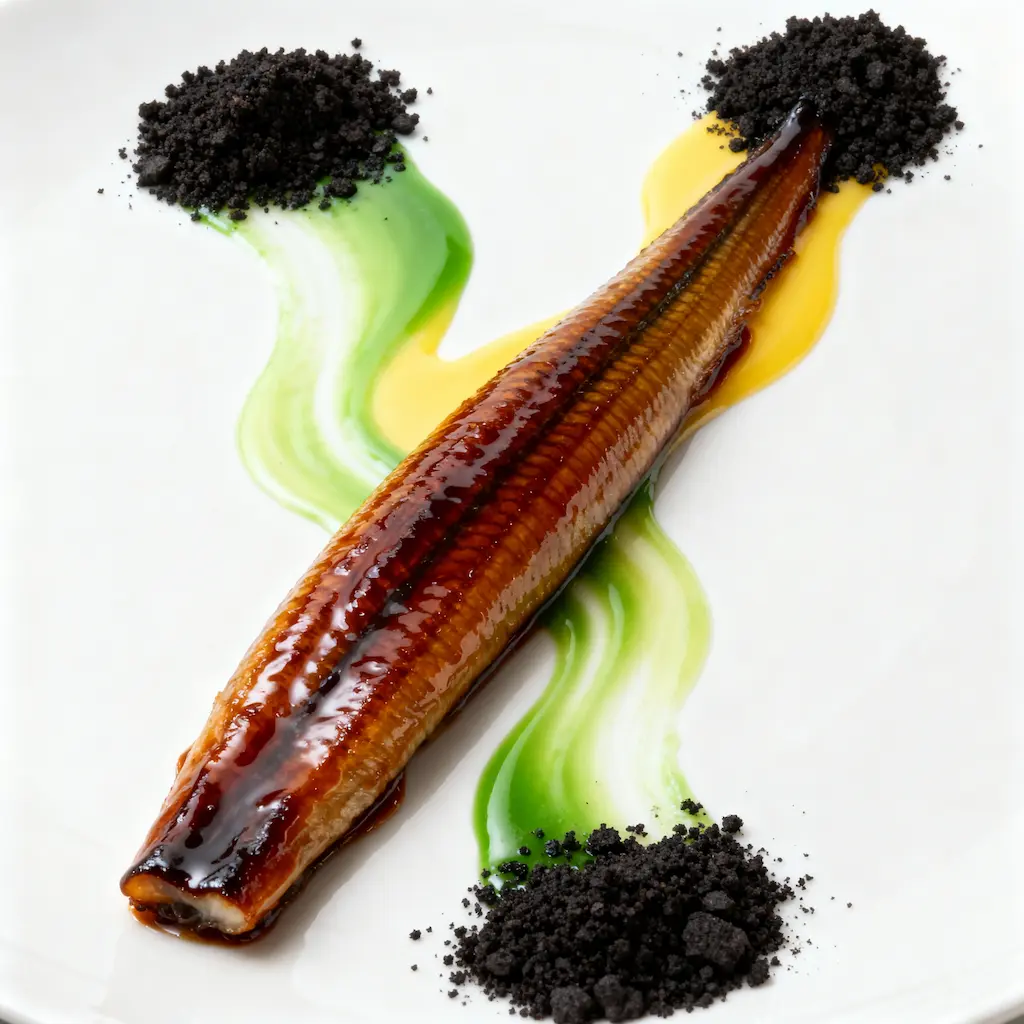
An Eel Swimming up the Po River – Reinterpreted
A contemporary reinterpretation inspired by the original dish, expressing the motion of an eel swimming upstream through color gradients and textured elements.
This image presents a reimagined interpretation of Massimo Bottura’s signature dish, “An Eel Swimming up the Po River.” The gentle flow of green and yellow sauces suggests the river’s movement, while the dark crumbs on each side evoke the riverbanks. It keeps the spirit of the original narrative while transforming it into a cleaner, more graphic composition.
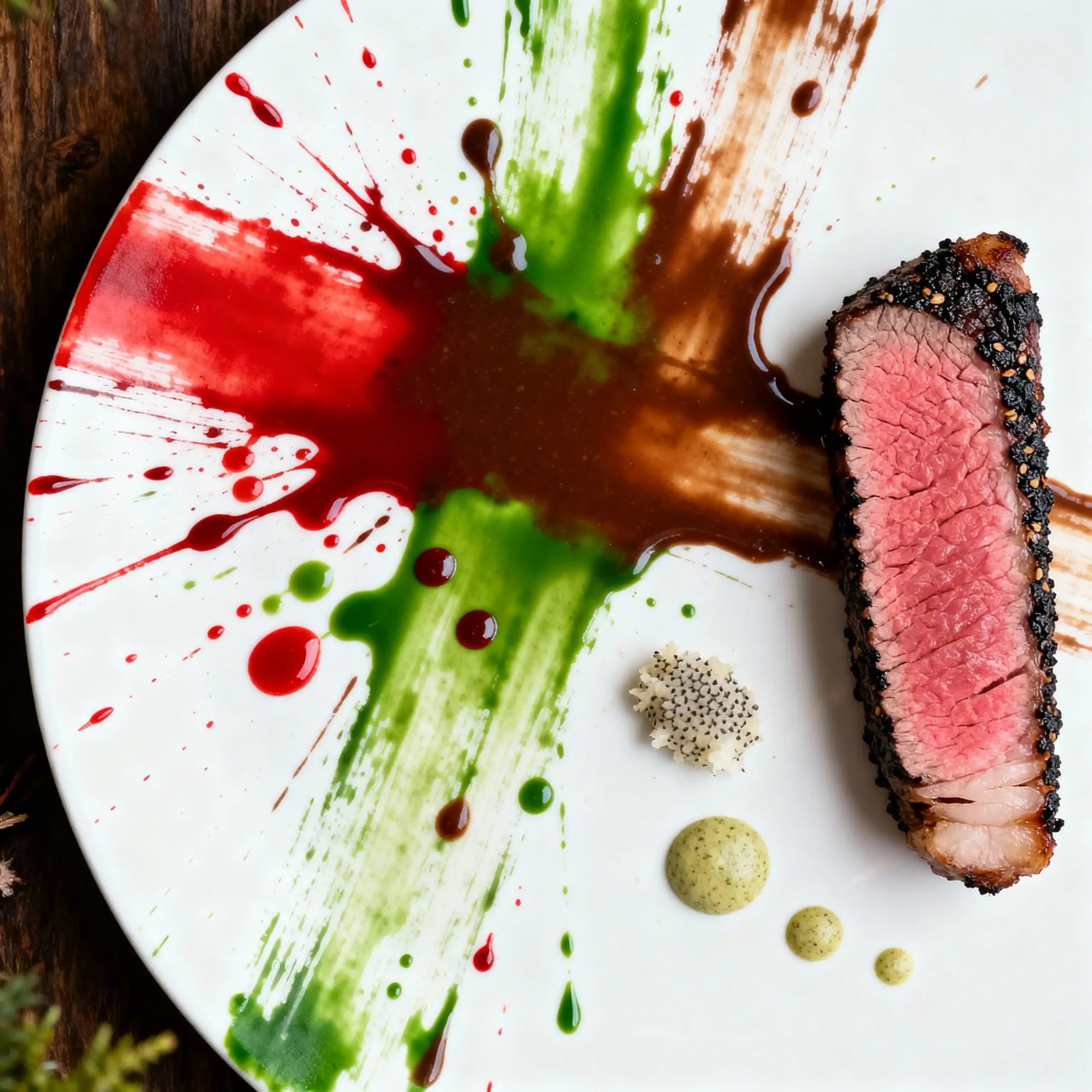
Oh Deer! – A Modern Reinterpretation
A reinterpretation inspired by the playful spirit of the original “Oh Deer!”, translating flavor contrasts into bold strokes and color splashes.
This reinterpretation of “Oh Deer!” treats the plate as a canvas, using color, movement, and contrast to express the tension and harmony of flavors. The textures of the meat and the fluid motion of the sauces evoke a moment where gastronomy merges seamlessly with visual art.
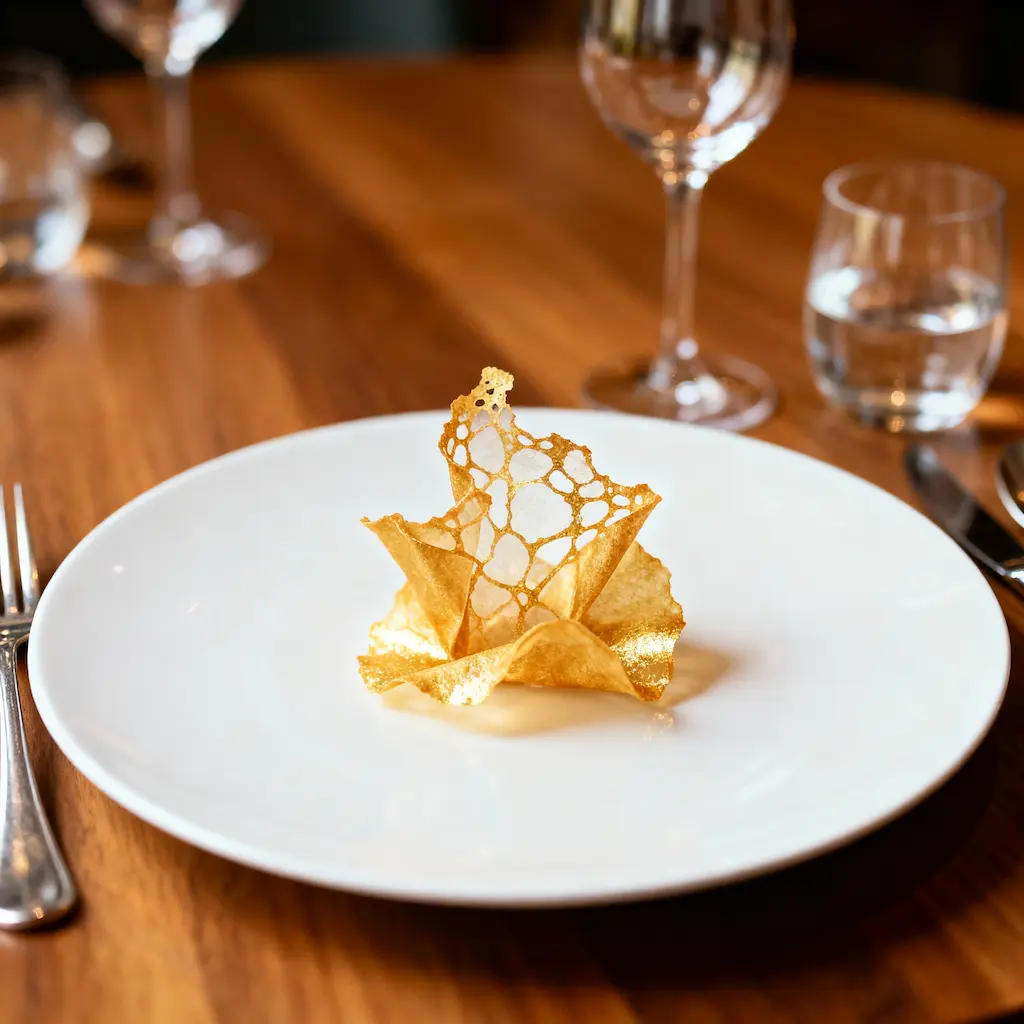
Bread is Gold – Reimagined Golden Tuile Art
A poetic reinterpretation of “Bread is Gold,” turning everyday bread into a golden, sculptural moment.
This image offers a modern reinterpretation of “Bread is Gold,” illustrating how an everyday ingredient like bread can transform into a sculptural expression. The delicate golden tuile catches the light, capturing the moment when a simple ingredient gains new meaning and value.
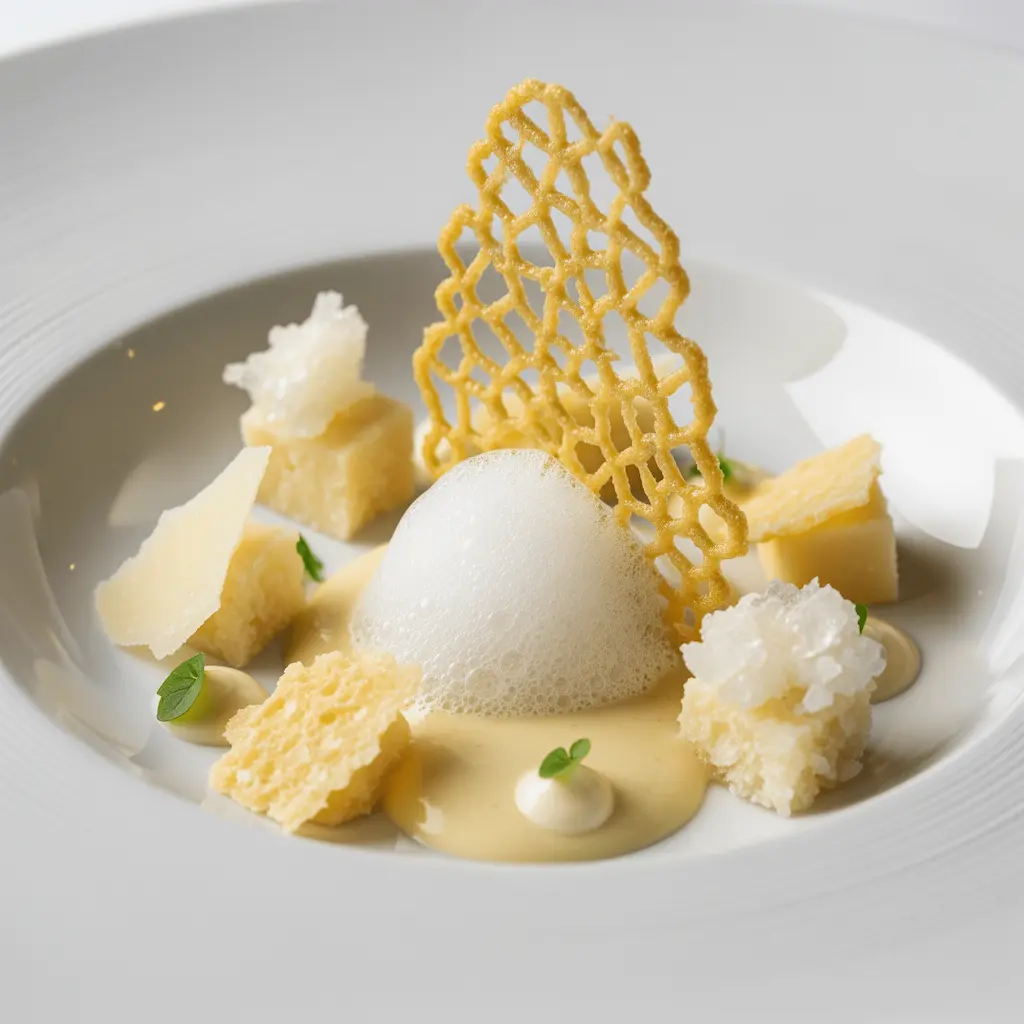
Reimagining Five Ages of Parmigiano Reggiano
A modern reinterpretation inspired by Five Ages of Parmigiano Reggiano
This image is a contemporary reinterpretation inspired by Bottura’s iconic Five Ages of Parmigiano Reggiano. It translates the cheese’s textures and aging profiles into a modern visual composition, blending foam, crumble, and lace-like crisps to express the idea of “time within a single cheese.” Rather than replicating the original dish, it embraces the experimental spirit and reshapes it into a new visual form.
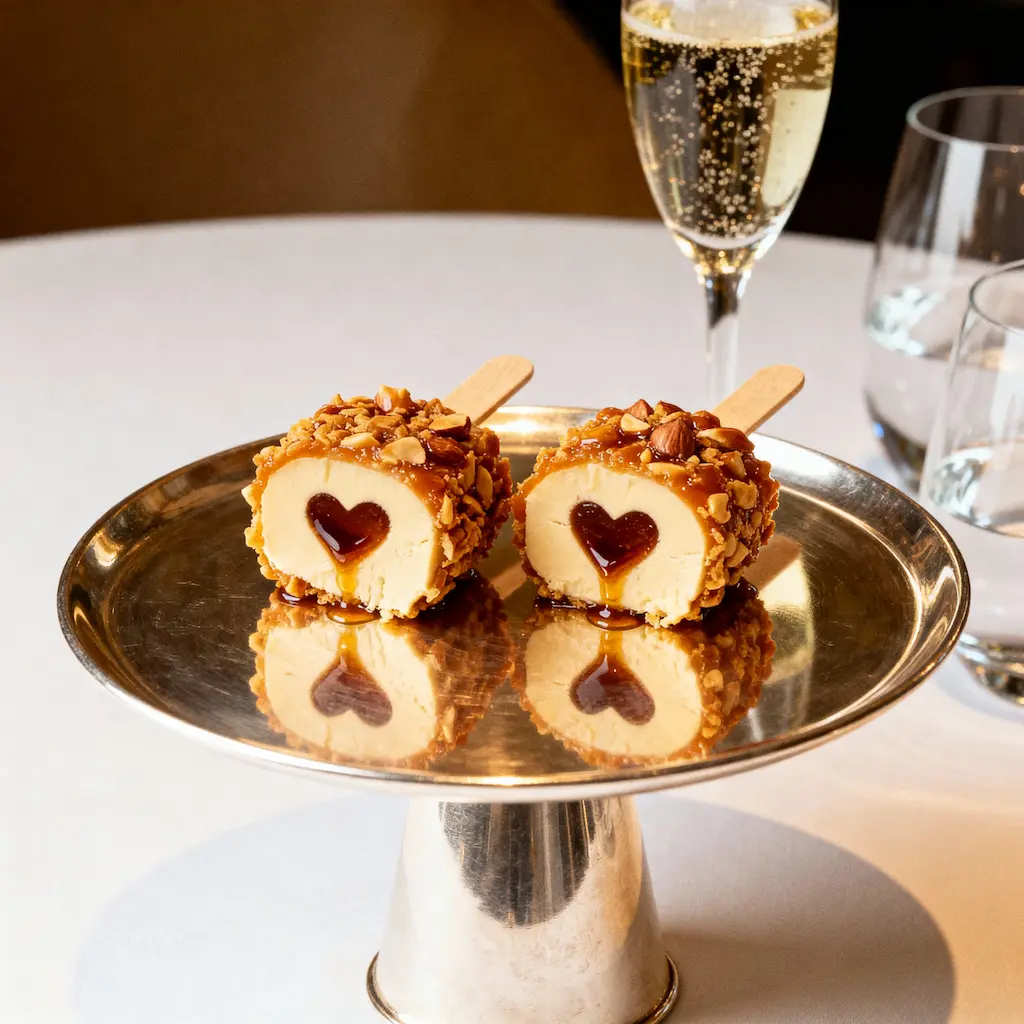
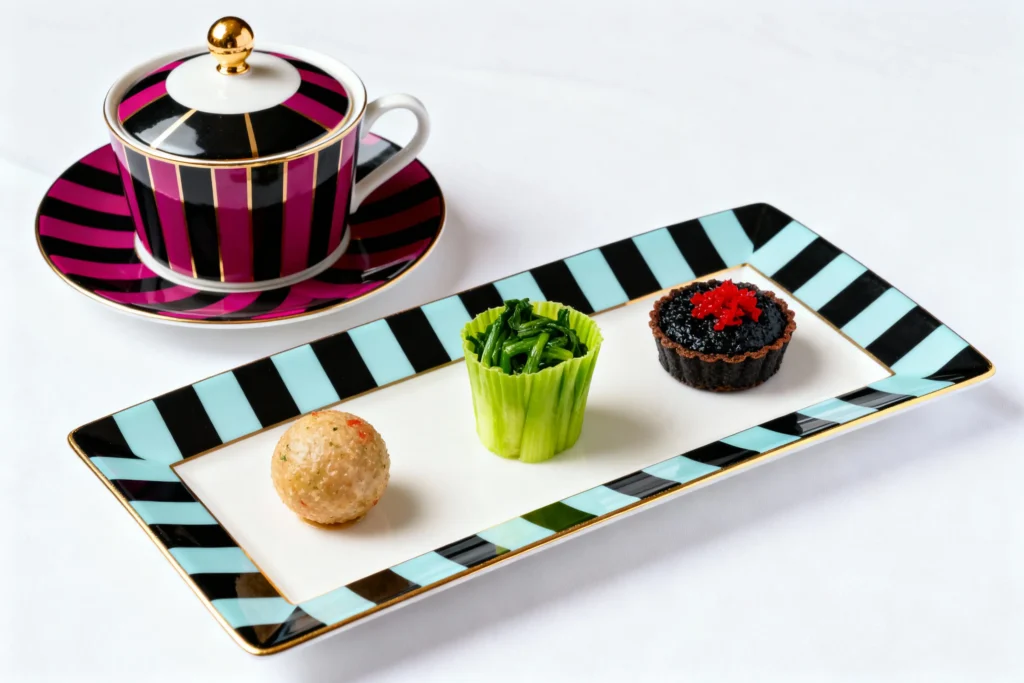
Croccantino of Foie Gras with Aged Balsamic Vinegar Heart
A modern dessert-style reinterpretation of foie gras and aged balsamic.
Inspired by the original “Croccantino of Foie Gras with Aged Balsamic Vinegar Heart,” this reinterpretation transforms the rich foie gras and bright acidity of aged balsamic into a dessert-like ice-cream bar. A crisp nut coating surrounds a smooth foie gras mousse, while a heart-shaped balsamic gel at the center adds a playful yet refined contrast.
In 2016, Bottura and Lara Gilmore founded the nonprofit Food for Soul, dedicated to transforming food waste into nourishment, hope, and dignity.
- Mission: Reduce food waste and support vulnerable communities using surplus ingredients.
- Beginning: The project began at Refettorio Ambrosiano during Expo 2015 in Milan, turning 15 tons of excess food into meals for those in need.
- Refettorio: A global network of spaces combining food, art, and social inclusion—providing hospitality, dignity, and community for the socially marginalized.
Through this project, Bottura redefined the role of cuisine as a driver of cultural and social responsibility.
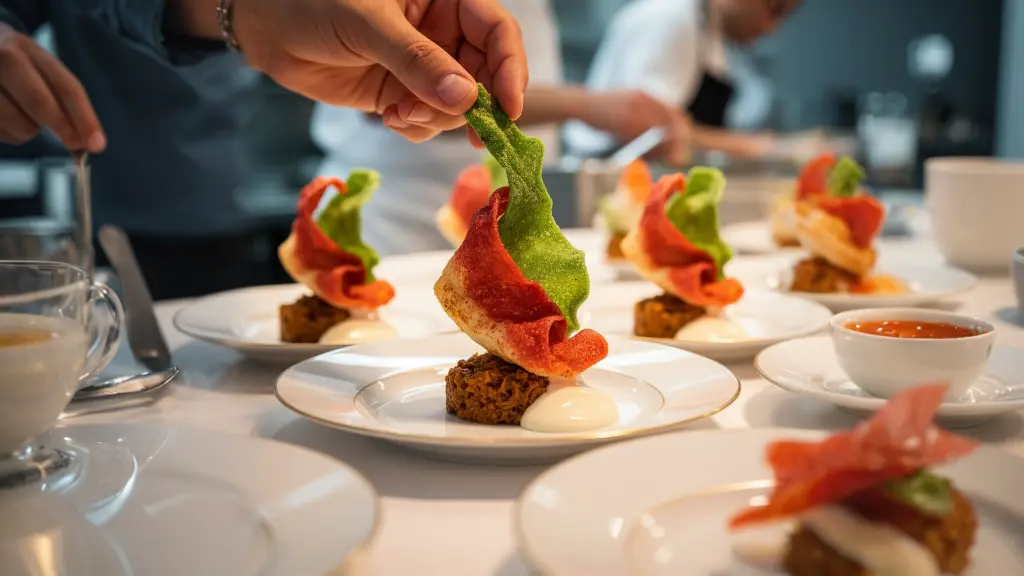
The word Osteria derives from ospitare—“to host, to offer hospitality.” Traditionally, it signifies a casual, simple local eatery.
For the world’s most celebrated restaurant to adopt the humblest of names is intensely symbolic.