Edit Lab, Taste

Massimo Bottura — A Culinary Journey at Osteria Francescana

Intro
In my earlier post, A Taste We Couldn’t Share, I mentioned chef Massimo Bottura. Today, I return to his world—centered around Osteria Francescana, the legendary three-Michelin-star restaurant in Modena, Italy. Here, I explore its culinary philosophy, essential background, and the artistic dishes that define its identity. This is not merely about dining—it is about awakening one’s senses to a deeper, almost spiritual, form of taste.
December 5, 2025

All images used in this post were generated with AI image creation tools to avoid copyright issues. These are original virtual images, not reproductions or edits of real photographs or others’ copyrighted material. No commercial exploitation or unauthorized use is intended.

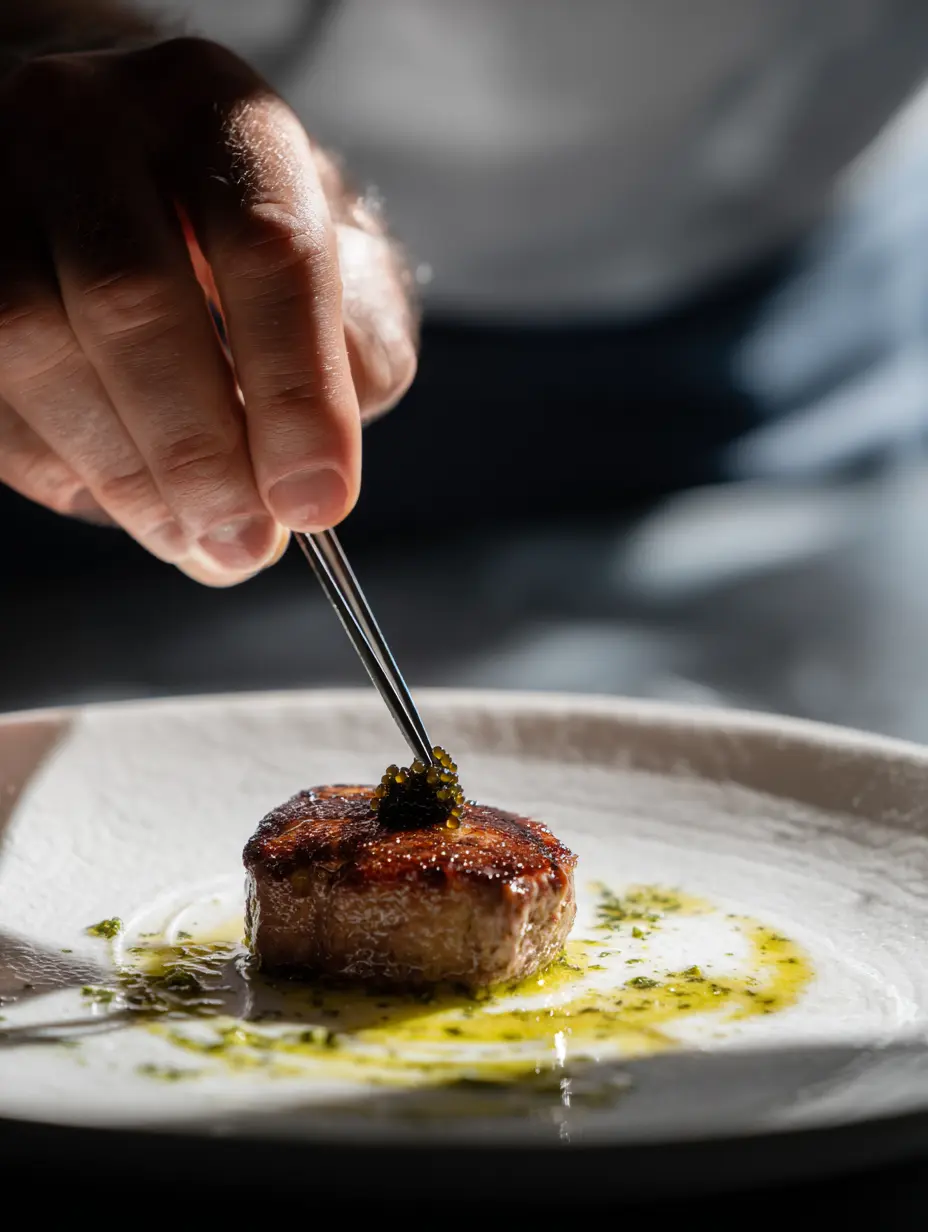
Close-up of a chef’s hand delicately placing caviar on a seared dish with tweezers, showcasing fine-dining craftsmanship and Michelin-level culinary precision.

A Surprise Encounter, More Than 20 Years Ago

My first encounter with Massimo Bottura happened unexpectedly. Many years ago, when a Korean partner company visited our Italian office, we decided to take them to Osteria Francescana for lunch. At that time, it wasn’t unusual to walk into the restaurant without a reservation—almost like choosing a familiar neighborhood spot. Hard to imagine now.

Right in front of the restaurant, at a small trattoria, we saw Massimo Bottura dining alone.

“Ciao Massimo! stai mangiando qui?”

He smiled and replied, “Oggi è chiuso!” (We’re closed today!)

He looked like an ordinary local man, almost unrecognizable as the chef who would soon become one of the greatest culinary innovators of our time. It was November 2001, just before he emerged from the most difficult period of his early career. Looking back, meeting him before the world celebrated him remains a singular memory—quiet, unadorned, and unexpectedly human.

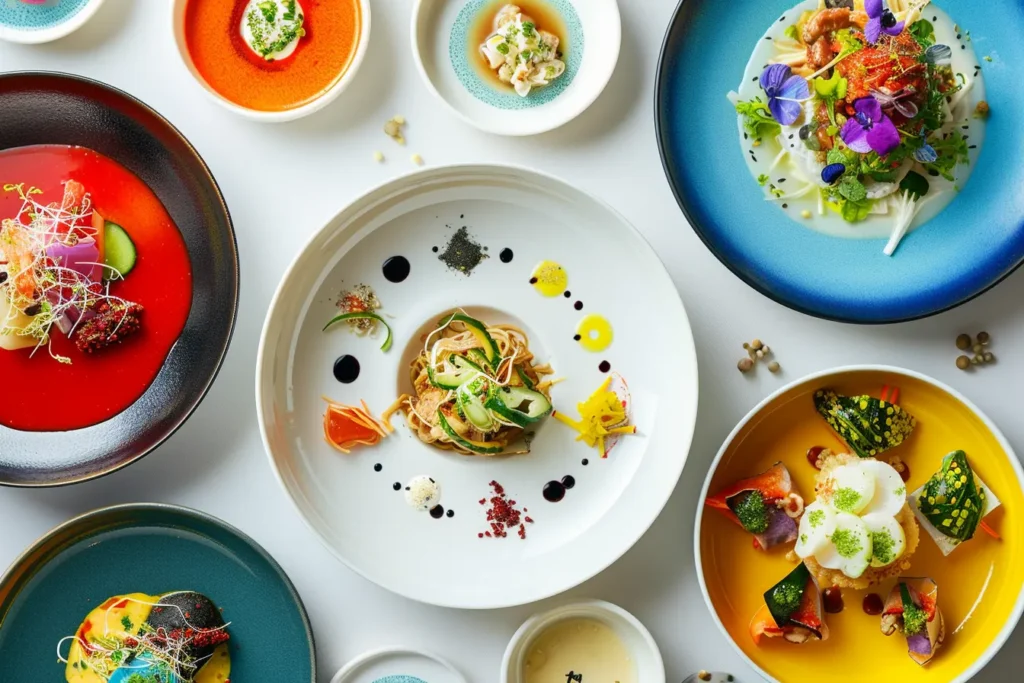
An arrangement of colorful fine-dining dishes displayed like artwork, representing a Michelin 3-star tasting menu
Michelin 3-Star Tasting Menu – Art Plate
“A vibrant, artfully plated tasting menu showcasing the essence of Michelin 3-star cuisine”

This image represents the tasting menu of a Michelin 3-star restaurant, where each dish is crafted with painterly colors and textures to express a visual form of gastronomy. The central plate surrounded by multiple small courses highlights precision, balance, and the philosophy that great cuisine is a form of art.

“Tradition in Evolution”: A Lonely Battle Toward Innovation

   Balsamic vinegar is my blood, Parmigiano Reggiano is my muscle.

Although Massimo Bottura opened Osteria Francescana in 1995, his core philosophy—Tradition in Evolution—was initially met with fierce resistance from his hometown of Modena. Rather than carrying tradition forward unchanged, he wanted to look critically at the past and bring the best of it into the future.

This perspective was shaped profoundly by contemporary art, discovered through his wife, Lara Gilmore—especially the works of Italian artist Maurizio Cattelan.
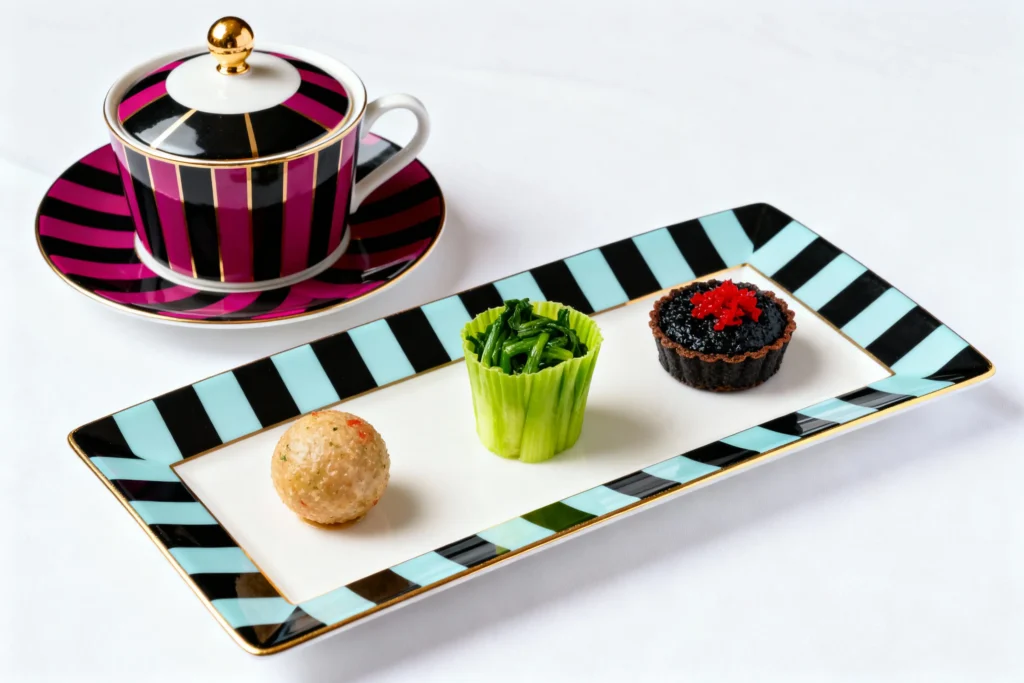
Three artfully plated tasting bites on patterned tableware representing refined course presentation.
Michelin 3 Star – Tasting Course Aesthetic
“The artistic precision of Michelin 3-Star’s tasting course.”

A symbolic representation of Michelin 3Star’s plating philosophy, featuring three meticulously crafted bites paired with bold, artistic tableware. This image reflects Michelin star restaurant’s refined aesthetics, creative tasting progression, and Luxury modern culinary voice.

Art as Catalyst for Culinary Reinvention

After seeing Cattelan’s installation works, Bottura realized: To see the past differently, one must climb higher—up to the rafters—into a new vantage point.

From that moment, he began asking fundamental questions about the culinary rules everyone took for granted.

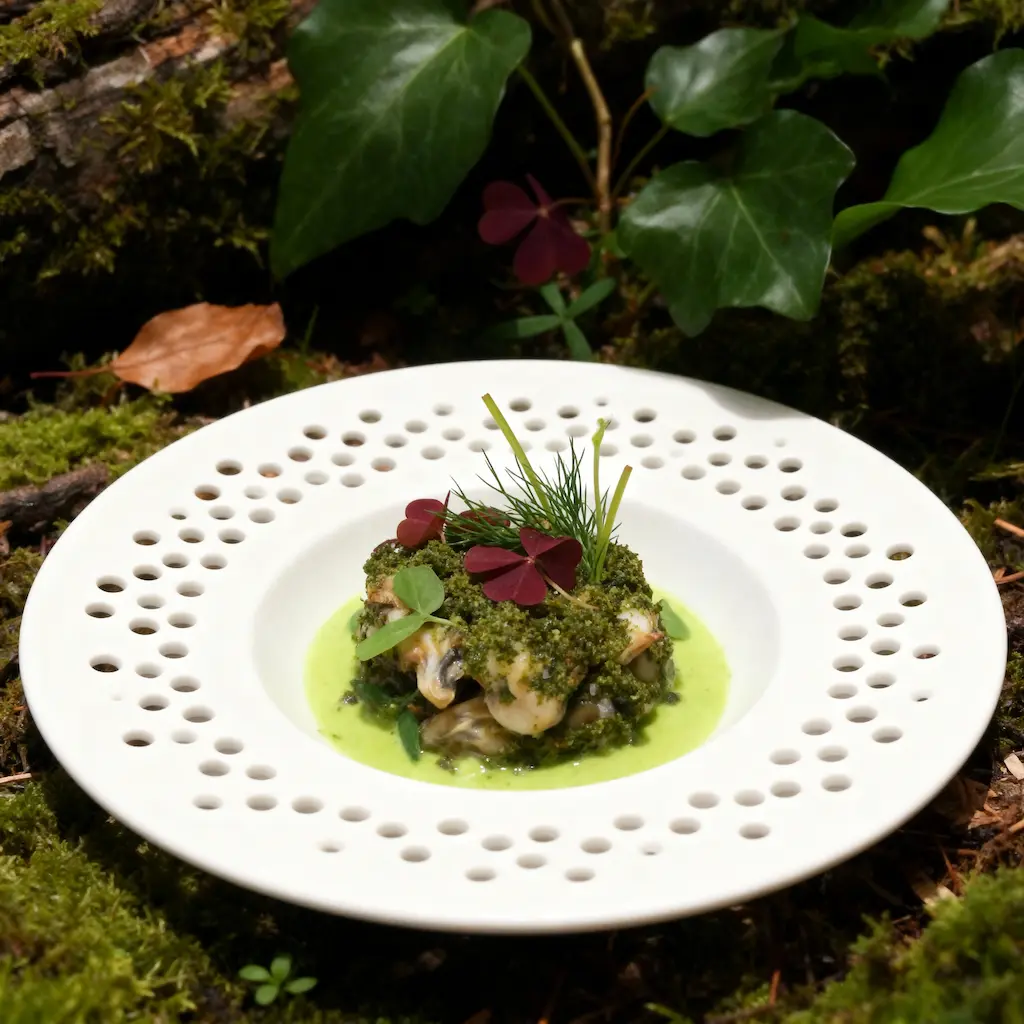
A reimagined oyster dish plated on forest moss, topped with green herb crumble in a woodland-inspired setting
Oysters in the Woods – Reimagined

A modern reinterpretation of ‘Oysters in the Woods,’ capturing the textures and tones of the forest.

This image offers a contemporary reinterpretation of Massimo Bottura’s “Oysters in the Woods.” Set against a forest-like bed of moss and leaves, the dish combines oysters with green herb crumble to evoke the aroma and texture of the woods. Rather than imitating the original, it explores the natural elements—textures, colors, and atmosphere—in a fresh visual direction.
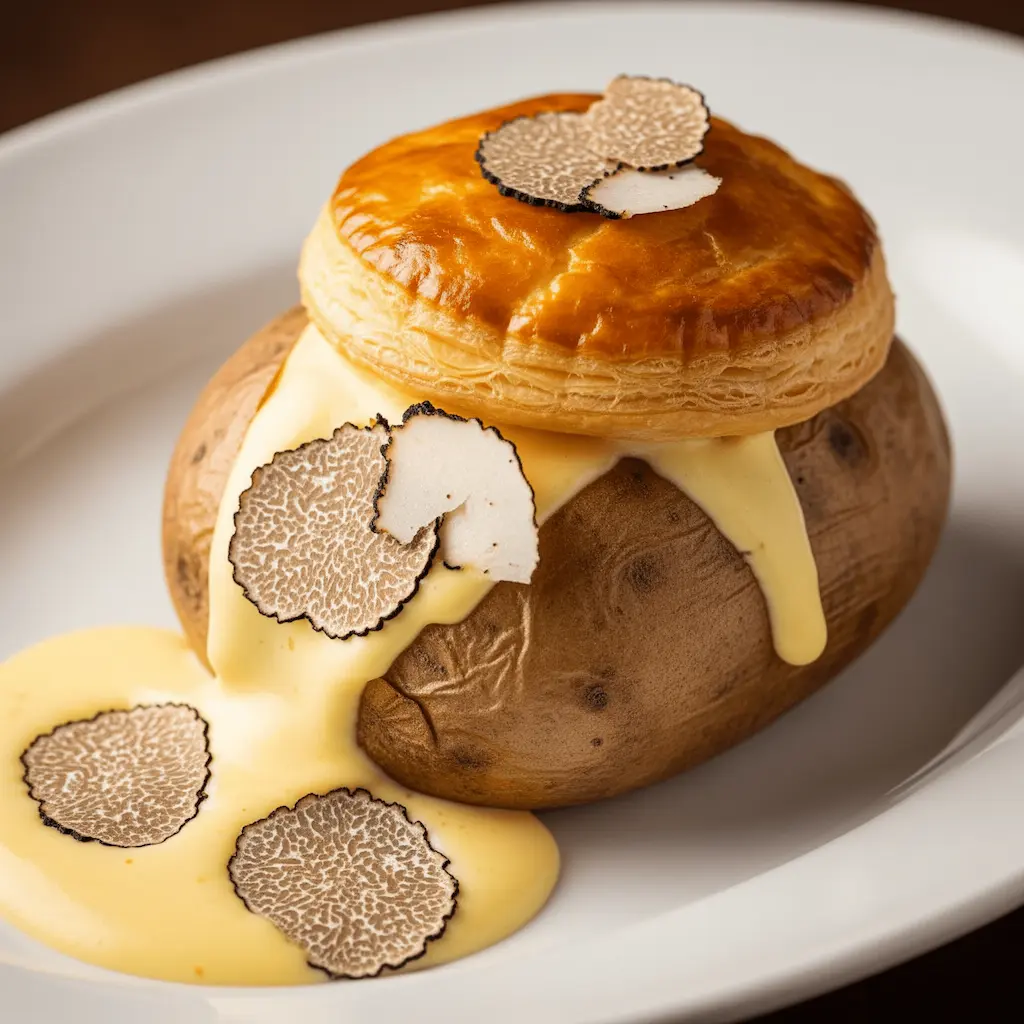
Reinterpreted baked potato dish topped with truffle slices and creamy sauce
A Potato Waiting to Become a Truffle – Reimagined

“A modern reinterpretation inspired by the original dish, highlighting the flavors of potato and truffle.”

Inspired by the original ‘A Potato Waiting to Become a Truffle,’ this reimagined version pairs a warm potato base with creamy sauce, crisp pastry, and delicate truffle slices. It respects the culinary imagination of Modena while transforming the composition into something more approachable, expressive, and rich in texture.
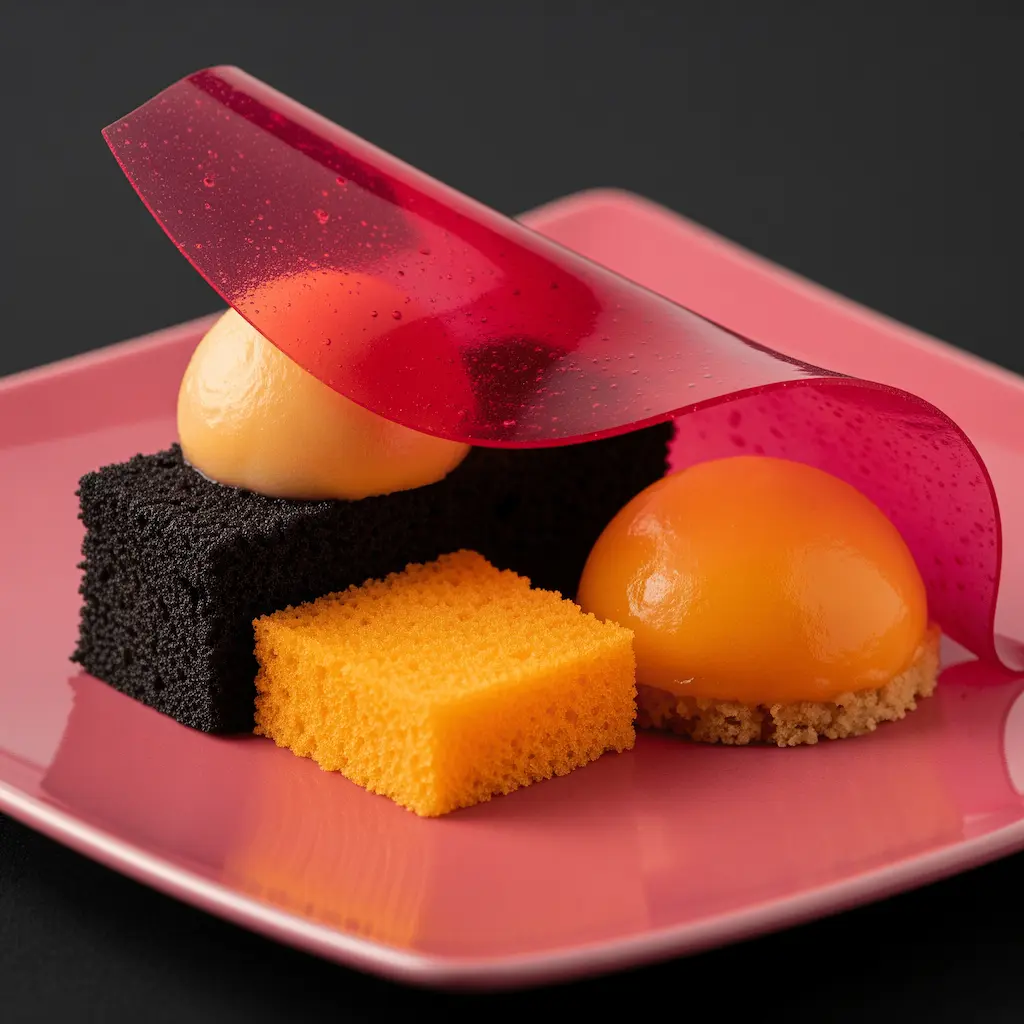
A modern dessert composition featuring a red gel sheet draped over black and yellow sponge cake with smooth cream domes—an artistic reinterpretation inspired by “Zuppa Inglese, Hot & Cold.”
Zuppa Inglese Reimagined — Dessert Interpretation

A modern reinterpretation inspired by “Zuppa Inglese, Hot & Cold,” highlighting contrasts in color, texture, and form.

This image does not replicate Massimo Bottura’s original “Zuppa Inglese, Hot & Cold.” Instead, it reimagines its spirit through a new visual language—contrasting black and yellow sponge textures, smooth cream domes, and a sweeping red gel sheet. It captures the idea of structural and sensory contrast, offering a contemporary reinterpretation of the classic dessert’s conceptual essence.
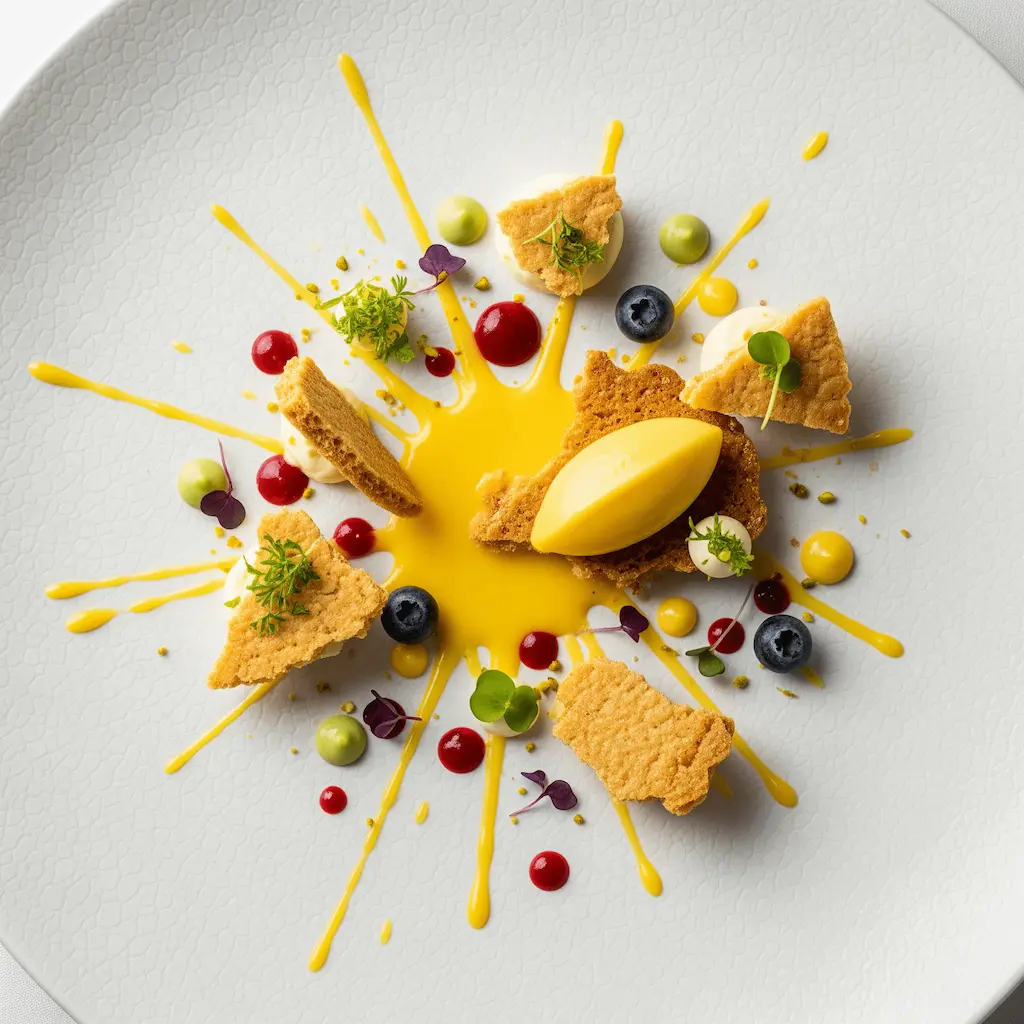
Lemon cream splashes with broken cookie pieces, berries, and herbs arranged as a modern plating art
Oops! I Dropped the Lemon Tart – Reimagined

A reinterpretation of the dessert’s “accidental moment,” rebuilt with modern colors and textures.

This image reimagines Massimo Bottura’s “Oops! I Dropped the Lemon Tart,” adding new textures and structure to the intentionally accidental look. The splattered lemon cream, broken cookie fragments, and vibrant color dots create a playful composition that expands the original dessert’s sense of spontaneity and artistry.
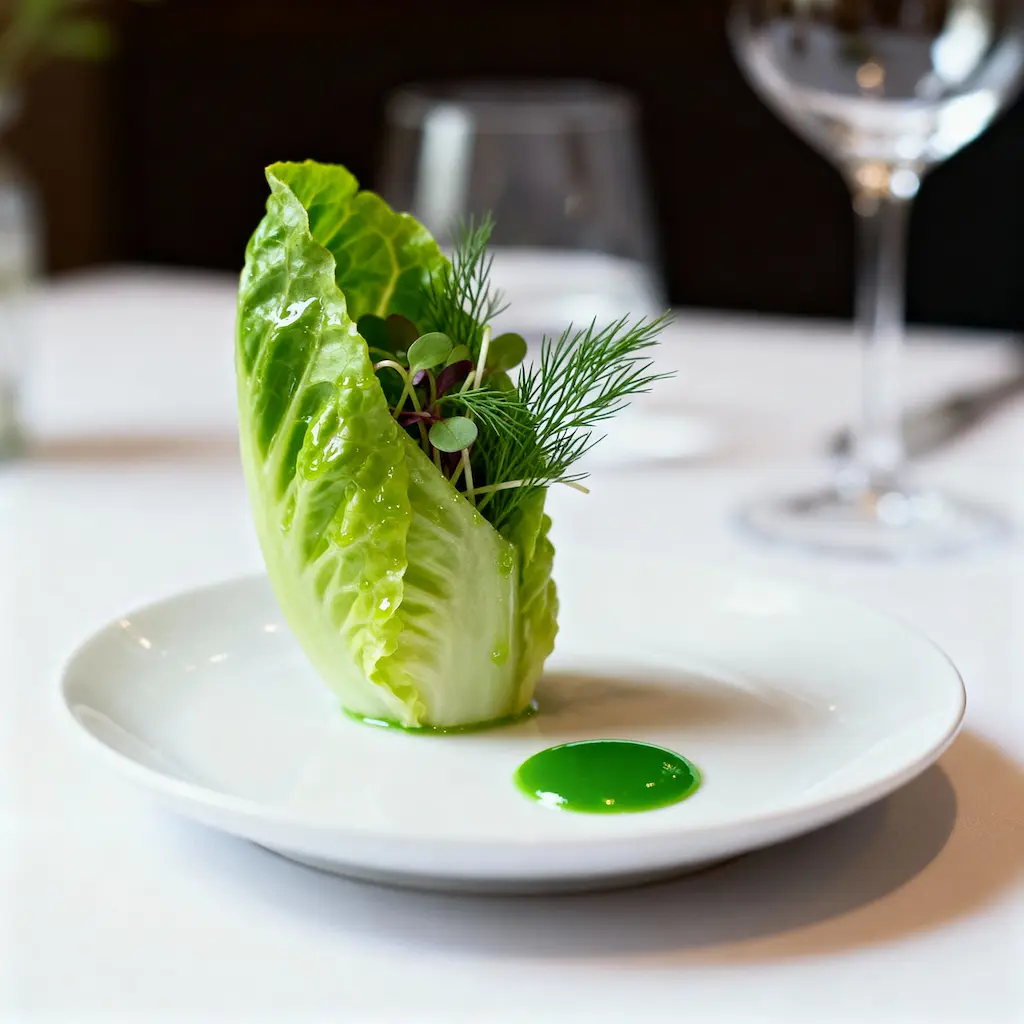
A reinterpretation of “Caesar Salad in Emilia,” featuring a crisp romaine leaf filled with herbs and microgreens, paired with a vibrant green sauce
Caesar Salad in Emilia – Reimagined

A creative reimagining of the classic Caesar salad, inspired by Emilia. Fresh herbs and microgreens tucked inside a crisp romaine leaf evoke a pure, garden-like freshness.

This dish offers a modern take on “Caesar Salad in Emilia,” using a crisp romaine leaf filled with herbs and microgreens to amplify freshness. A touch of vibrant green sauce adds an Emilia-inspired note, transforming a simple salad into an elegant, minimalist culinary moment.
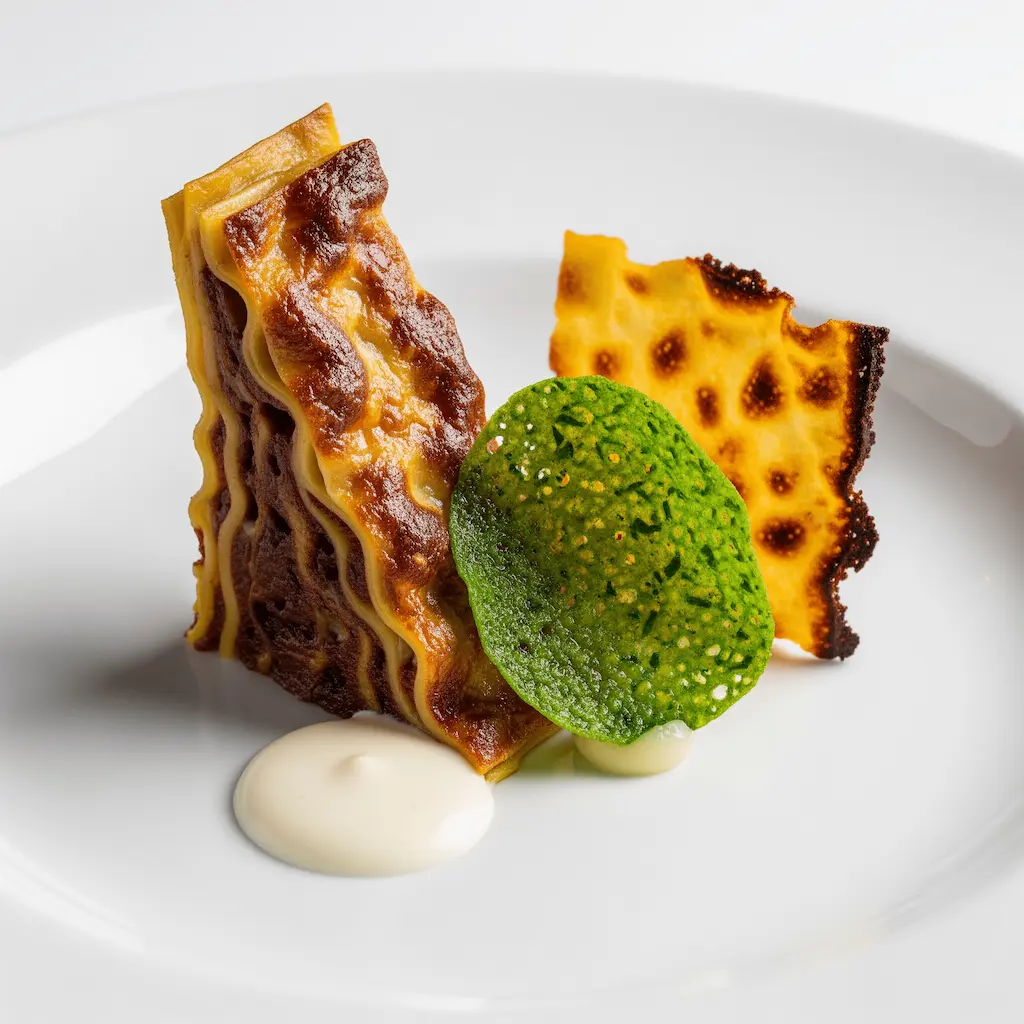
A modern reinterpretation of “The Crunchy Part of the Lasagna” featuring layered lasagna crisps, a green chip, and a minimalist cream sauce plating
The Crunchy Part of the Lasagna – Reimagined

Inspired by the iconic “crunchy moment” of classic lasagna, rebuilt into a structural, minimalist presentation.

This image does not replicate the original dish but reimagines its textures, structure, and playful rhythm. The beloved crispy layers of lasagna are presented as sculptural elements, paired with a green chip and a minimalist cream sauce. It maintains the spirit of the original while expressing a more contemporary, experimental direction.
The Controversial Icon: Six Tortellini Walking to the Broth

In Emilia-Romagna, Tortellini is not just pasta—it symbolises abundance, family, and the grandmother’s touch. Traditionally, it is served generously in a deep bowl of meat broth (brodo), eaten by the spoonful.

But Bottura reduced it to exactly six tortellini, arranged on a plate as if they were strolling toward a thin stream of broth. A radical deconstruction of the region’s most sacred comfort food.

Local Modenese residents were outraged: “He is insulting sacred cuisine.” “He is destroying our grandmothers’ tradition.”

His avant-garde ideas sparked relentless backlash and created one of the most challenging chapters of his career.

Recognition After the Storm

Despite these difficulties, everything changed in 2001 when Espresso magazine published a glowing review. Critics and food writers began visiting.

The day I saw him having lunch across the street—November 2001—was precisely when he was emerging from those dark years. The memory feels like witnessing a quiet turning point in culinary history.

  • 2002 – Awarded 1st Michelin star
  • 2006 – Awarded 2nd Michelin star
  • 2012 – Earned 3rd Michelin star (global recognition secured)
  • 2015 – Featured in the first episode of Netflix’s Chef’s Table, elevating worldwide fame

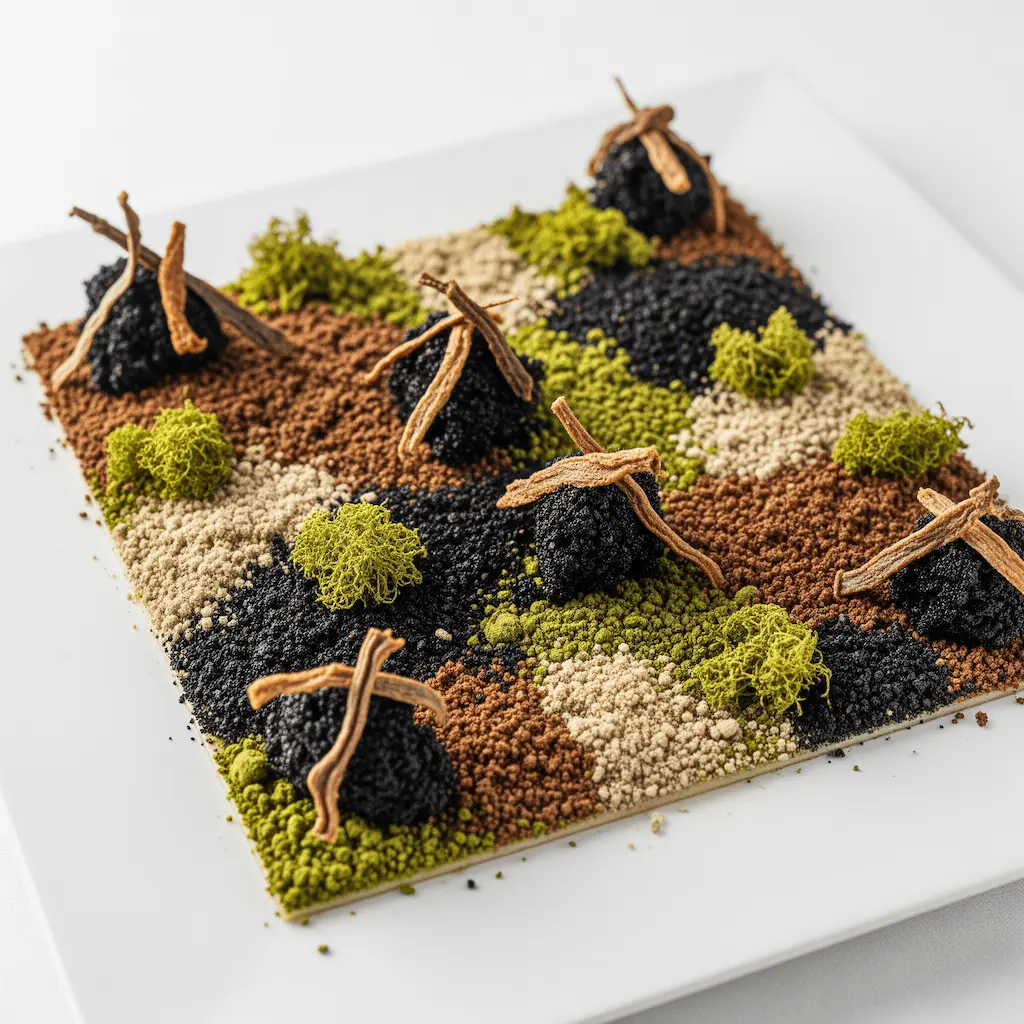
A reinterpretation of “Camouflage: A Hare in the Woods,” featuring a grid of green, brown, and black textures arranged like forest camouflage with small elements symbolizing woodland life.
A Dish Inspired by Forest Camouflage – Reimagined Camouflage Concept

A reinterpretation that draws from the original dish’s camouflage concept, reimagining forest colors and textures in a minimal, graphic composition.

This image is a reimagined interpretation inspired by Camouflage: A Hare in the Woods, not a reproduction of the original dish. It transforms forest patterns and organic textures into a visual concept, symbolizing hidden movement and life within the woods. The contrasting colors and tactile elements create an artistic ‘map of the forest’ that draws the viewer in.
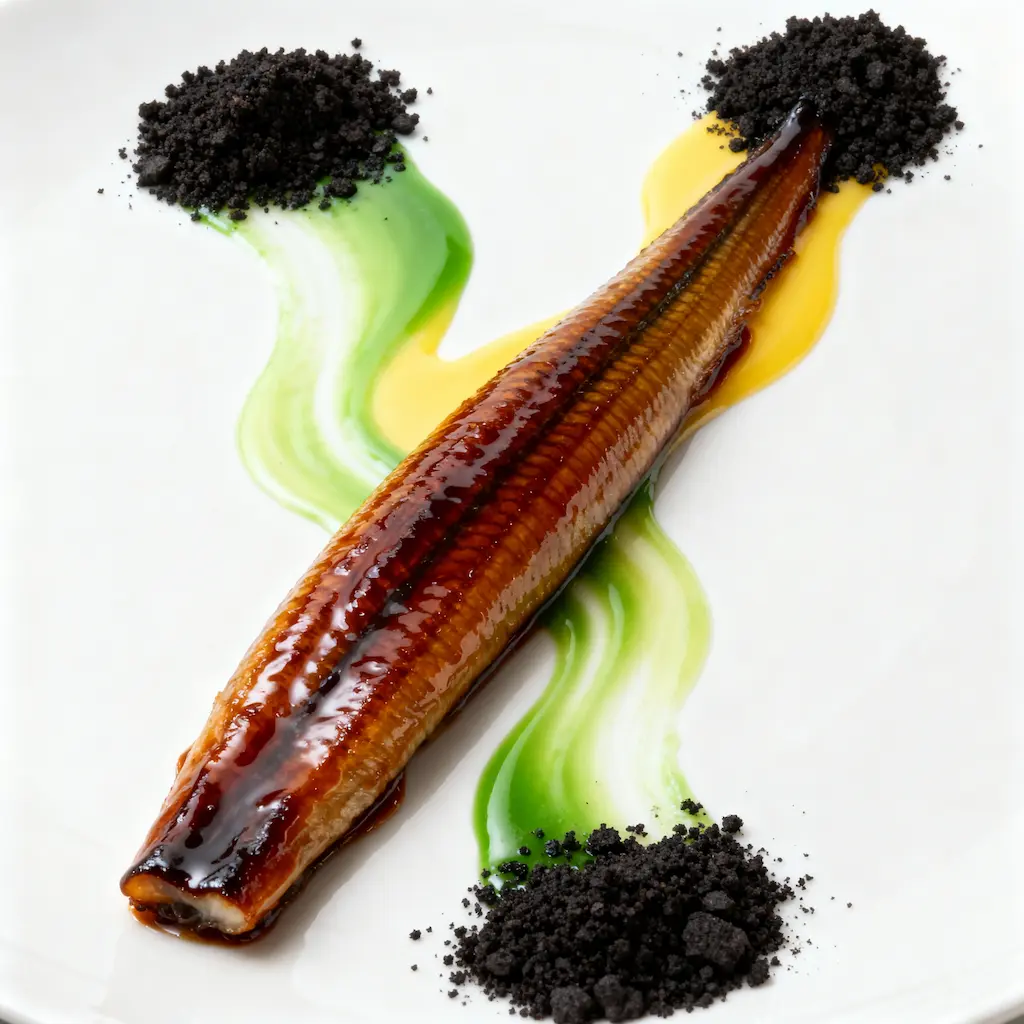
Reimagined version of “An Eel Swimming up the Po River.” A glossy eel fillet plated over green and yellow sauces with dark crumbs suggesting riverbanks.
An Eel Swimming up the Po River – Reinterpreted

A contemporary reinterpretation inspired by the original dish, expressing the motion of an eel swimming upstream through color gradients and textured elements.

This image presents a reimagined interpretation of Massimo Bottura’s signature dish, “An Eel Swimming up the Po River.” The gentle flow of green and yellow sauces suggests the river’s movement, while the dark crumbs on each side evoke the riverbanks. It keeps the spirit of the original narrative while transforming it into a cleaner, more graphic composition.
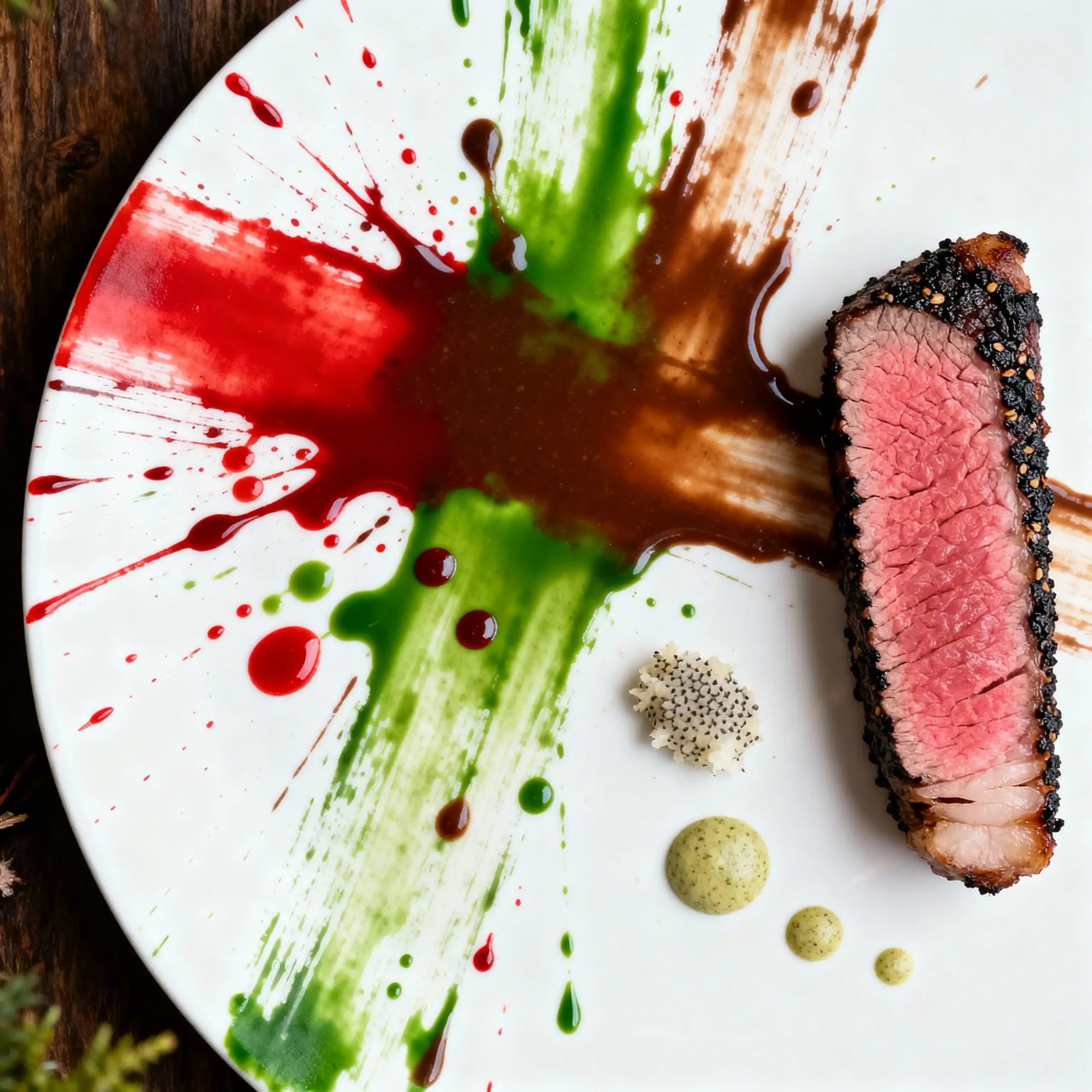
A plate styled like abstract art, with splattered colorful sauces surrounding a seared piece of meat
Oh Deer! – A Modern Reinterpretation

A reinterpretation inspired by the playful spirit of the original “Oh Deer!”, translating flavor contrasts into bold strokes and color splashes.

This reinterpretation of “Oh Deer!” treats the plate as a canvas, using color, movement, and contrast to express the tension and harmony of flavors. The textures of the meat and the fluid motion of the sauces evoke a moment where gastronomy merges seamlessly with visual art.
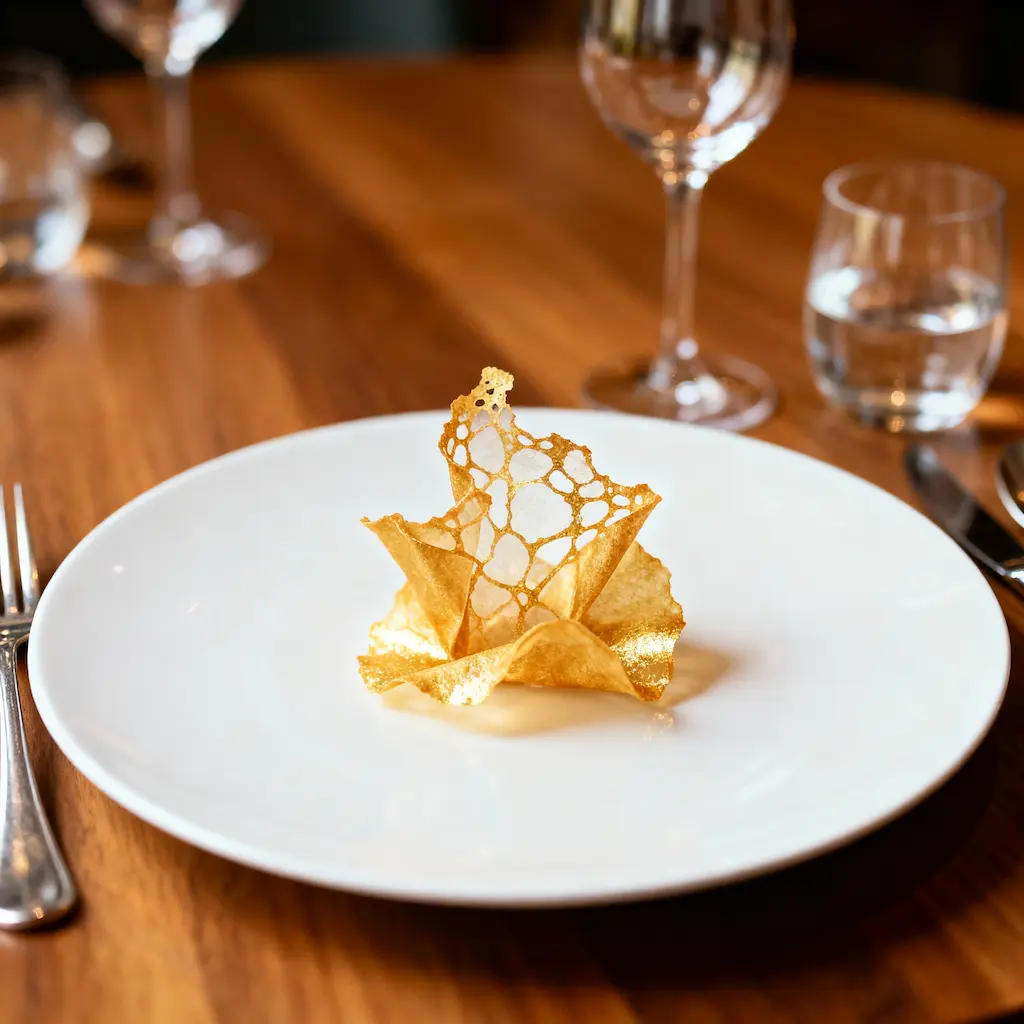
A sculpted golden crisp tuile standing like an art piece on a white plate atop a wooden table. A reinterpretation inspired by the original “Bread is Gold.”
Bread is Gold – Reimagined Golden Tuile Art

A poetic reinterpretation of “Bread is Gold,” turning everyday bread into a golden, sculptural moment.

This image offers a modern reinterpretation of “Bread is Gold,” illustrating how an everyday ingredient like bread can transform into a sculptural expression. The delicate golden tuile catches the light, capturing the moment when a simple ingredient gains new meaning and value.
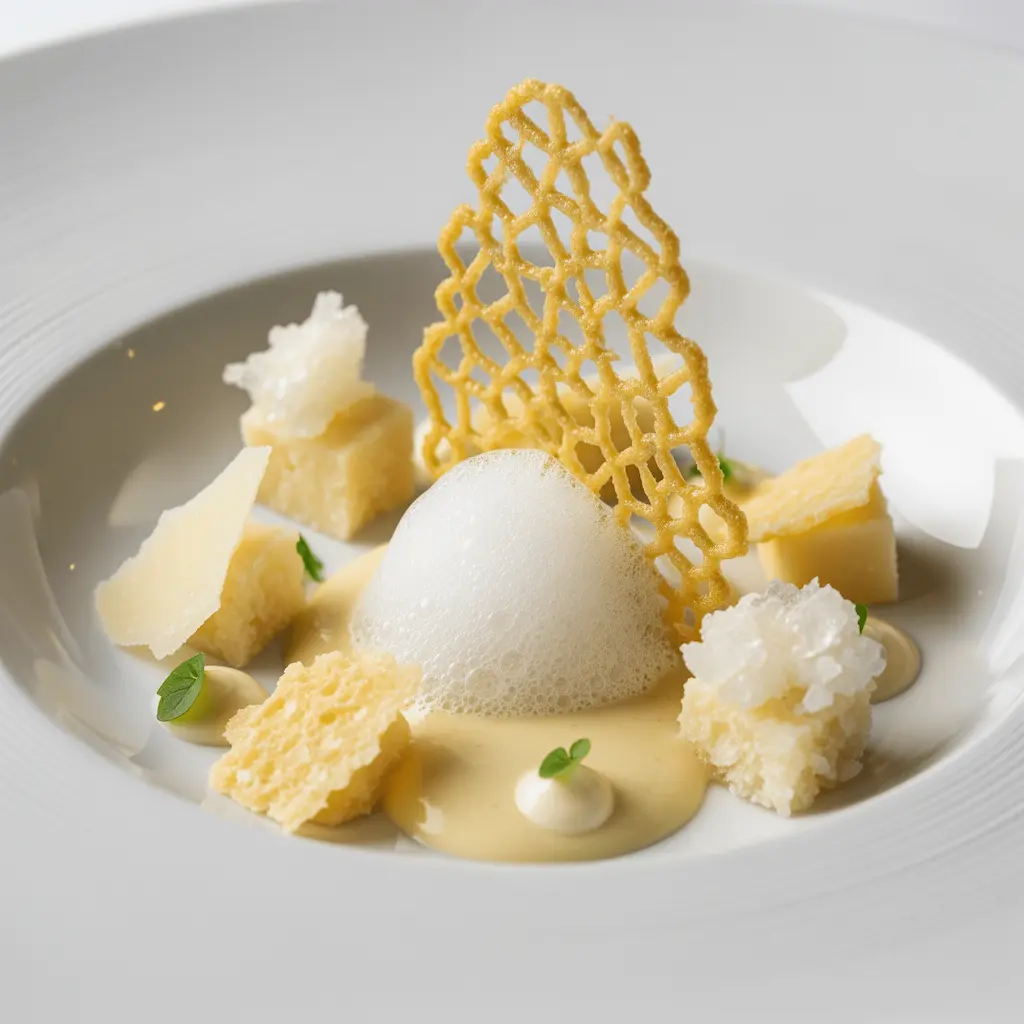
A contemporary plating inspired by the textures and aging stages of Parmigiano Reggiano
Reimagining Five Ages of Parmigiano Reggiano

A modern reinterpretation inspired by Five Ages of Parmigiano Reggiano

This image is a contemporary reinterpretation inspired by Bottura’s iconic Five Ages of Parmigiano Reggiano. It translates the cheese’s textures and aging profiles into a modern visual composition, blending foam, crumble, and lace-like crisps to express the idea of “time within a single cheese.” Rather than replicating the original dish, it embraces the experimental spirit and reshapes it into a new visual form.
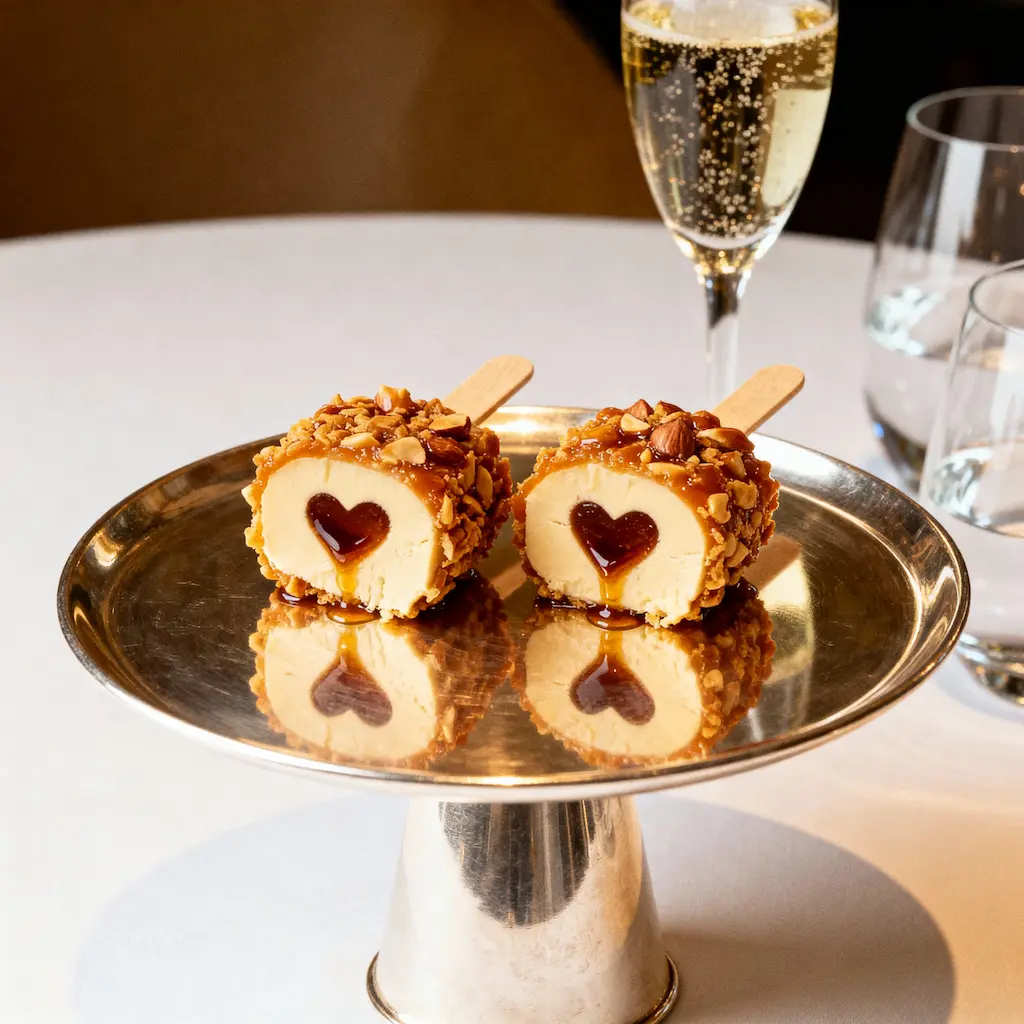
Reimagined foie gras ice-cream bar with a heart-shaped aged balsamic center, plated elegantly
Croccantino of Foie Gras with Aged Balsamic Vinegar Heart

A modern dessert-style reinterpretation of foie gras and aged balsamic.

Inspired by the original “Croccantino of Foie Gras with Aged Balsamic Vinegar Heart,” this reinterpretation transforms the rich foie gras and bright acidity of aged balsamic into a dessert-like ice-cream bar. A crisp nut coating surrounds a smooth foie gras mousse, while a heart-shaped balsamic gel at the center adds a playful yet refined contrast.

Beyond Gastronomy: Food for Soul

  Culture brings knowledge. Knowledge leads to consciousness. Consciousness cultivates social responsibility.

In 2016, Bottura and Lara Gilmore founded the nonprofit Food for Soul, dedicated to transforming food waste into nourishment, hope, and dignity.

  • Mission: Reduce food waste and support vulnerable communities using surplus ingredients.
  • Beginning: The project began at Refettorio Ambrosiano during Expo 2015 in Milan, turning 15 tons of excess food into meals for those in need.
  • Refettorio: A global network of spaces combining food, art, and social inclusion—providing hospitality, dignity, and community for the socially marginalized.

Through this project, Bottura redefined the role of cuisine as a driver of cultural and social responsibility.
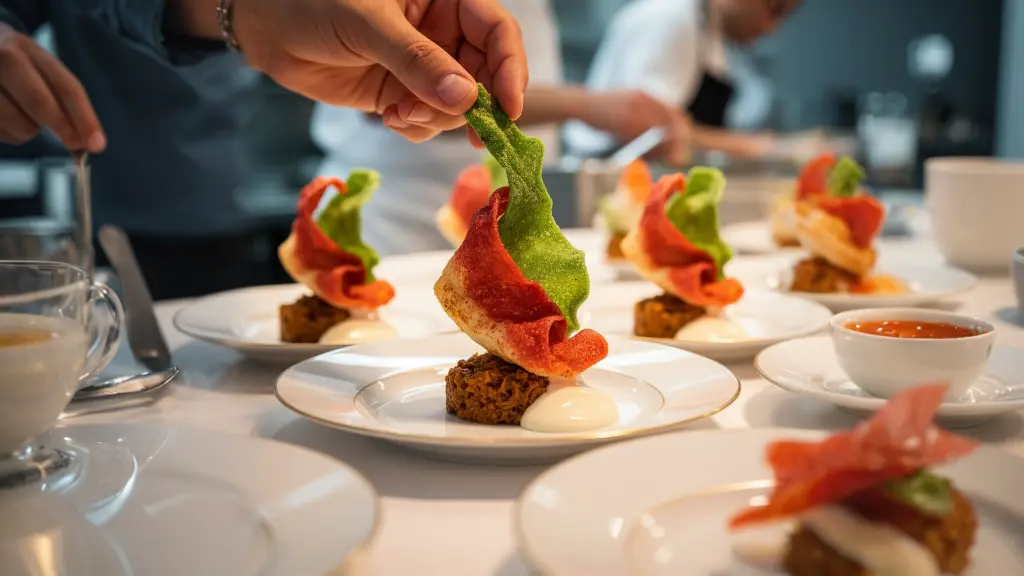
Chef placing a crispy pasta sheet while plating “The Crunchy Part of the Lasagna.”
The Crunchy Part of the Lasagna – Plating
“The moment just before Chef’s dish comes to life.”

The chef delicately places colorful pasta crisps atop the dish, highlighting the restaurant’s craftsmanship, creativity, and the precise moments leading up to a completed tasting course.

Why “Osteria”? The Philosophical Irony

The word Osteria derives from ospitare—“to host, to offer hospitality.” Traditionally, it signifies a casual, simple local eatery.

For the world’s most celebrated restaurant to adopt the humblest of names is intensely symbolic.
 With the simplest name, we will present the greatest expression of Italian cuisine.

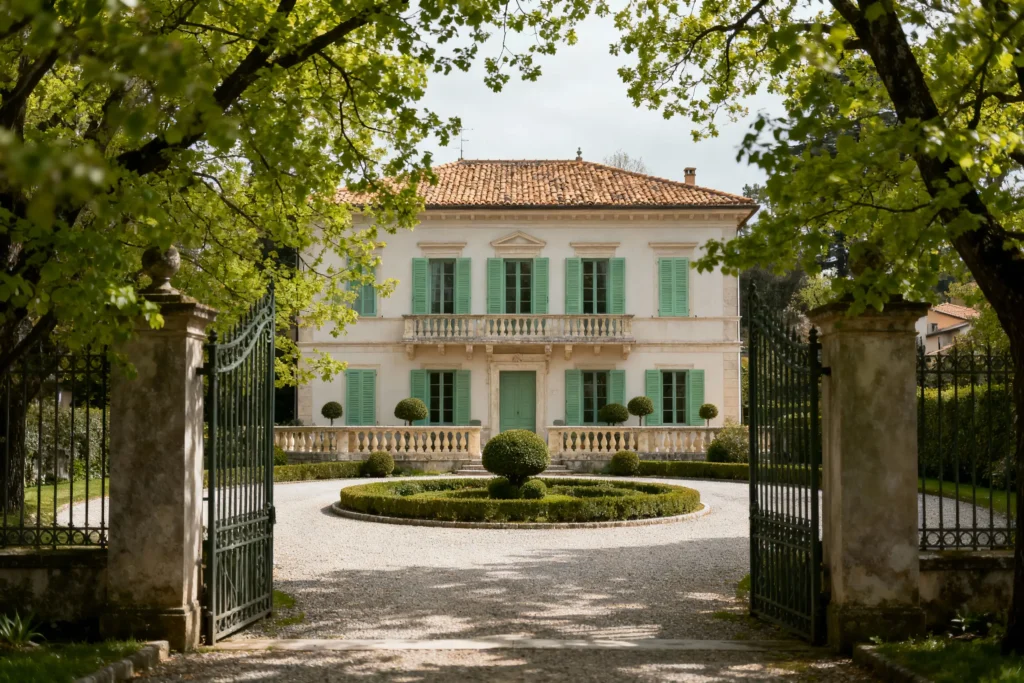
Elegant countryside villa near Modena framed by open gates and lush green garden
Elegant Villa in the Modena Countryside
“A serene villa nestled in the outskirts of Modena, where green shutters and manicured gardens capture the quiet elegance of the Italian countryside.”

This image captures a villa in the Modena countryside, framed by open gates that evoke a cinematic sense of arrival. The classic architecture, refined garden, and gentle afternoon light together create a serene beauty unique to the Italian countryside.

Bottura often describes Osteria Francescana as his “laboratory of ideas.”

That laboratory now extends into different spaces, cities, and cultural contexts.

Osteria Francescana – Modena

Flagship restaurant, holding 3 Michelin stars and a Green Star. Twice ranked No.1 in the World’s 50 Best Restaurants.

Via Stella, 22, 41121 Modena MO, Italy

Franceschetta58 – Modena

Casual bistro blending local ingredients with global influences.

Via Vignolese, 58, 41124 Modena MO, Italy

Casa Maria Luigia – Modena Countryside

An 18th-century villa transformed into an intimate guesthouse filled with contemporary art, books, and vintage cars. Awarded 3 Michelin Keys in 2024.

  • Francescana at Maria Luigia: Offers historical signature dishes from Osteria Francescana.
  • Al Gatto Verde: Michelin 1 star + Green Star, focused on sustainability.
  • Acetaia Maria Luigia: Home of Bottura’s Villa Manodori balsamic vinegar.

Stradello Bonaghino, 56, 41126 Modena MO, Italy

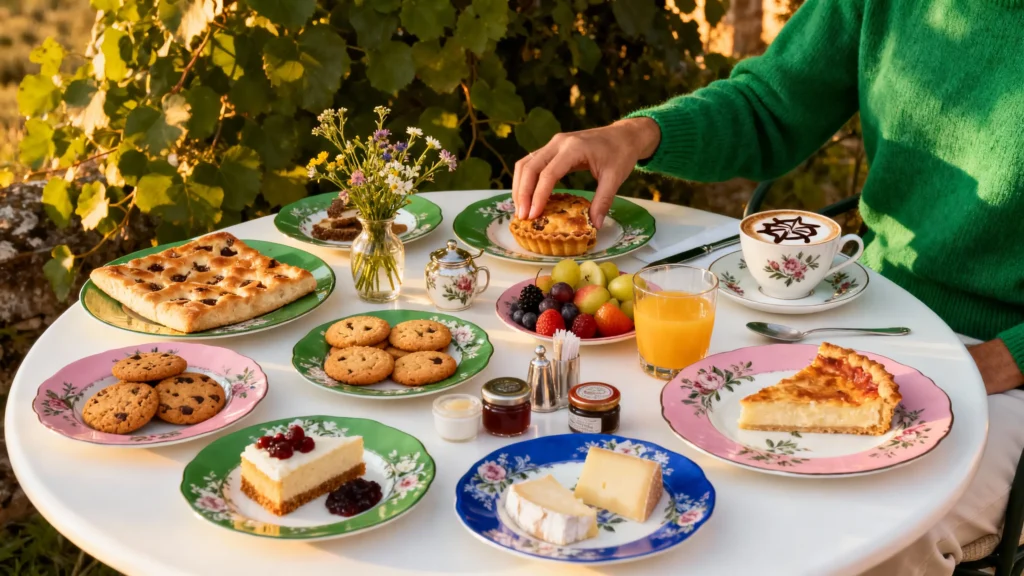
A serene breakfast table set in the garden of an elegant countryside villa near Modena
Breakfast at a Countryside Villa near Modena
“A slow morning at a countryside villa near Modena—sunlit, quiet, and delightfully indulgent.”

This image captures a peaceful morning at an elegant countryside villa near Modena. Under the soft shade of vineyard leaves, a simple yet abundant breakfast—coffee, tart, cheeses, fresh fruit—is set on a charming garden table. Sunlight warms the scene, evoking the calm, unhurried rhythm of rural Italy and the quiet luxury of beginning one’s day amidst serene nature.

Related Article
Related Post
TAG
Casa Maria Luigia, Ferrari Cavallino, Gucci Osteria, Italian fine dining, Massimo Bottura, Michelin 3-star, Modena restaurant, Osteria Francescana
See other Edit Lab