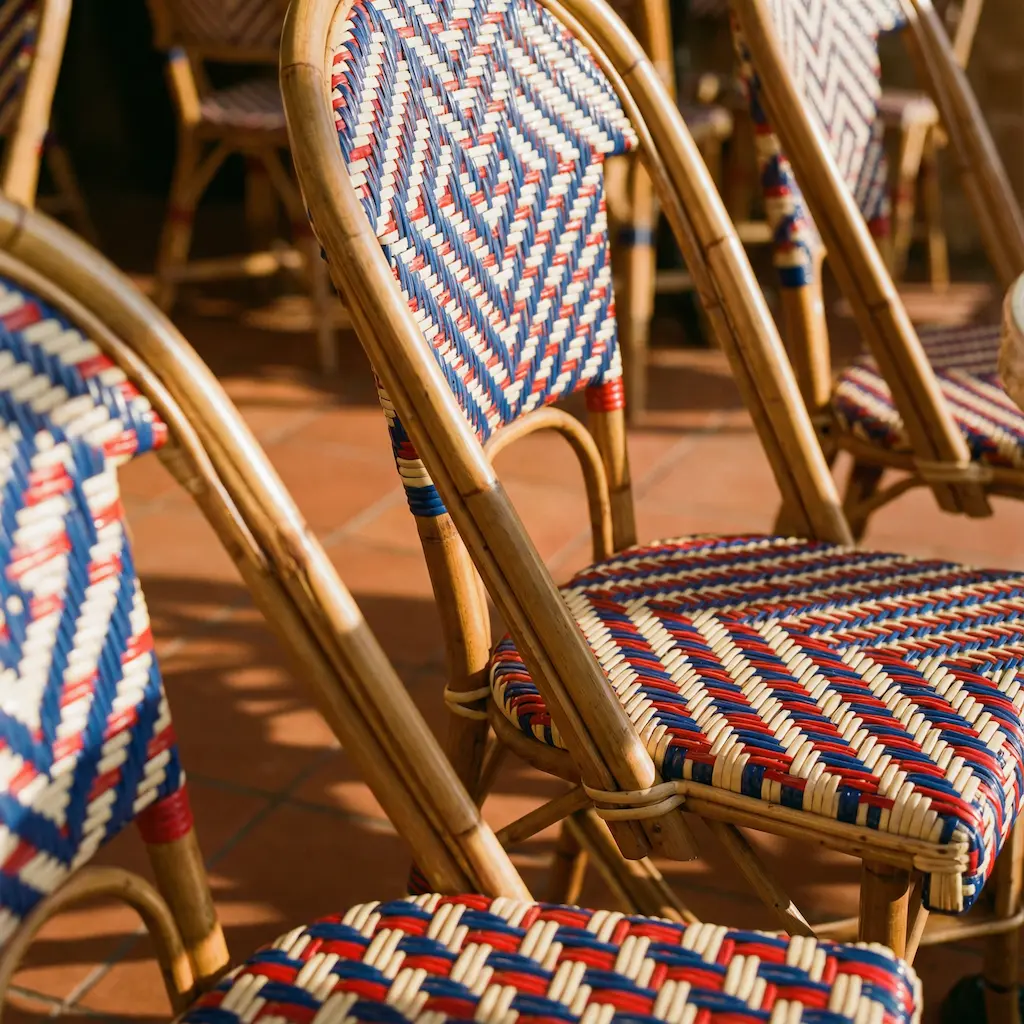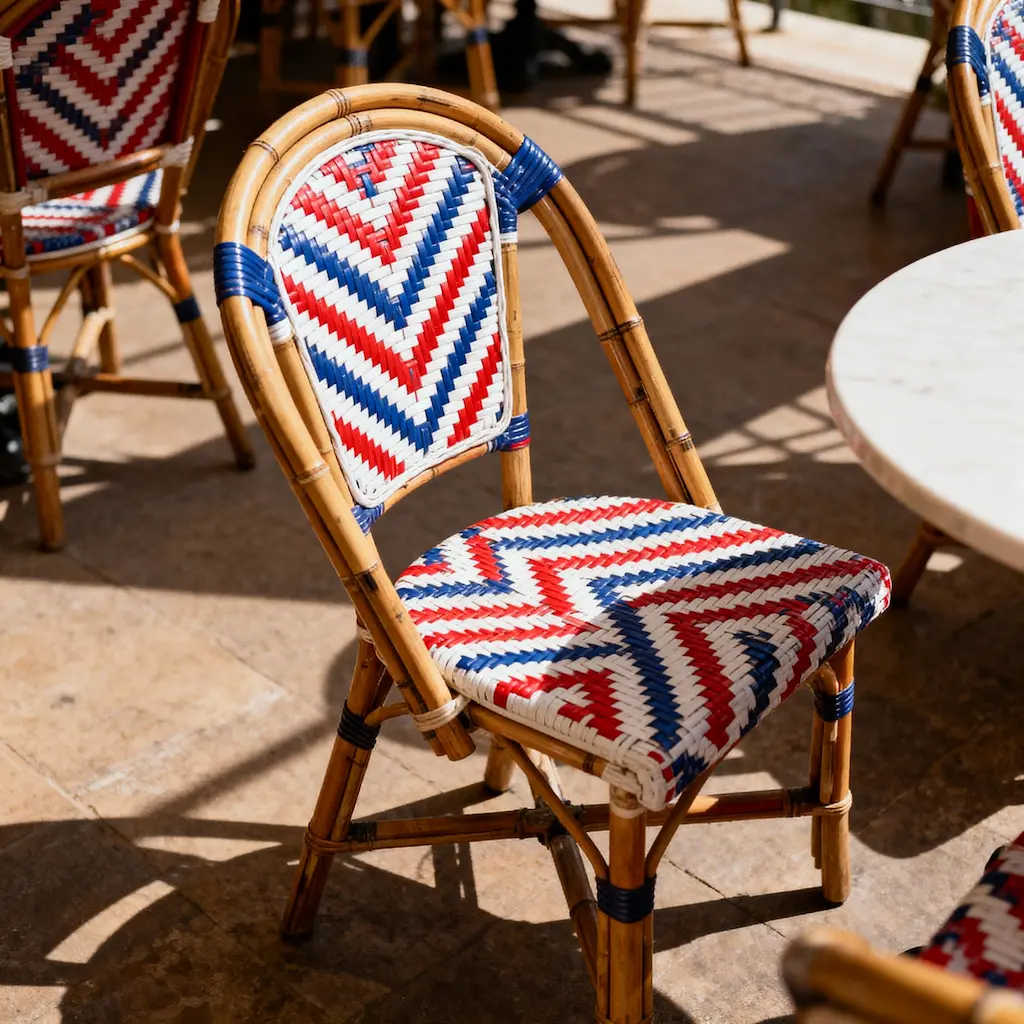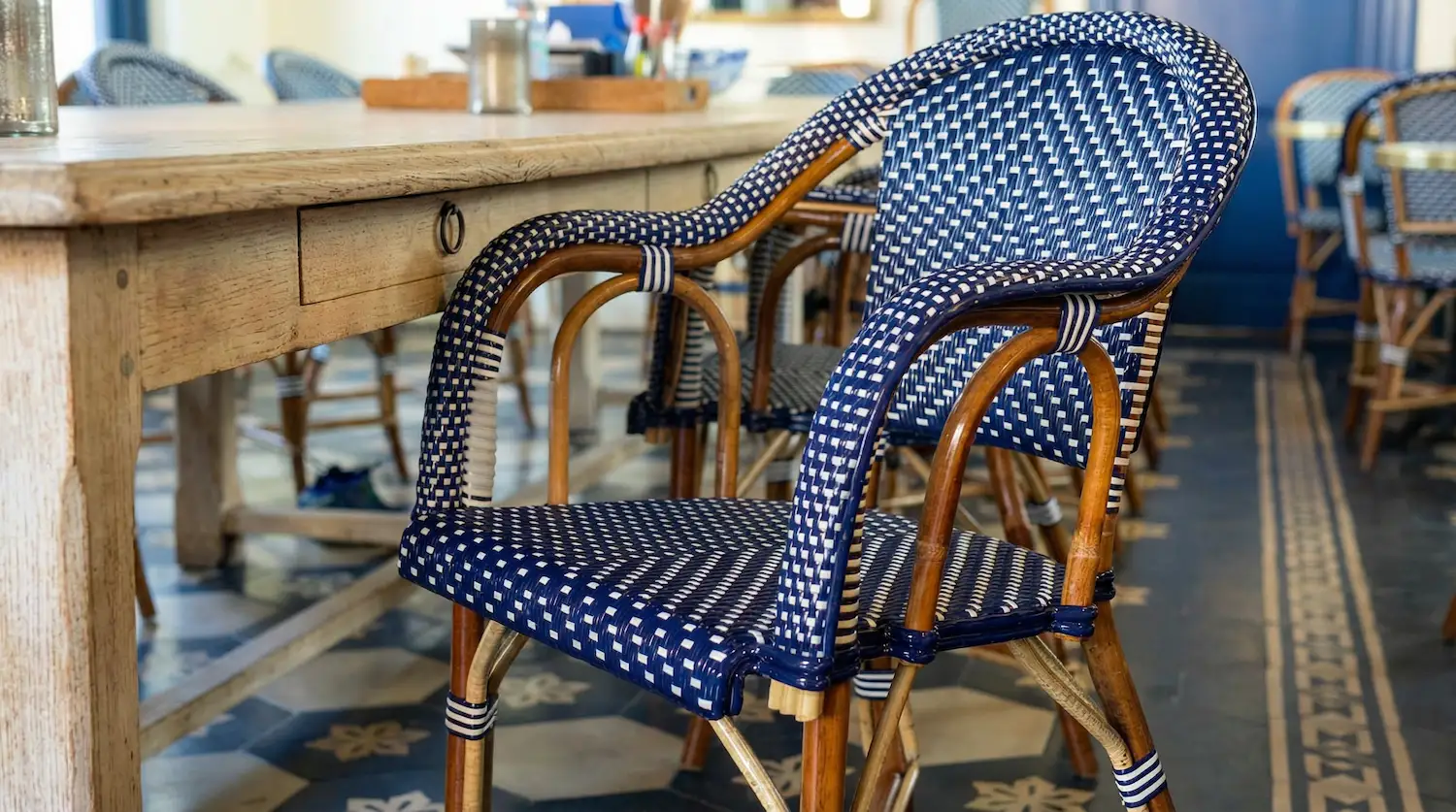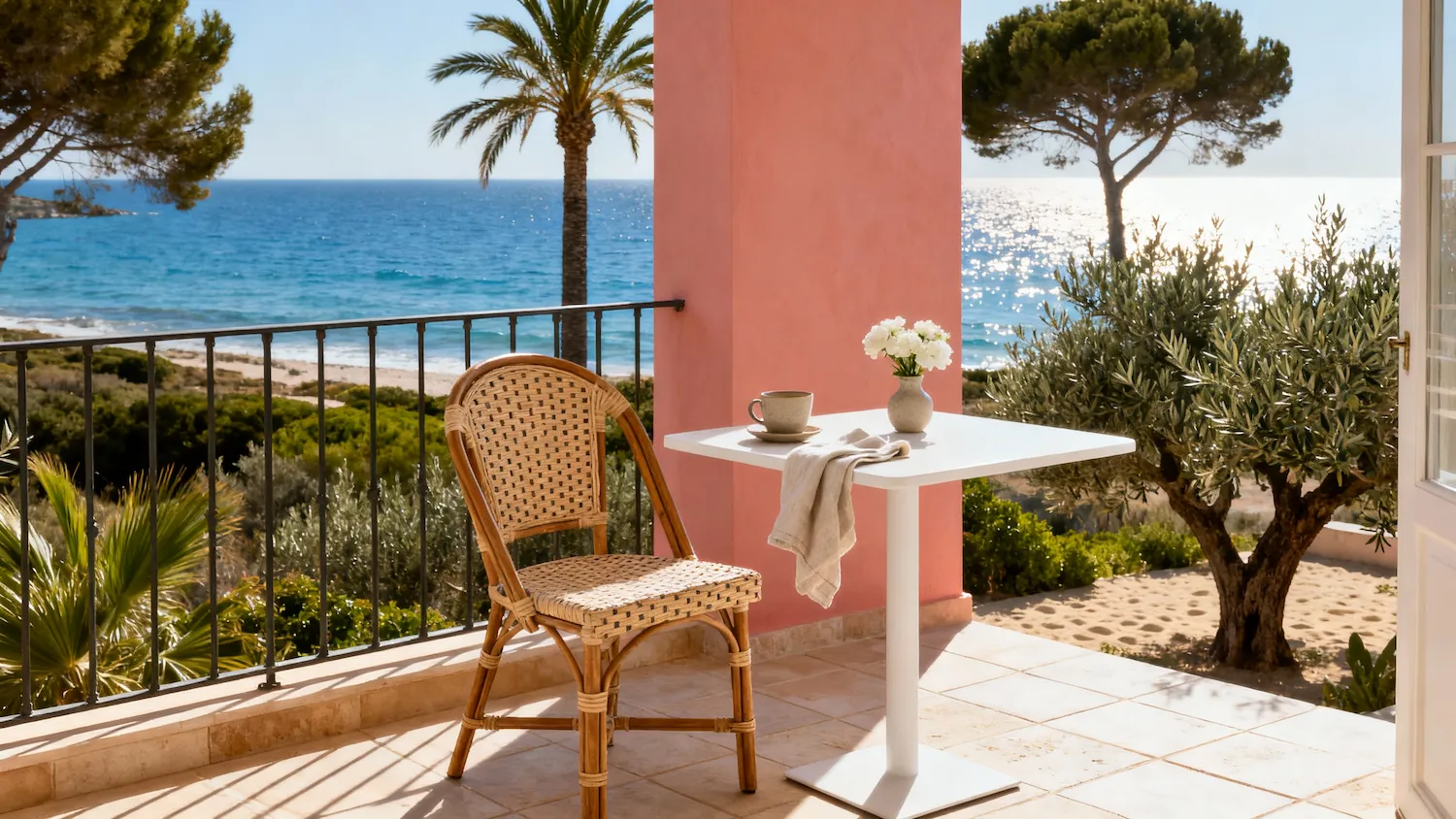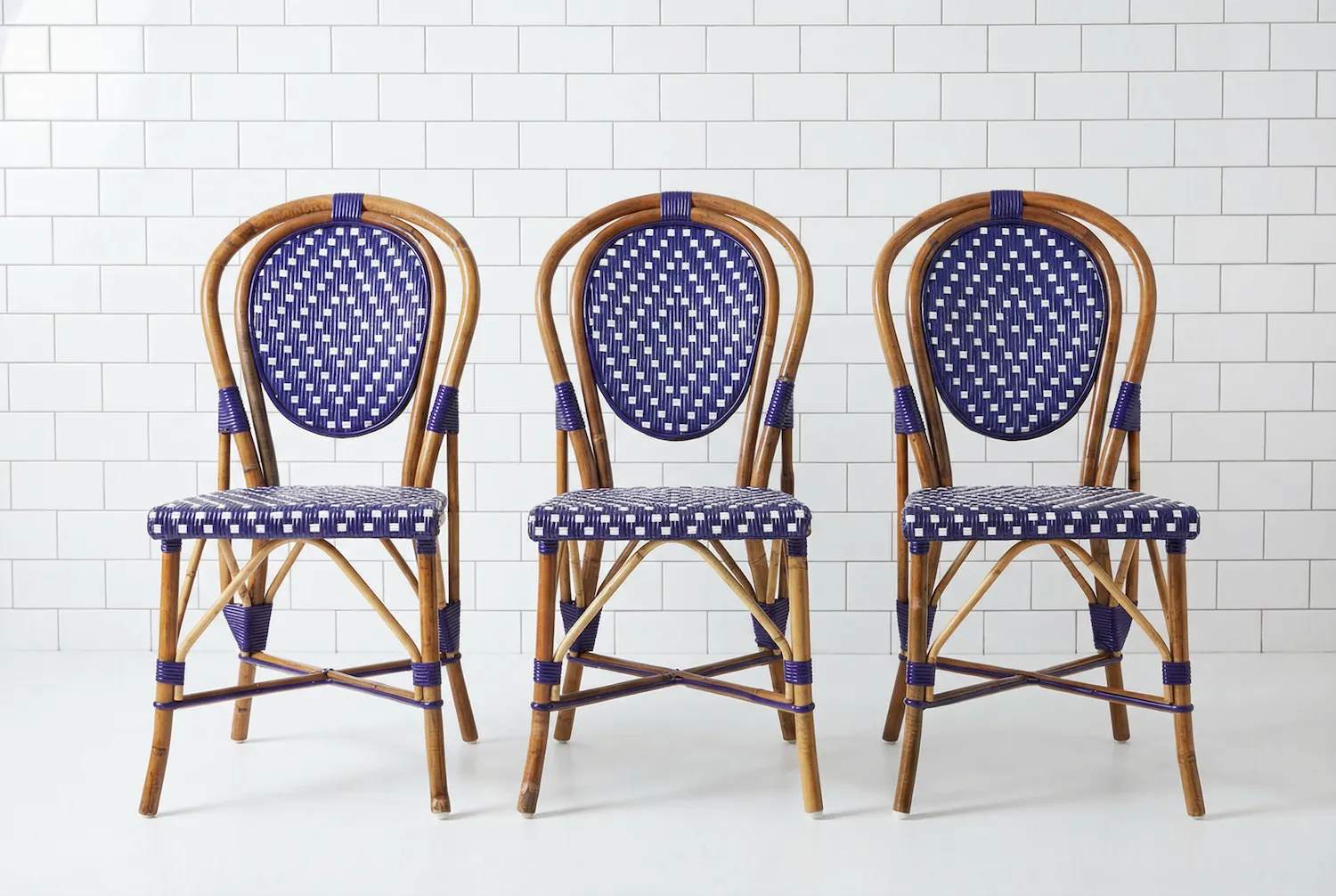
Transforming a room often begins with the smallest choice. Among them, the rattan bistro chairs stand quietly, yet the moment it is placed, the room finds a new sense of order. Its handwoven patterns act not just as decoration but as structure, rhythm, and a natural warmth that softens even the most minimal interior.
In this second Edit Lab spatial curation, we explore “the moment weaving meets the room.” The sensory geometry of rattan, the versatility of its placement, and the architectural clarity it brings— we take time to observe the quiet shift sparked by a single woven object.
The Rattan Bistro Chairs That Defines Parisian Café Culture
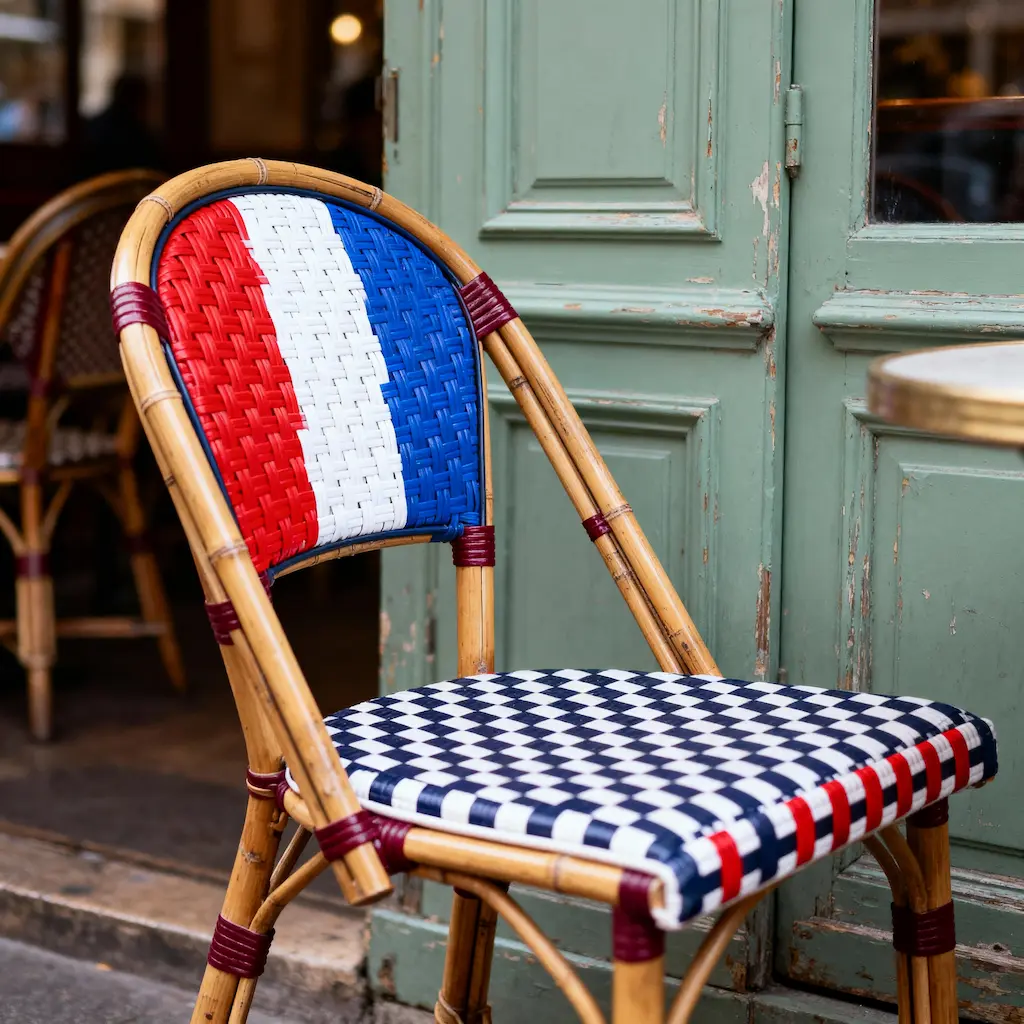
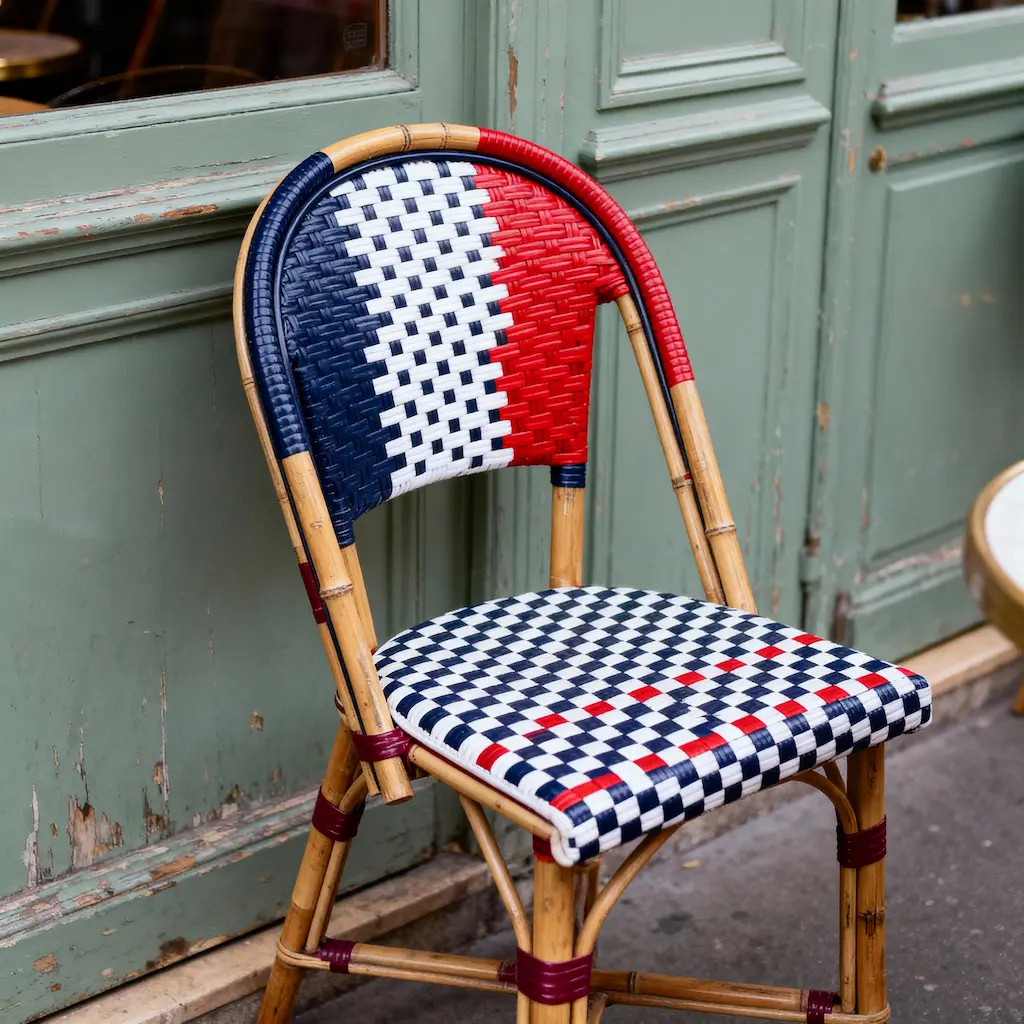
As the morning sun slips down the slopes of Montmartre, Parisian bistros begin to wake. Chairs line the sidewalks in quiet precision—woven blue-and-white checks, curved rattan frames bent by hand. These chairs are more than seats. They are the morning light of Paris, the unhurried rhythm of the afternoon, the romance of evening settling in.
But how did the rattan bistro chair become such an enduring symbol of Paris? And why are design lovers across the world captivated by something so seemingly simple—just a woven pattern, a curve, a frame?
L'ORIGINE: The Birth of Parisian Café Culture
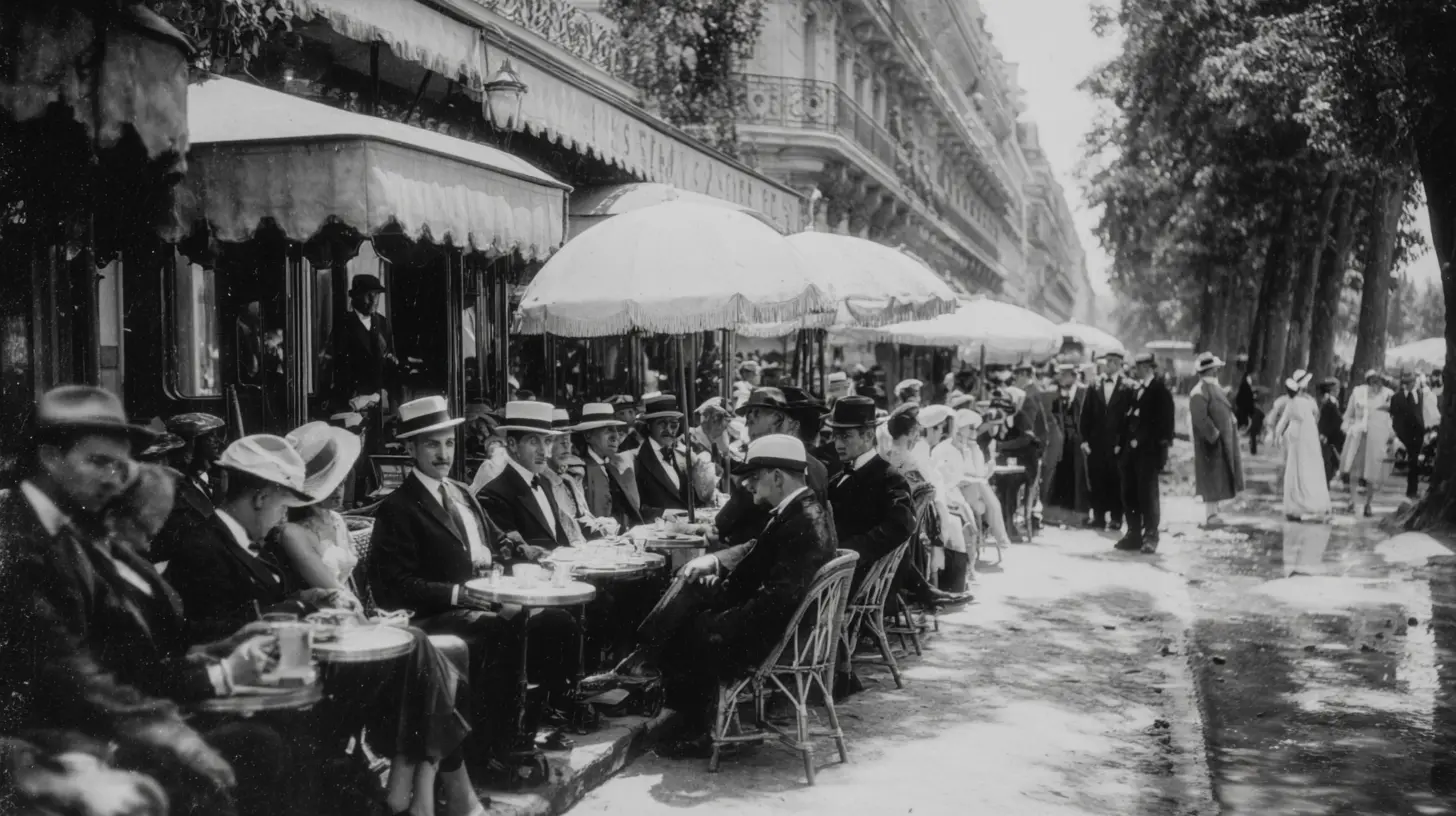
In the late 19th century, as café culture began to bloom along the streets of Paris, artists, philosophers, and writers claimed these spaces as their second living rooms—stages for thought and conversation. Between drifting cigarette smoke and the clinking of porcelain cups, they debated ideas, scribbled sentences into worn notebooks, and observed the city unfolding before them.
In those long, lingering hours, they needed something essential—a chair that was comfortable enough to stay in, yet elegant enough to belong in Paris.
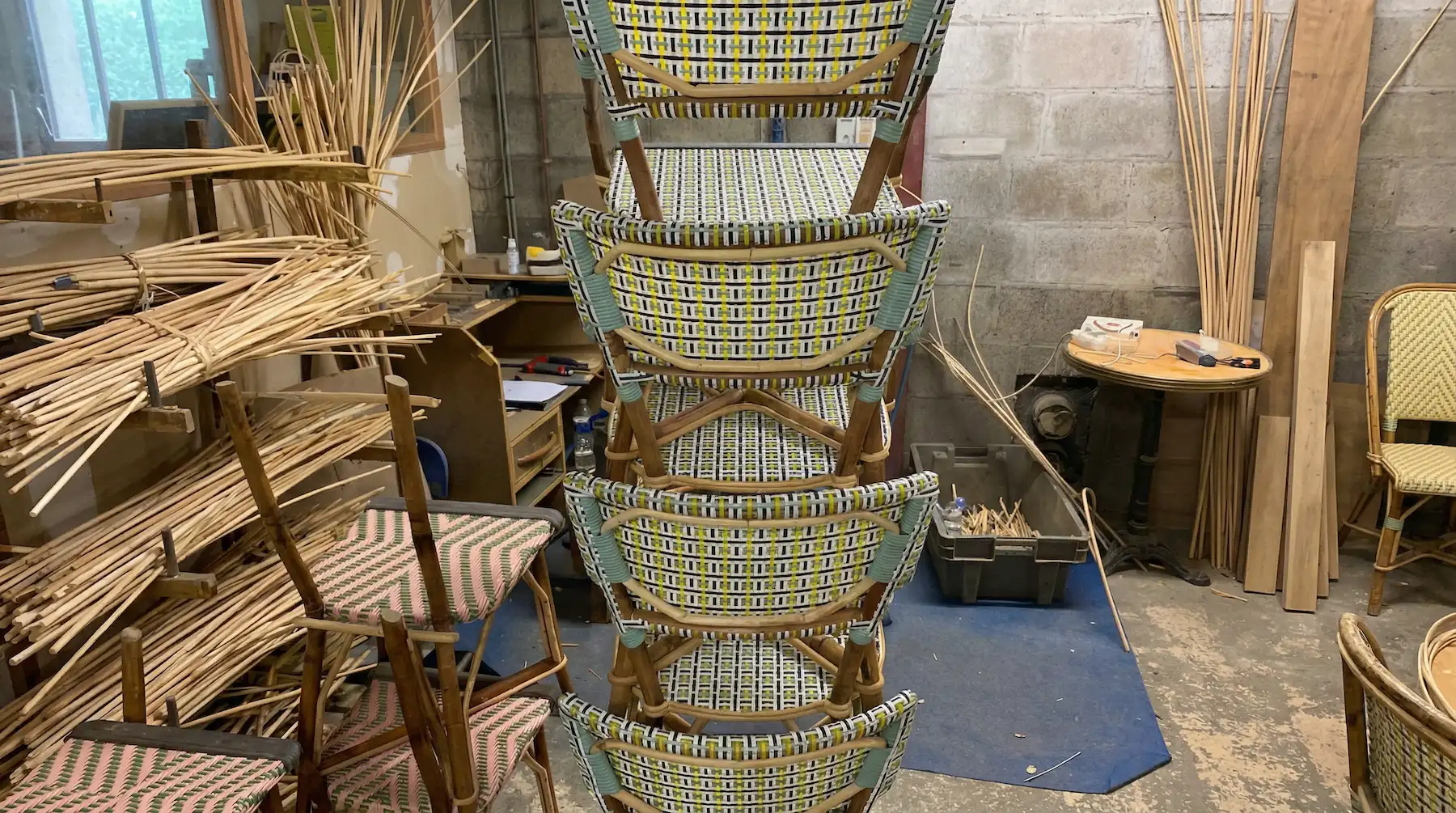
Rattan answered that need perfectly. Lightweight, durable, and readily imported from French Indochina, it offered a rare combination of practicality and beauty. Craftsmen bent the material into gentle curves, weaving each strand into frames that were both resilient and graceful.
From there, the rattan bistro chair swept across the cafés of Paris, quietly reshaping the city’s visual language. By the early 20th century, iconic cafés such as Café de Flore and Les Deux Magots adopted these chairs, anchoring their status as symbols of Parisian intellect and culture.
They became the seats where Sartre and Beauvoir argued ideas, where Hemingway revised lines under the afternoon sun. Over time, the chairs transformed from simple furniture into witnesses—objects bearing the stories of an era.
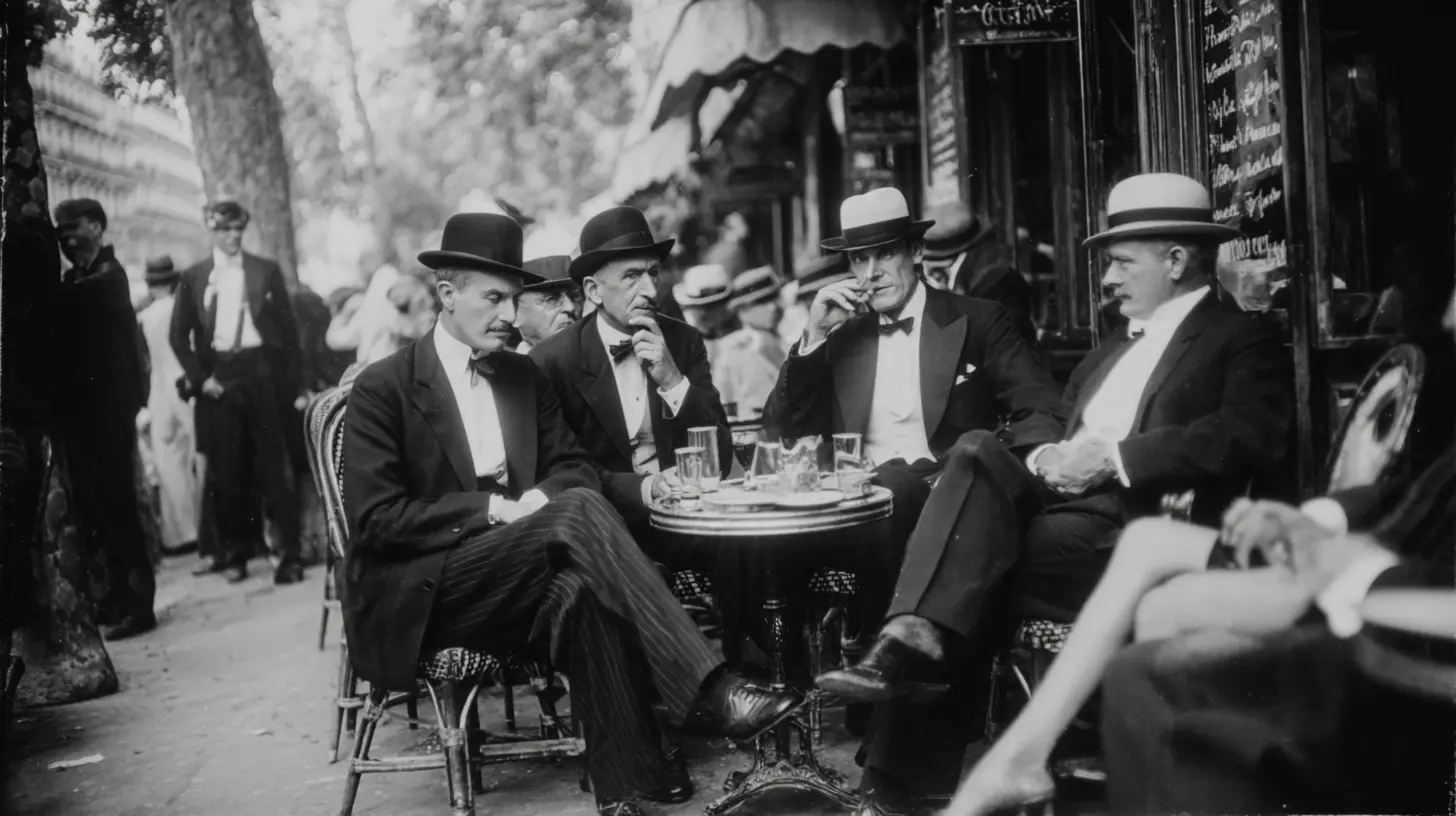
Endless conversations unfolded atop rattan chairs—much of 1920s Parisian thought was born on café terraces.
LE DESIGN: Where Form Meets Function
The Magic of Rattan
Rattan, a climbing palm native to the tropical forests of Southeast Asia, carries a remarkable duality: supple flexibility and structural strength. Once soaked in water, the material softens just enough to bend into elegant curves; as it dries, it firms again, locking into shape. The result is a material that naturally unites form and function—a designer’s dream long before the word “design” became a discipline.
Craftsmen understood this intuition deeply. They shaped backrests into gentle arches, carved armrests into fluid lines, and wove tight, rhythmic patterns that cradle the body with surprising comfort, even through long café conversations. What looks effortless is, in reality, the product of generations of technical refinement.
And then there is its featherlight weight—an underrated but essential virtue. For Parisian café workers who carried dozens of chairs out to the terrace each morning and back inside each evening, rattan wasn’t simply beautiful; it was the most practical choice available.
The Symbolism of the Check Pattern
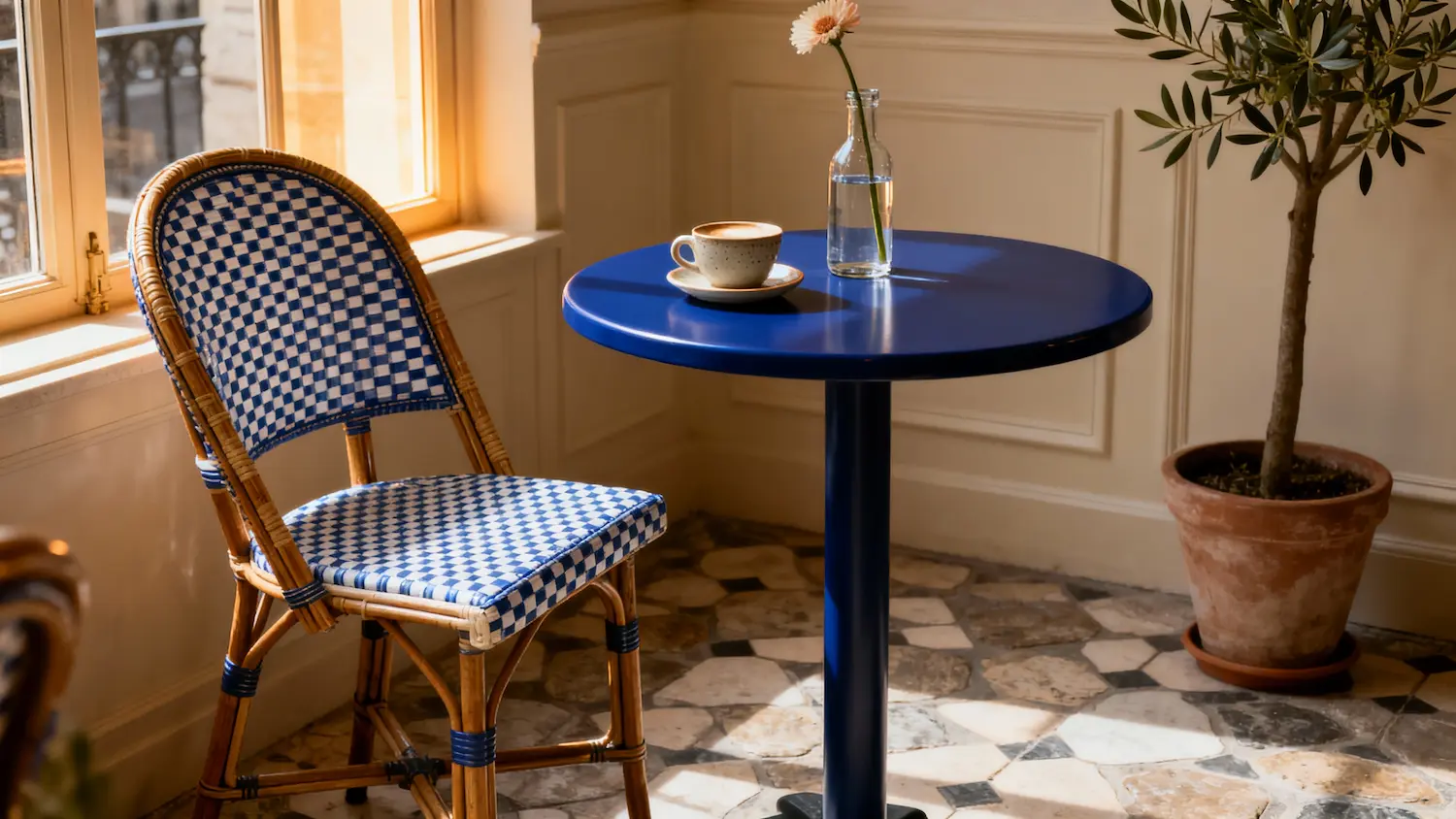
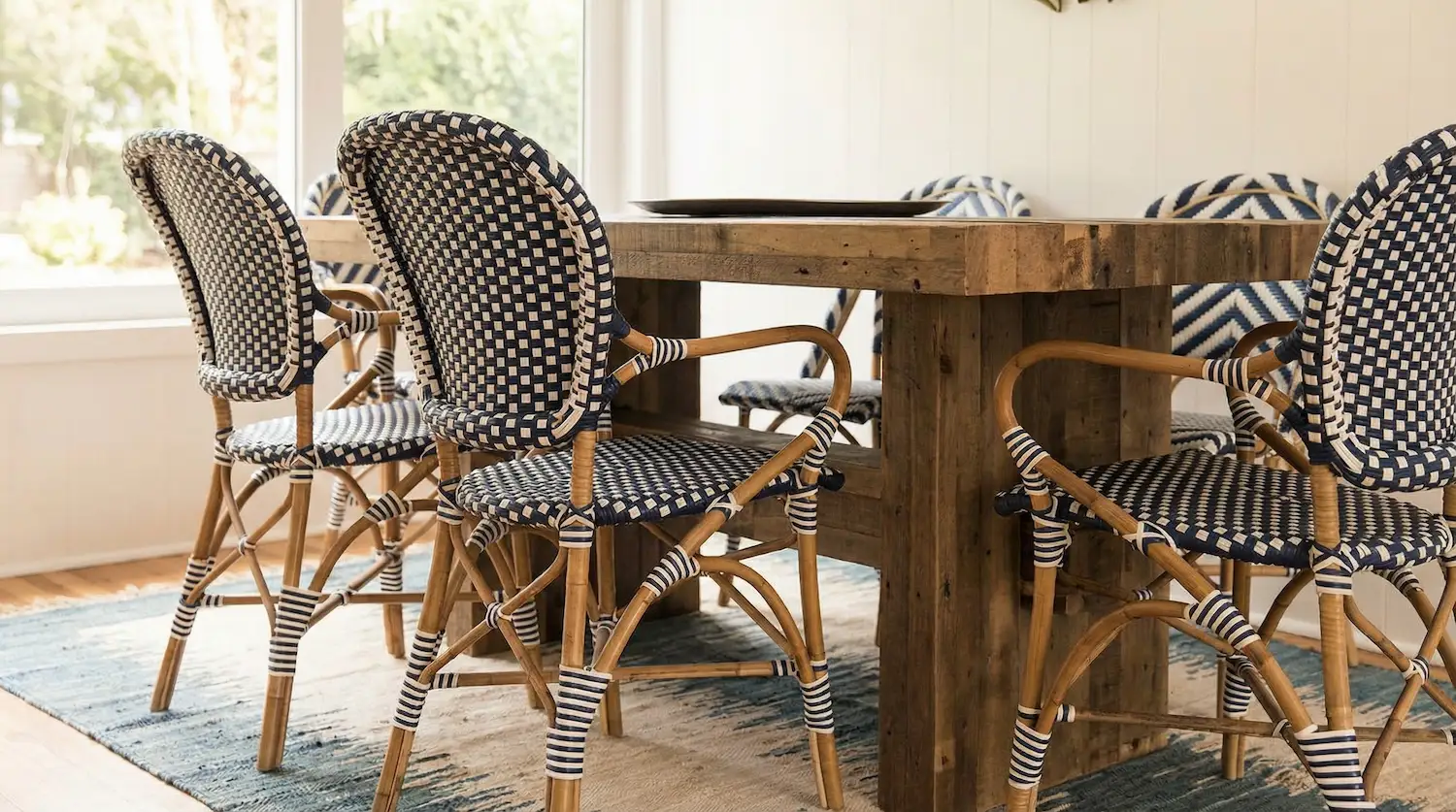
The blue-and-white check pattern is more than decoration—it is the signature motif of the Parisian bistro chair. Inspired by traditional textiles from Provence, the palette evokes the serenity of the Mediterranean: the crispness of its sky, the softness of its clouds, the breeze that moves gently between them.
But this classic pattern is not just charming; it is highly functional. It conceals wear, harmonizes with both rustic and modern tabletops, and brings balance to spaces in need of color or texture.
Among its many pairings, one stands above the rest: the cobalt-blue café table. Together, they recreate the mood of a Mediterranean terrace—right in the heart of Paris.
“Good design rarely announces itself. It simply belongs.”
LE STYLE: Styling Ideas That Transform a Space
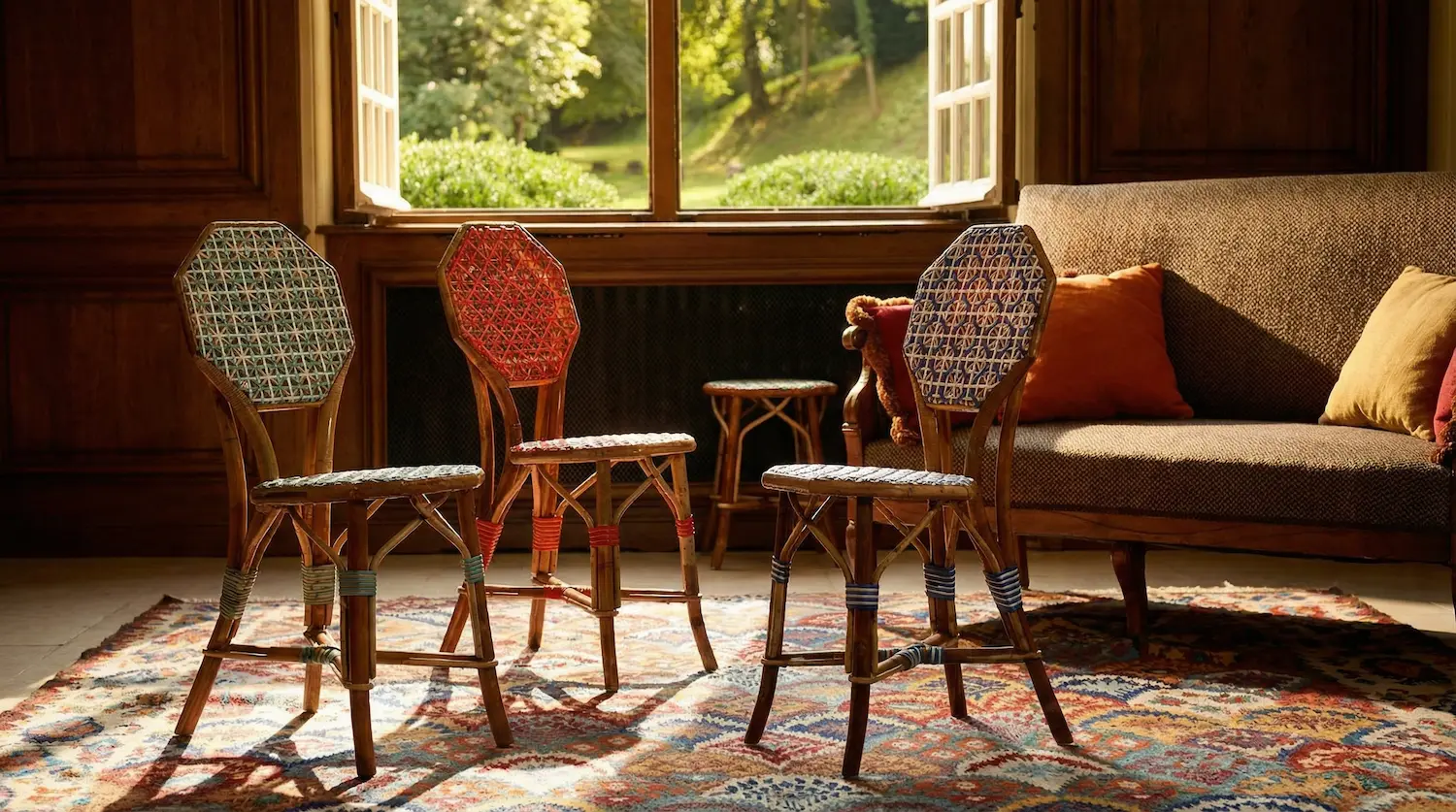
 Every room has a rhythm. And sometimes, that rhythm begins with the quiet geometry of a woven chair.
01. Classic Parisian Style
For the most authentic Parisian café mood, pair the rattan bistro chair with a small round table in cobalt blue or deep green. Here, the chair’s signature blue-and-white check comes alive. Add classic tabletop accents—a Pernod ashtray, a glass water carafe, a tiny flower vase—and place a small olive tree or lavender pot nearby to introduce a touch of natural softness.
Tiled or stone flooring and walls washed in cream or pale grey complete the French classic palette. It’s the timeless equation of Paris: understated colors + woven texture + a hint of green.
02. Modern Minimal Style
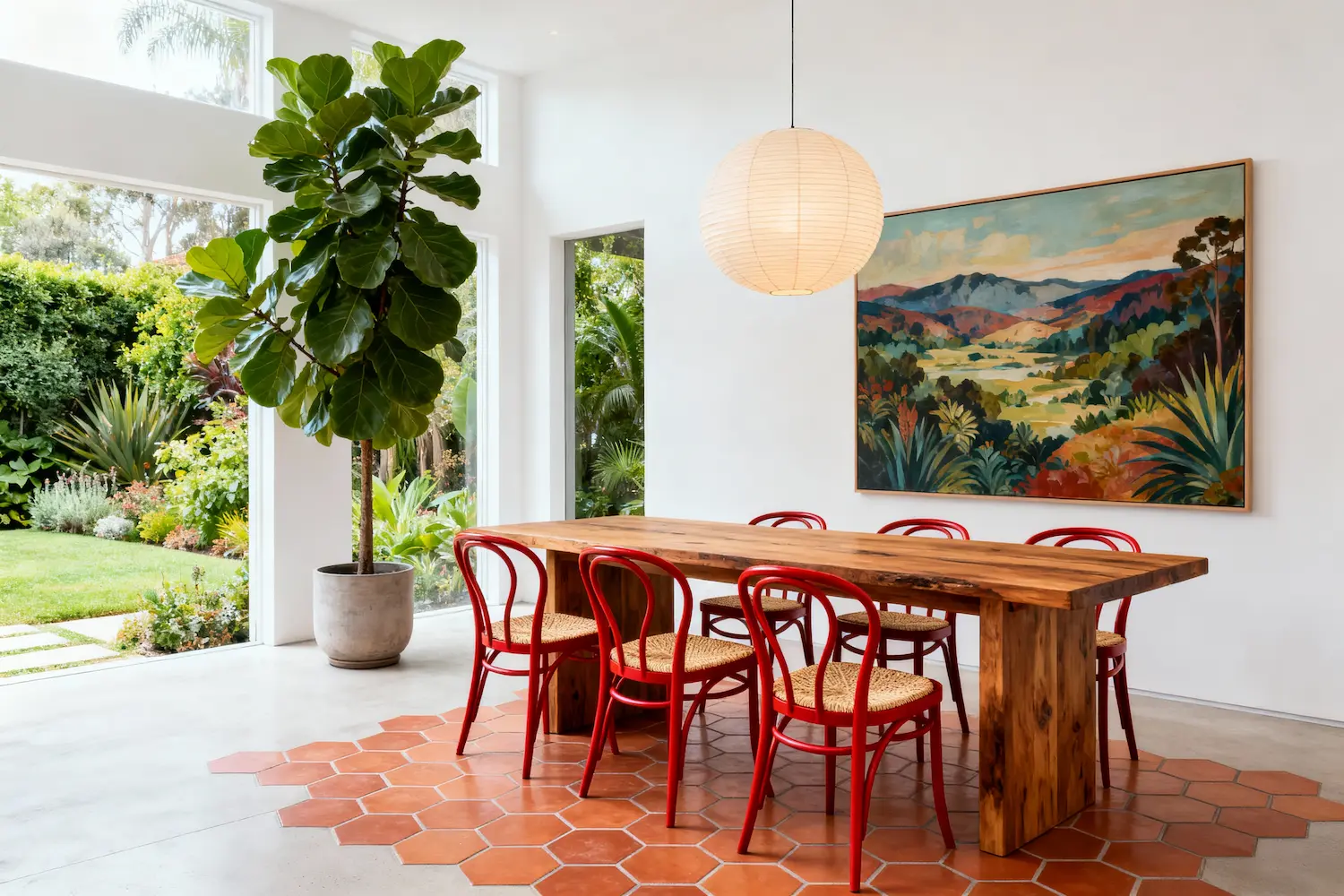
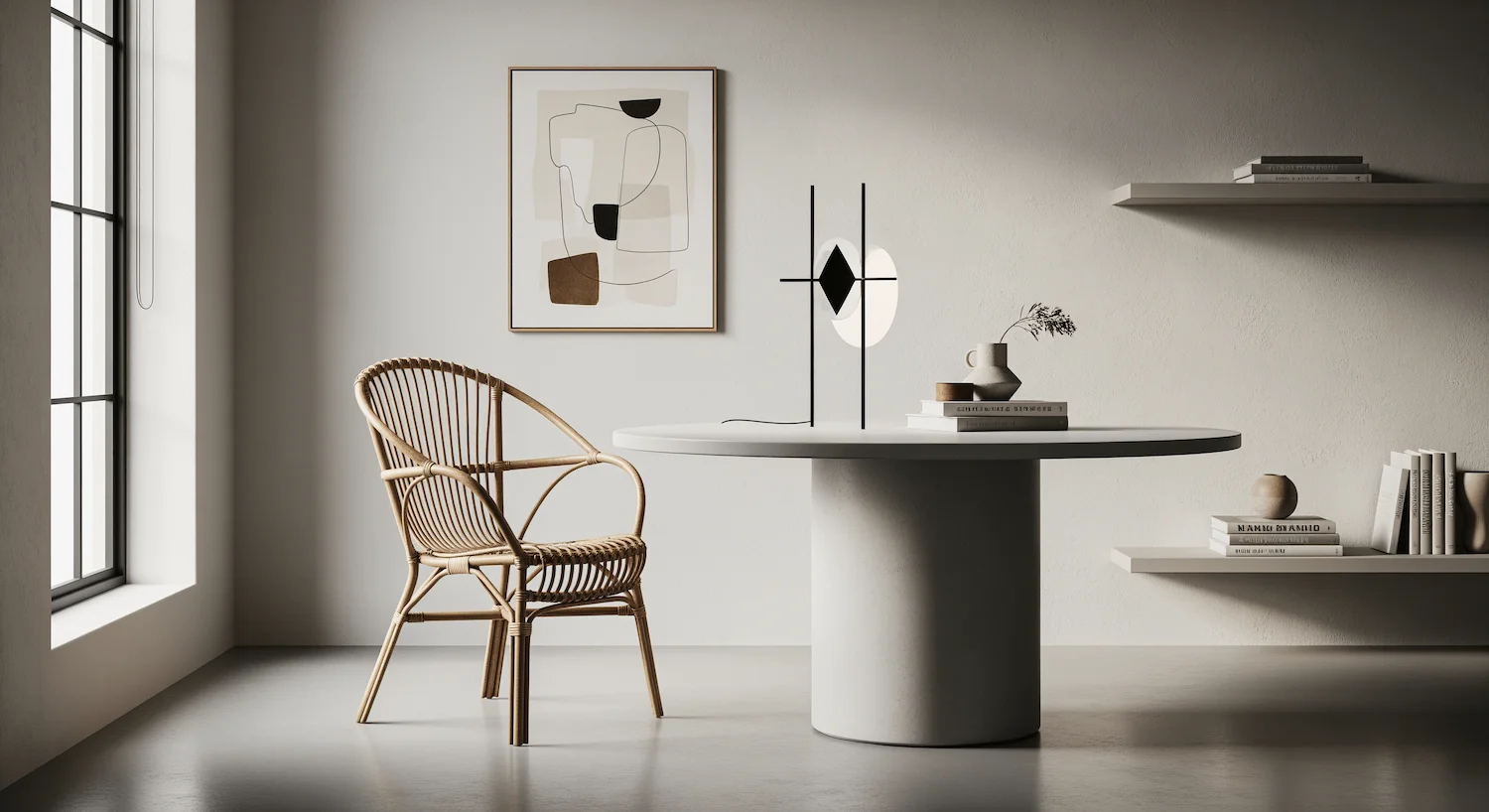
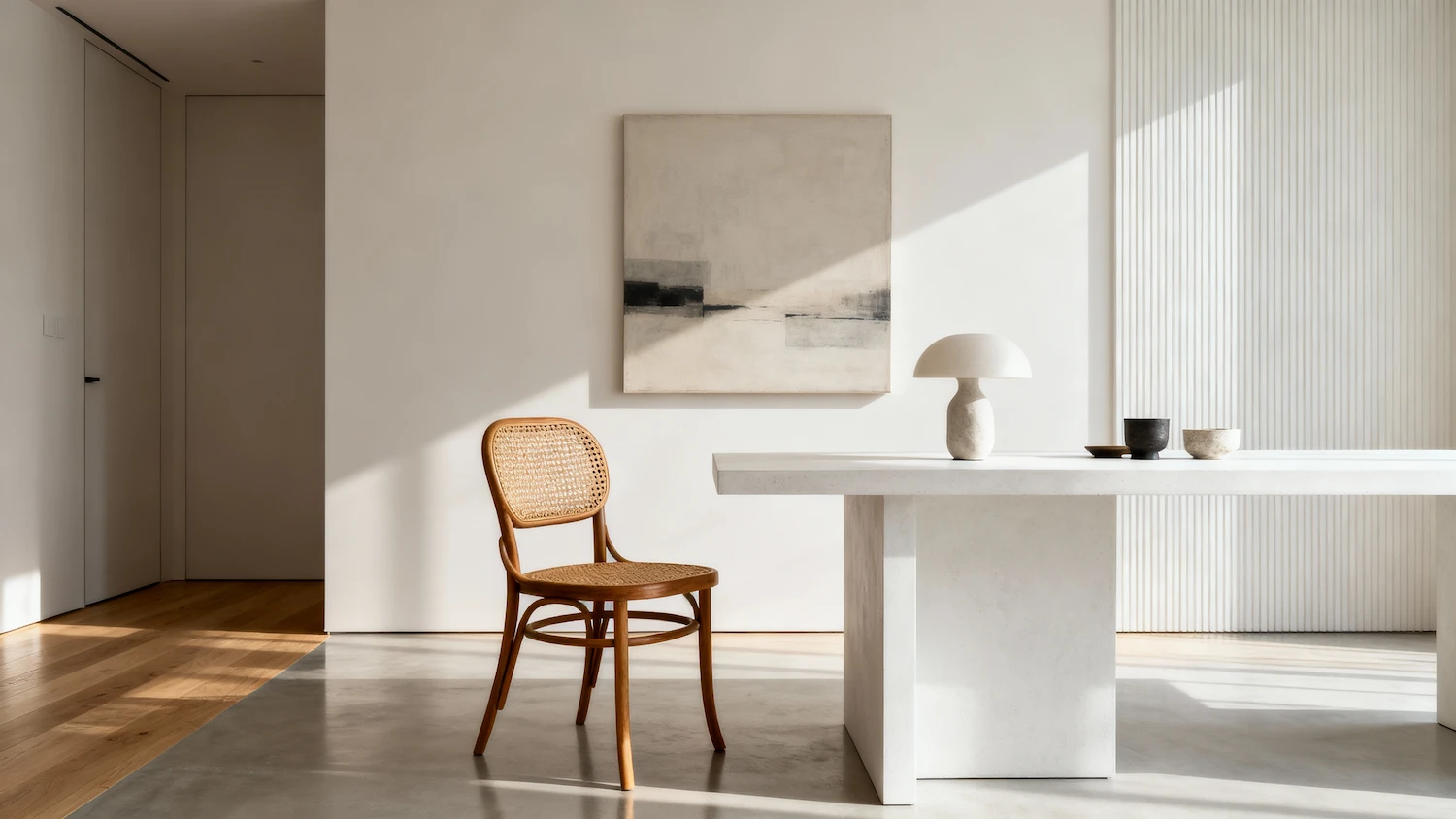
Pairing a traditional rattan chair with a modern interior creates a compelling dialogue between past and present—a study in contrast and harmony. Combine the chair with a white or concrete table, add minimal lighting with clean lines, and let the rattan’s warmth punctuate an otherwise sleek space.
Hang contemporary art on the wall, and use light wood or polished concrete flooring to maintain visual clarity throughout the room. The key is the rhythm between classic curves and modern restraint. A few well-chosen plants softly bridge the gap.
03. Coastal Chic Style
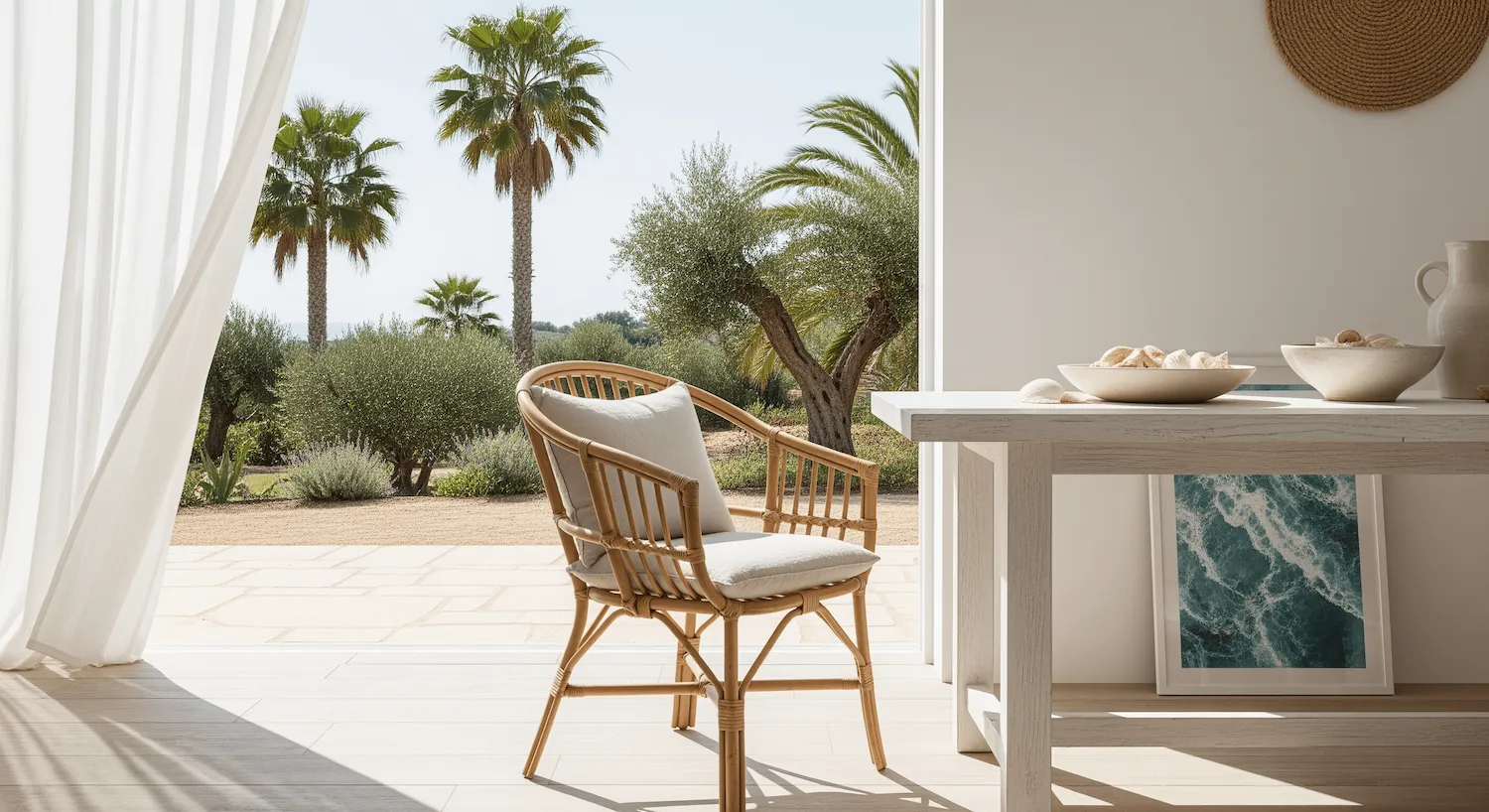
This look brings the essence of the Mediterranean coast into your home. Start with a palette of white and sky blue, and soften the rattan bistro chair with linen cushions that echo the texture of sea breeze. Choose whitewashed wood or pale marble for the table, and incorporate nautical touches—shell accents, coastal prints, or weathered ceramics.
Light, movement, and ease define this style. Install sheer curtains to let sunlight drift through, and choose palm or olive trees to evoke the coastal landscape. When done well, the room feels open, weightless—like a summer afternoon overlooking the sea.
LE GUIDE: How to Choose a True Parisian Bistro Chair
Selecting a rattan bistro chair is not merely a purchase—it is the act of inviting culture, history, and time into your space. For decades, French café culture has shaped the world’s idea of what makes a “good chair.” Even today, that legacy endures: the warmth of natural rattan, the cadence of woven patterns, the silhouettes crafted by generations of artisans.
Each maison tells a different story. Some preserve the classic Parisian spirit, others pursue an almost haute couture–like structural beauty, and still others offer a quiet, vintage softness. This guide highlights only the houses you can truly trust—chairs that grow more beautiful, more characterful, as the years pass.
Brand & Selection Guide — Three Houses, Three Spirits
01. Maison Louis Drucker — The Archetype of the Parisian Bistro Chair
Founded in Paris in 1885, Maison Louis Drucker is widely regarded as the originator of the rattan bistro chair. Its lightweight yet durable rattan frames, finely executed Rilsan® weaving, and dozens of color combinations create the silhouette that defines Parisian terraces. When you picture a café scene in Paris, chances are the chair in that image is a Drucker. For those seeking authenticity, this maison remains the definitive choice.
02. Maison Gatti — Rattan as Haute Couture
Since 1920, Maison Gatti has embodied the spirit of tailor-made craftsmanship. Their extensive lineup—chairs, stools, benches, outdoor settings—is known for meticulous customization: colors, patterns, frame shapes, and proportions can all be specified. It is little wonder that luxury hotels and Michelin-starred restaurants choose Gatti. Rooted in classic French tradition yet unafraid to experiment, the maison offers rattan as a form of haute couture for contemporary spaces.
03. Maison Grock — A Quiet Balance of Vintage and Modern
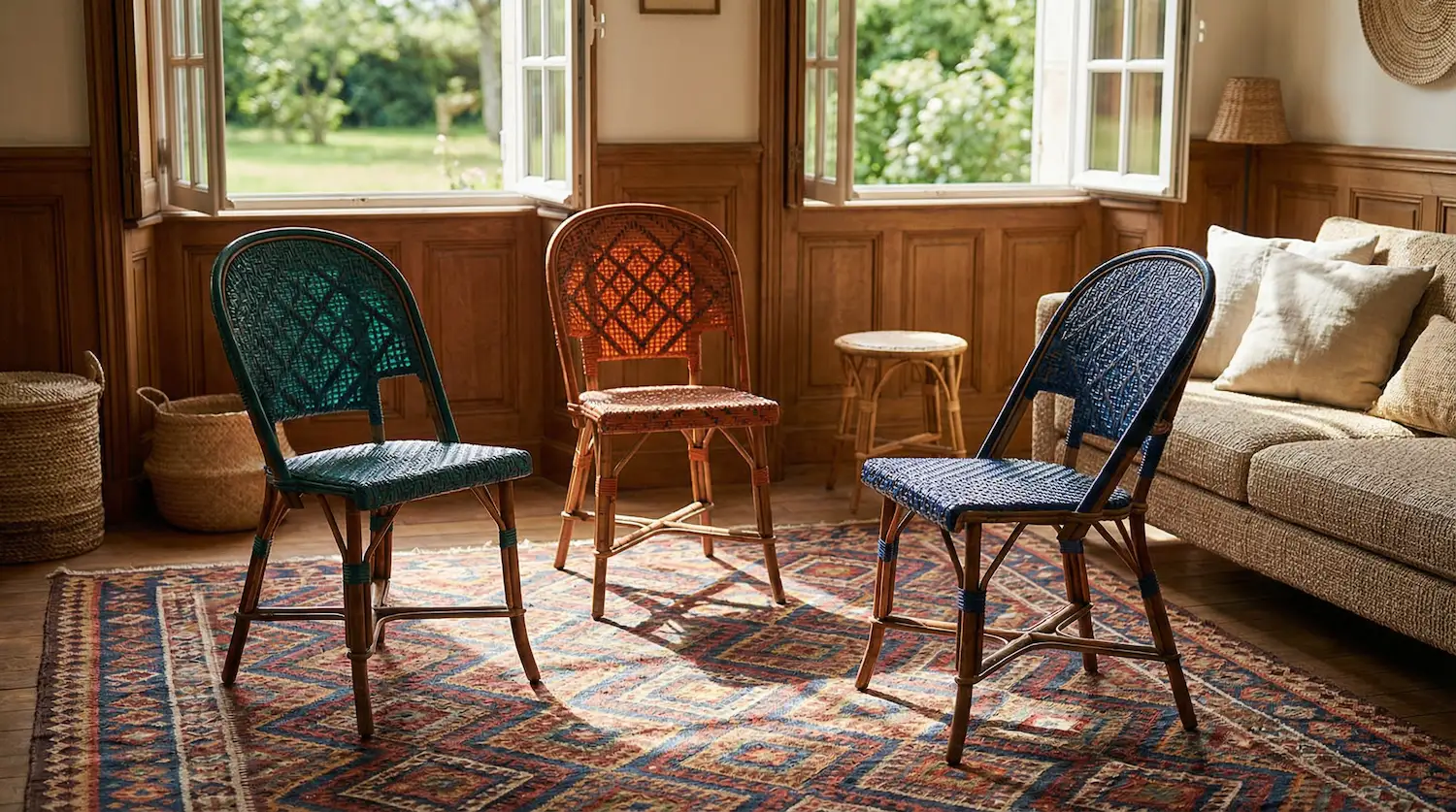
Founded around 1911, Maison Grock may be less globally exposed, but it remains a meaningful pillar of France’s rattan-making heritage. Its designs feature uncluttered silhouettes, restrained palettes, and a calm blend of vintage and modern sensibilities. Models like Louise or Jules reveal their true charm when placed in natural light, where the material’s quiet character comes alive. Compared to Drucker or Gatti, Grock’s presence is softer—but perhaps for that reason, its pieces age with remarkable grace.
The Big Three: A Comparative Guide to French Bistro Rattan Chairs
Founded
Maison Louis Drucker
Maison Gatti
Maison Grock
Established in 1885, the oldest and most iconic maker of Parisian rattan bistro chairs
Founded in 1920 by an Italian craftsman in Paris
Founded circa 1911, known for traditional French rattan café furniture
Core Identity
Maison Louis Drucker
Maison Gatti
Maison Grock
The original Parisian bistro chair. A symbol of Parisian terrace culture
A couture-level atelier specializing in fully bespoke rattan furniture for global hotels & restaurants
A quiet maison blending vintage warmth with modern restraint
Key Products
Maison Louis Drucker
Maison Gatti
Maison Grock
Rattan-frame bistro chairs, armchairs, stools with Rilsan® weaving
Bistro chairs, benches, bar stools—highly customized for commercial spaces
Natural rattan chairs such as Louise and Jules, café & terrace seating
Design Character
Maison Louis Drucker
Maison Gatti
Maison Grock
Elegant curved frames + vibrant woven patterns; the quintessential Paris café silhouette
Classic bistro foundation with richer variations in frames & patterns
Subtle textures, muted palettes, vintage-meets-modern tone
Production Method
Maison Louis Drucker
Maison Gatti
Maison Grock
Frames crafted by Indonesian artisans → assembled & finished in French workshops
Fully handcrafted in French workshops; exceptional customization options
Handwoven construction, outdoor-friendly durability
Brand Position
Maison Louis Drucker
Maison Gatti
Maison Grock
Considered the symbol of Parisian terraces; holder of France’s EPV heritage label
One of the two leading maisons of Parisian rattan chairs alongside Drucker
Less internationally exposed but respected among rattan purists
Representative Models
Maison Louis Drucker
Maison Gatti
Maison Grock
Full lineup of emblematic Parisian bistro chairs
Full professional collection—chairs, bar stools, benches
Natural rattan café chairs (Louise, Jules, etc.)
Tone of Design
Maison Louis Drucker
Maison Gatti
Maison Grock
Classic, expressive patterns; unmistakably Parisian
Refined variations with project-level customization
Quiet, timeless silhouettes with vintage softness
Retail Price (New)
Maison Louis Drucker
Maison Gatti
Maison Grock
Approx. $1,200–1,500
Approx. $700–1,500
Approx. €500–1,000 (limited data but comparable range)
Vintage Market
Maison Louis Drucker
Maison Gatti
Maison Grock
1stDibs: hundreds to thousands per piece/set
1stDibs: similar ranges
Sparse online listings; similar pricing in French vintage markets
OTHER SELECTIONS — Expanding the Palette
Beyond the three heritage maisons, these additional selections widen the landscape of what rattan can bring to a space. From Scandinavian reinterpretations to vintage treasures, each option offers its own rhythm, its own story.
01. Sika-Design
Danish craftsmanship meets the warmth of rattan
Founded in 1950, Sika-Design blends traditional European rattan weaving with the clean, understated spirit of Scandinavian design. The result is a collection that naturally bridges Parisian charm with Nordic softness.
- Contemporary reinterpretations of classic rattan
- Indoor/outdoor collections available
- Ideal for mixing Parisian bistro mood with Scandinavian calm
Recommended For
✓ Those who prefer a more modern, Nordic take on rattan
✓ Anyone looking to soften a space with organic textures
02. Vintage Rattan Chairs (Flea Markets & Vintage Shops)
When an object carries time within its frame
The beauty of rattan deepens with age. Vintage pieces bring patina, history, and a sense of narrative—turning a simple chair into a story in the room.
- Paris’ famed Clignancourt Flea Market remains a treasure trove
- Rich selections across European and US vintage platforms
- Check before buying: weaving integrity, signs of moisture, frame warping
Recommended For
✓ Those seeking a true one-of-a-kind chair with soul
✓ Individuals wanting a focal object that brings depth and identity
03. Modern Re-editions & Reproductions
A practical entry point into the Parisian aesthetic
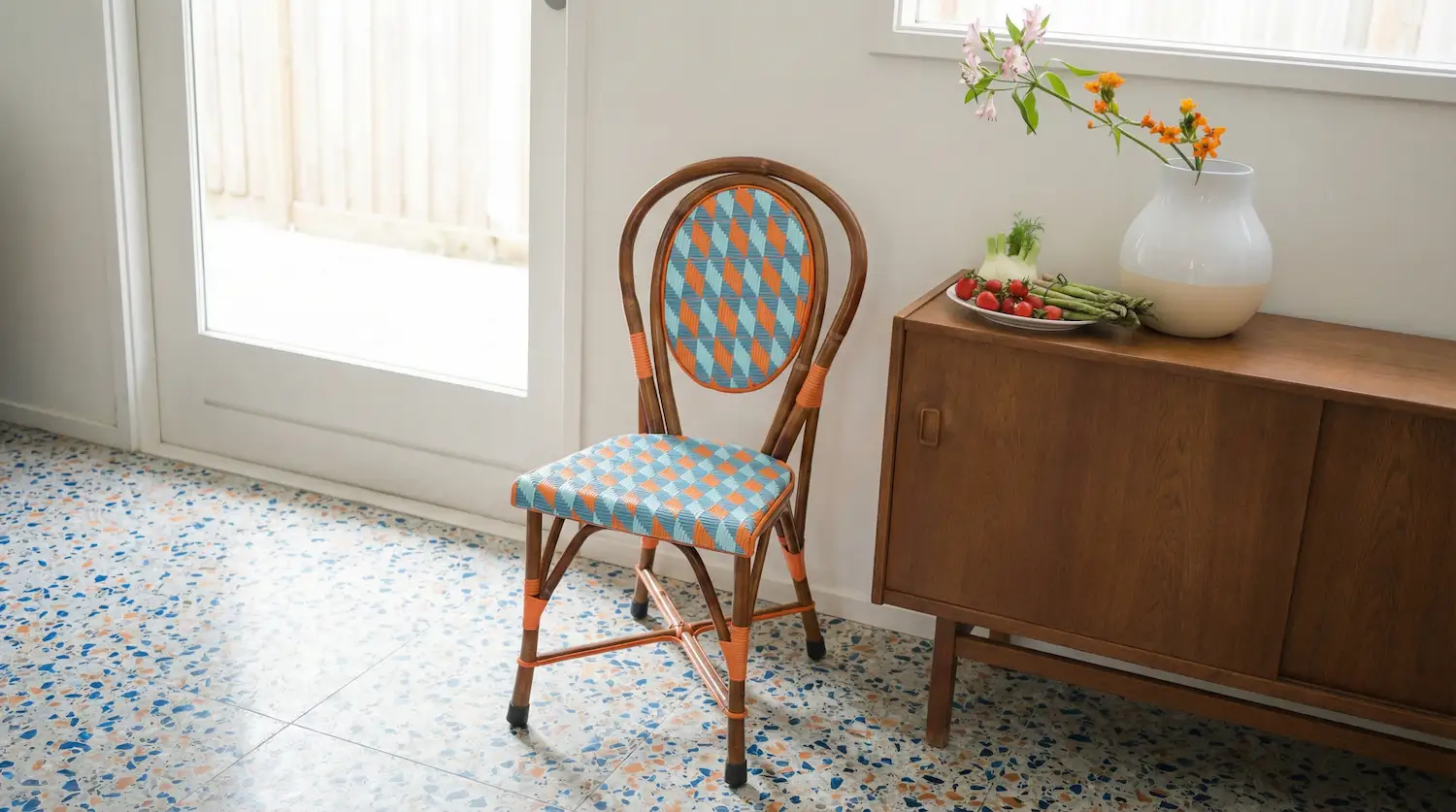
Many contemporary interior brands reinterpret the bistro rattan silhouette with approachable materials and flexible price points. These pieces are accessible, versatile, and easy to integrate into daily living.
- Wide range of patterns, frames, and colorways
- Broad price spectrum
- Suitable for indoor spaces, balconies, terraces
Recommended For
✓ Anyone wanting the Parisian look at a practical price
✓ Those needing versatile rattan seating across multiple spaces
How to Choose — Three Essential Criteria
① Density of the Weave and Precision of the Pattern
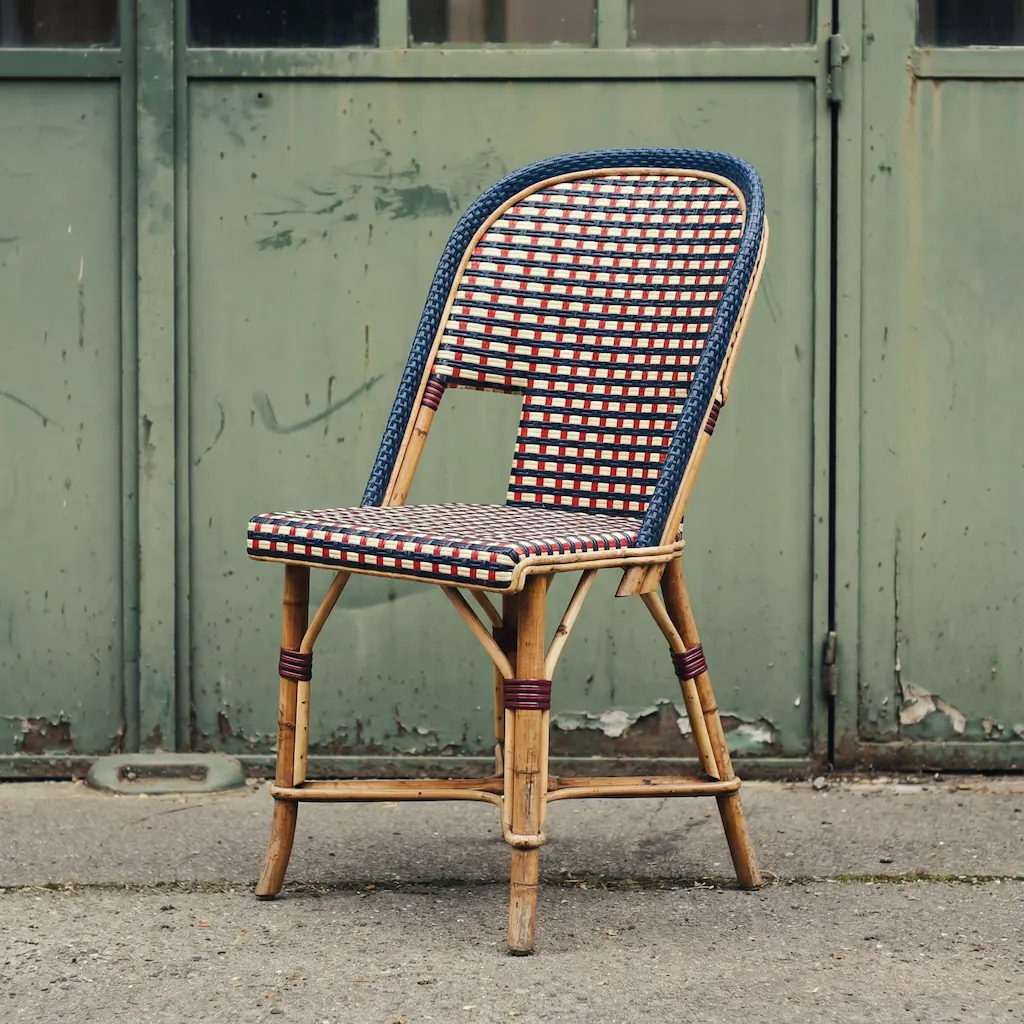
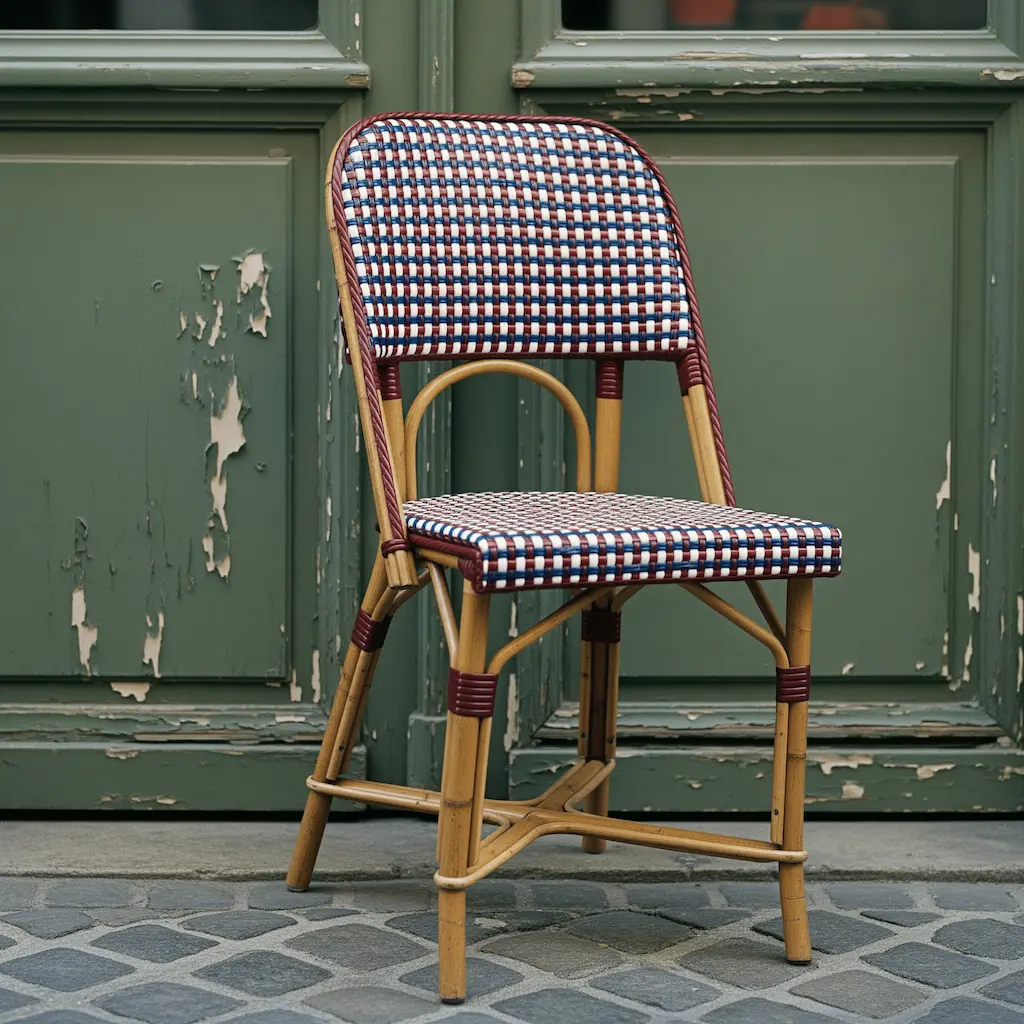
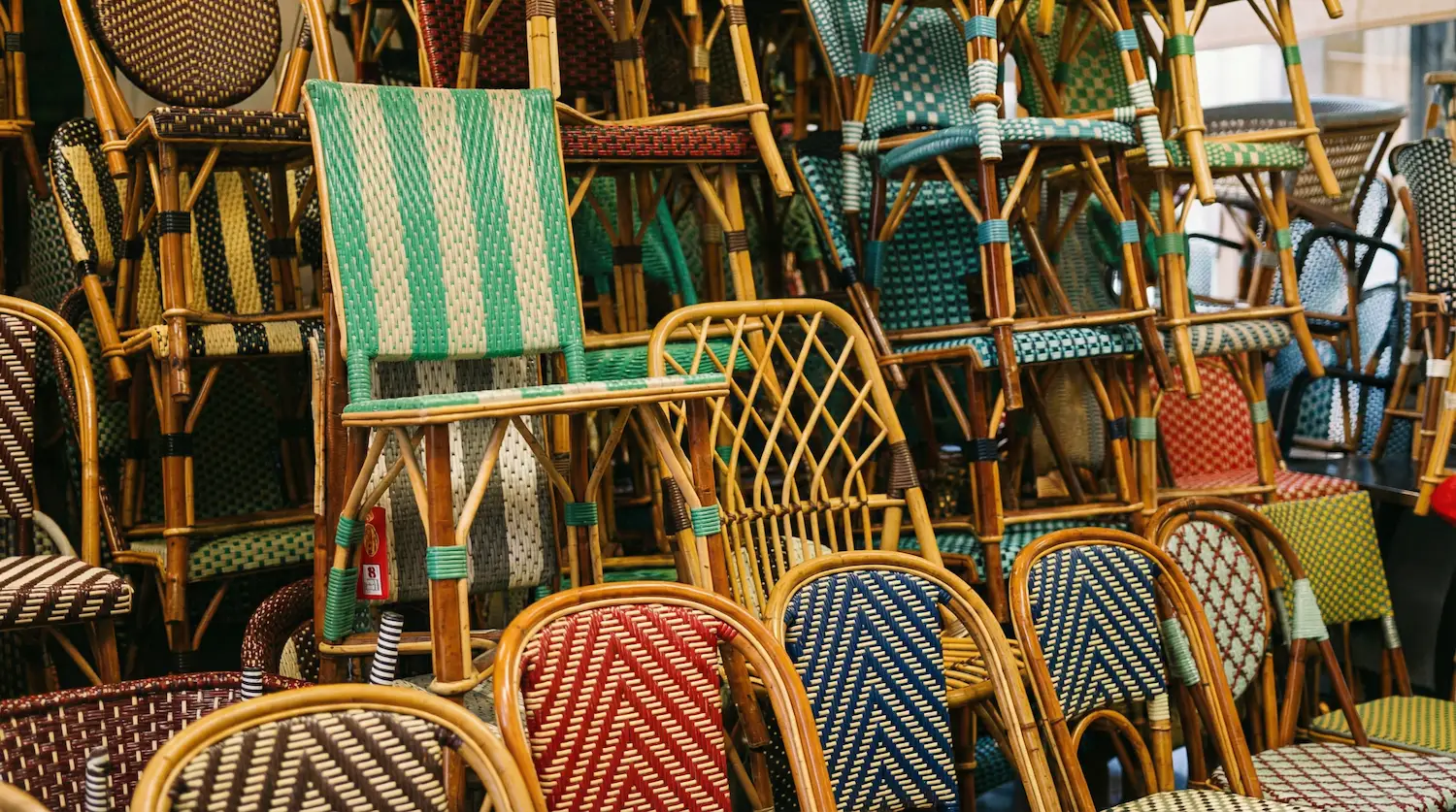
A high-quality rattan chair reveals itself in the weave. The braiding is tight, consistent, and structurally firm. Its rhythm feels even, the texture uninterrupted—almost like a quiet, repeating cadence.
② Curvature of the Frame and Structural Balance
The soul of rattan lies in its curves. Look closely at the arch of the backrest—how gracefully it bends. Observe how naturally each joint connects, how stable the frame feels as a whole. A well-crafted rattan chair never fights its shape; it settles into it.
③ Heritage of the Maison and the Mood You Want to Create
- Seeking the quintessential Parisian terrace mood? → Drucker
- Looking for bespoke craftsmanship for hospitality or luxury terraces? → Gatti
- Prefer a calmer, vintage-modern warmth? → Grock
Rattan Chairs Are ‘Furniture of Time’
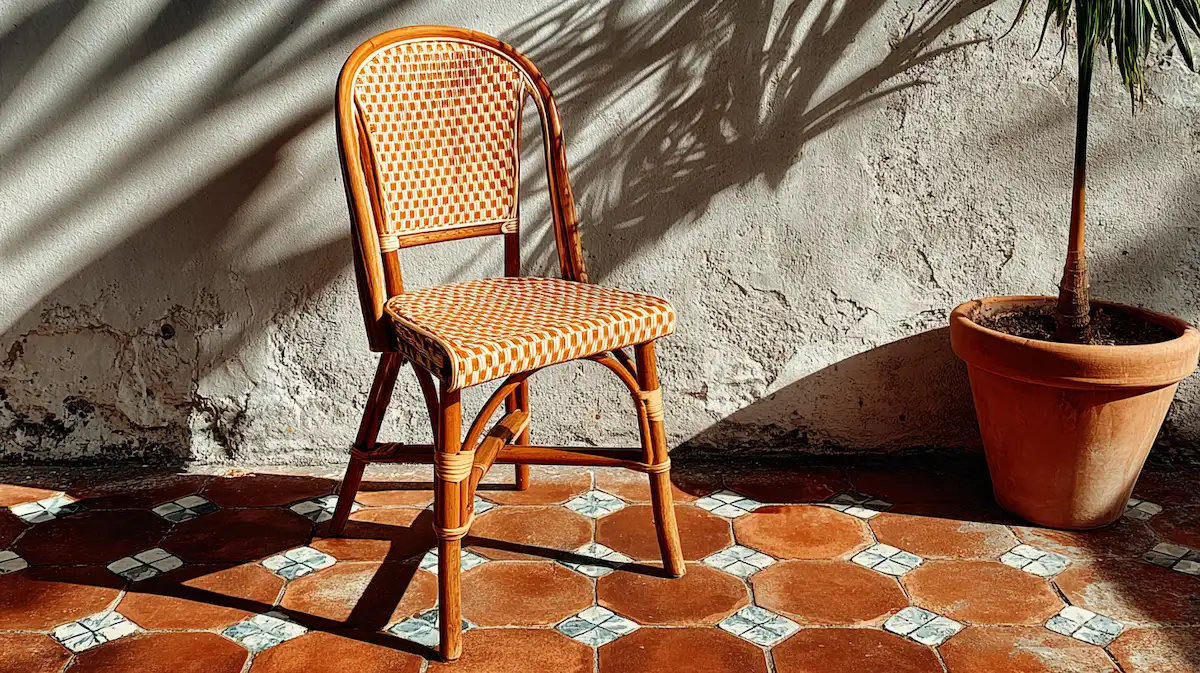
A rattan chair grows more beautiful as it ages. Sunlight, seasons, and daily use gently shift the tone of the weave, softening its edges and deepening its character.
A chair crafted by a true maison is designed to age with grace, turning every patina and subtle change into a part of its story.
A chair you never tire of. An object that shifts the atmosphere of a room. And it all begins with choosing the right maison.
MAINTENANCE — Time Deepens the Beauty of Rattan
Because rattan is a natural material, the way you care for it determines how beautifully it ages. Avoid direct sunlight and excessive humidity, and dust it regularly with a soft cloth. If stains appear, wipe gently with diluted mild soap and remove moisture immediately.
For outdoor use, bring the chair indoors during rain or humid seasons, or cover it with a waterproof protector. Rattan can dry out and crack over time, so applying a light coat of rattan oil once or twice a year helps maintain its flexibility and longevity.
Thanks to this kind of care, many Parisian cafés still use rattan chairs that have weathered 40 to 50 years—each one carrying the patina of sunlight, conversations, and countless mornings.
THE ESSENCE — A Chair Is Never Just a Chair
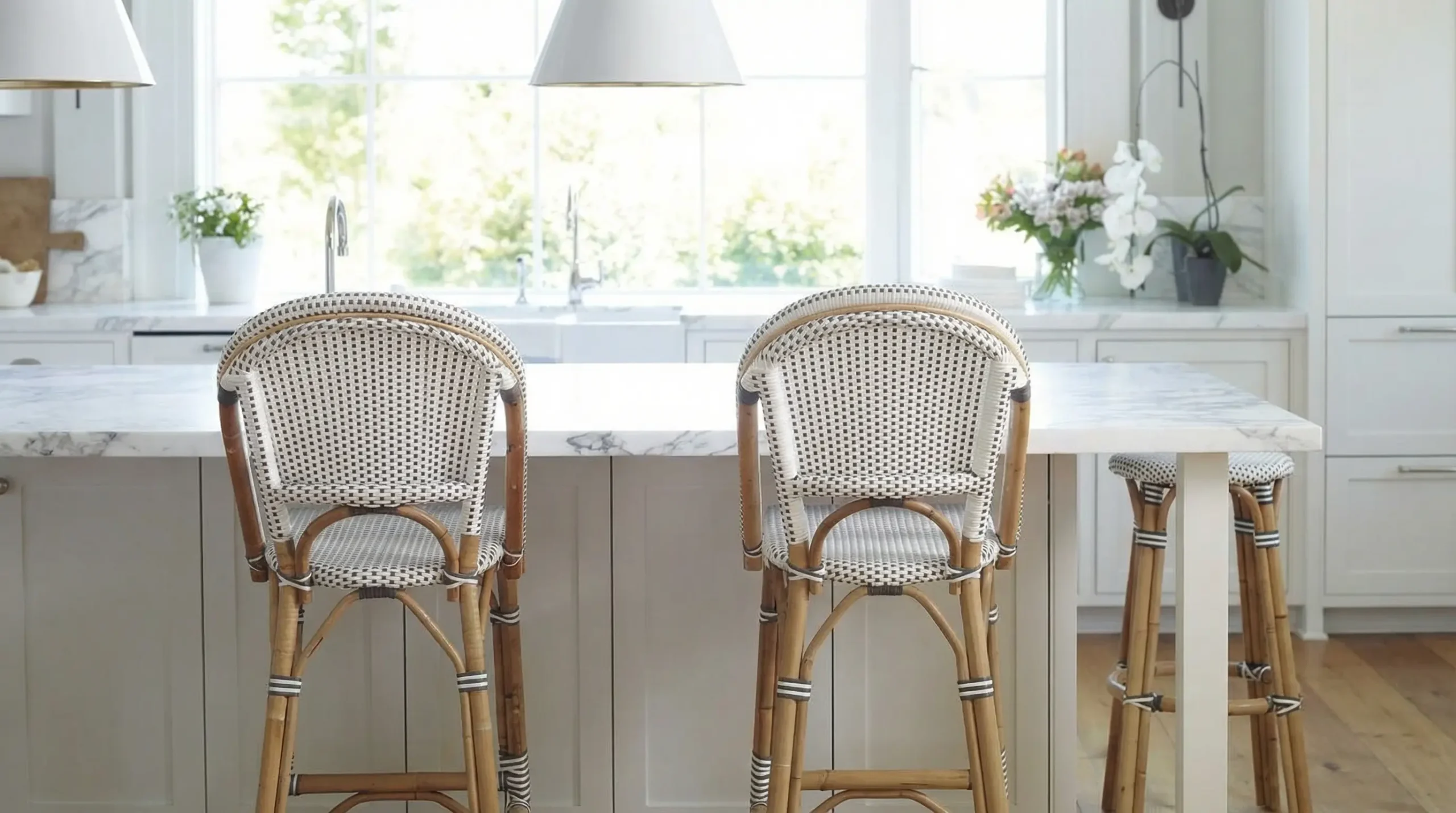
A chair is more than an object to sit on; it is an anchor that shapes the rhythm of a room. Among them, the rattan bistro chair holds a rare kind of presence. It carries with it the morning air of Paris, the soft murmur of café conversations, and the unhurried pace of a long afternoon. It brings those landscapes quietly into your space.
Bringing a rattan chair into your home is not simply adding new furniture. It is inviting in its history, its time-worn patina, its cultural memory, and its quiet cadence.
Each morning as you sit with your coffee, you step into a tradition that has lived for more than a century. And from that moment on, this timeless Parisian ritual begins to write a new story—your story—within your own space.